Health
First Year in a House? The Records That Decide Six Arguments You Haven't Had Yet
A first-time owner's guide to which paperwork earns its keep, which quietly expires, and the everyday charges that get harder to dispute once the record is gone.
Lucinda Fairbairn|
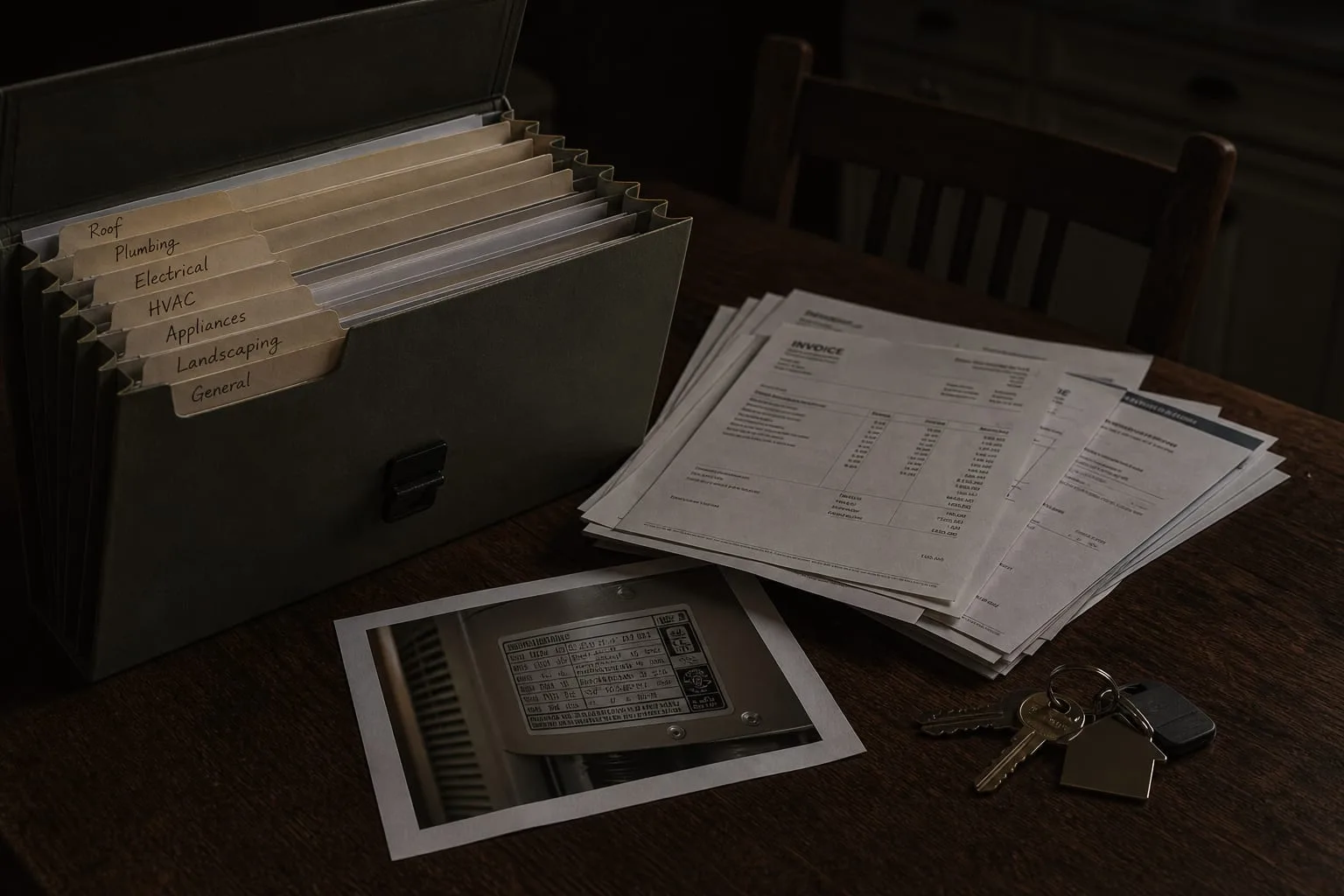
The first year of owning something substantial, a house, a car you paid cash for, a small business with two employees, generates paper at a rate nobody warns you about, and almost none of it announces which pieces will matter. The closing packet matters. The water heater invoice matters more than the closing packet in some ways, because it carries a date that a manufacturer will one day ask you to prove. Most people learn the sorting rules backward, after a claim gets trimmed or a warranty gets refused, and the lesson arrives with a number attached. It is cheaper to learn the categories first and let the filing follow from them.
The receipts that quietly become money at sale
When you sell a house, the taxable gain is calculated against what you put into it, not just what you paid for it, and the difference between those two figures is built entirely out of receipts you either kept or did not. A new roof, a finished basement, a replaced sewer line, an added bathroom: each raises the number you get to subtract, and each is worth nothing to you as a memory. The IRS is responsible for the rules on how property basis is figured and how long supporting records need to survive, and the practical upshot is that improvement paperwork outlives ordinary paperwork by a long stretch. Keep it for as long as you own the property, then for years after the sale closes.
The distinction that trips first-timers is between an improvement and a repair, and it is not a distinction the contractor's invoice will make for you. Patching three shingles is maintenance. Replacing the roof deck and the shingles together is not. Because you cannot always tell at the time which side of the line a job falls on, the workable habit is to keep every invoice above some threshold you choose and let an accountant sort them at sale. A shoebox of invoices you never needed costs nothing. A missing one costs a percentage of a gain, and on a house held fifteen years that percentage is not small.
Proof that a thing was installed, and exactly when
Almost every appliance and building product warranty runs from a date, and the date the manufacturer wants is usually installation, not purchase, and certainly not the day you noticed the problem. A furnace with a ten-year heat exchanger warranty is only under warranty if someone can show when it went in. First-time owners tend to assume the manufacturer has this on file from a registration card, or that the installer's records are retrievable, and both assumptions fail routinely: companies close, files get purged, the technician who did the work moved to another state. The document that survives is the one in your own hands.
The same logic runs through service history. Many manufacturer warranties condition coverage on maintenance having been performed, and a water heater that was never flushed or a system that never had its annual service can be declined on that basis alone. So the folder for each major piece of equipment wants three things: the install invoice with a date and a model and serial number, the registration confirmation if there was one, and every service ticket since. That set is what turns a warranty from a promise into a claim someone has to honor. It is also what a home inspector's report will be measured against when you eventually sell.
Photographs belong in the same folder, and they cost nothing. A picture of the data plate on the furnace, the model sticker inside the dishwasher door, the label on the electrical panel, the shutoff valve locations, all taken once and stored where you can find them, saves an hour of crawling with a flashlight every time a part needs ordering. The pictures also settle the small arguments, the ones about whether the unit is the original or a replacement, which come up more often than anyone expects.
The records that settle disputes with people who bill you
Billing disputes are decided by whoever can produce a document, and the party with the better filing system usually wins regardless of who is right. A utility that reads a meter wrong will correct it against a photograph of the meter with a date. A gym or software subscription that auto-renewed after you canceled will refund against a cancellation confirmation email, and will not refund against your recollection of a phone call. A landlord holding a security deposit for damage you did not cause is answered by move-in photographs and a signed condition report, and is not answered by anything else. None of these disputes involve large sums individually. They recur, which is how they add up.
The pattern worth noticing is that every one of these turns on a record created at a calm moment, before there was any reason to think it would be needed. Nobody photographs a meter during an argument about a bill; the useful photograph was taken months earlier for no reason at all. The Federal Trade Commission oversees a good deal of how companies must handle billing and cancellation practices, and the consumer side of those protections still runs on your ability to show what happened and when. Confirmation emails, screenshots of a cancellation page, the reference number a representative gave you: these are ten seconds of work each, and they are the entire evidentiary basis of a small refund.
How long each category actually stays useful
Records have shelf lives, and knowing them is what keeps the system from collapsing under its own weight. Utility bills are useful for about a year, long enough to compare a season against the same season and to catch a meter drifting. Bank and credit card statements are useful until the return that relies on them is well past any window in which it could be questioned. Tax returns and the documents behind them, W-2s, 1099s, brokerage statements showing what you paid for something, sit on a longer clock, and anything that establishes what you paid for an asset stays useful until years after you dispose of it. Insurance policies matter in their declarations pages and their endorsements, and the version that governs a loss is the version in force on the date of the loss, which is a reason to keep the expired ones.
Permanent means permanent for a short list: deeds, title insurance, surveys, mortgage payoff letters, wills and trusts, birth and marriage certificates, Social Security cards, military discharge papers, and the improvement receipts already mentioned. Those go somewhere fireproof or somewhere off site, and a scanned copy goes in a second place, because a single location is not storage, it is a bet. Everything else can be reviewed once a year and thinned, which takes an afternoon and gets faster each time. Doing the thinning is what makes the keeping sustainable.
Building the habit before you need it
The setup that survives contact with real life is boring and shallow: a handful of folders named after the thing rather than the year, one for the house, one per vehicle, one for insurance, one for tax year, one for each recurring account, and a rule that a document goes into a folder the day it arrives rather than into a pile with intentions attached to it. Scanning helps, but a labeled paper file beats an unsorted scan folder every time, because retrieval under pressure is the only test that counts. First-timers who set this up in month one spend perhaps two hours on it. The payoff arrives in fragments, years apart, each time an argument ends early because the paper was already there.
What makes the difference is not diligence, which fluctuates, but the decision made once about where each kind of thing lives. That decision is available to you now, cheaply, while the paperwork is still arriving and nothing has gone wrong.