Money
Hail in April, Renewal in July? The File That Keeps One Roof From Repricing Twenty
After a spring hailstorm, the paperwork you build before you call matters more than the call itself, and it matters differently at one property than at twenty.
Rafael Quintanilla|
A spring hail line runs across a county in about eleven minutes and leaves behind a question that looks simple at one address and turns into a project at twenty. The owner of a single rental duplex has one roof to inspect, one deductible to weigh, and one renewal date to worry about. The owner of twenty scattered single-family rentals has twenty roofs, a mix of ages, and a renewal that reprices the whole schedule at once. Same storm, same policy language, genuinely different decision, and the paperwork is what separates the two.
The narrow case: soft metal dents, a July renewal, and one adjuster's scope
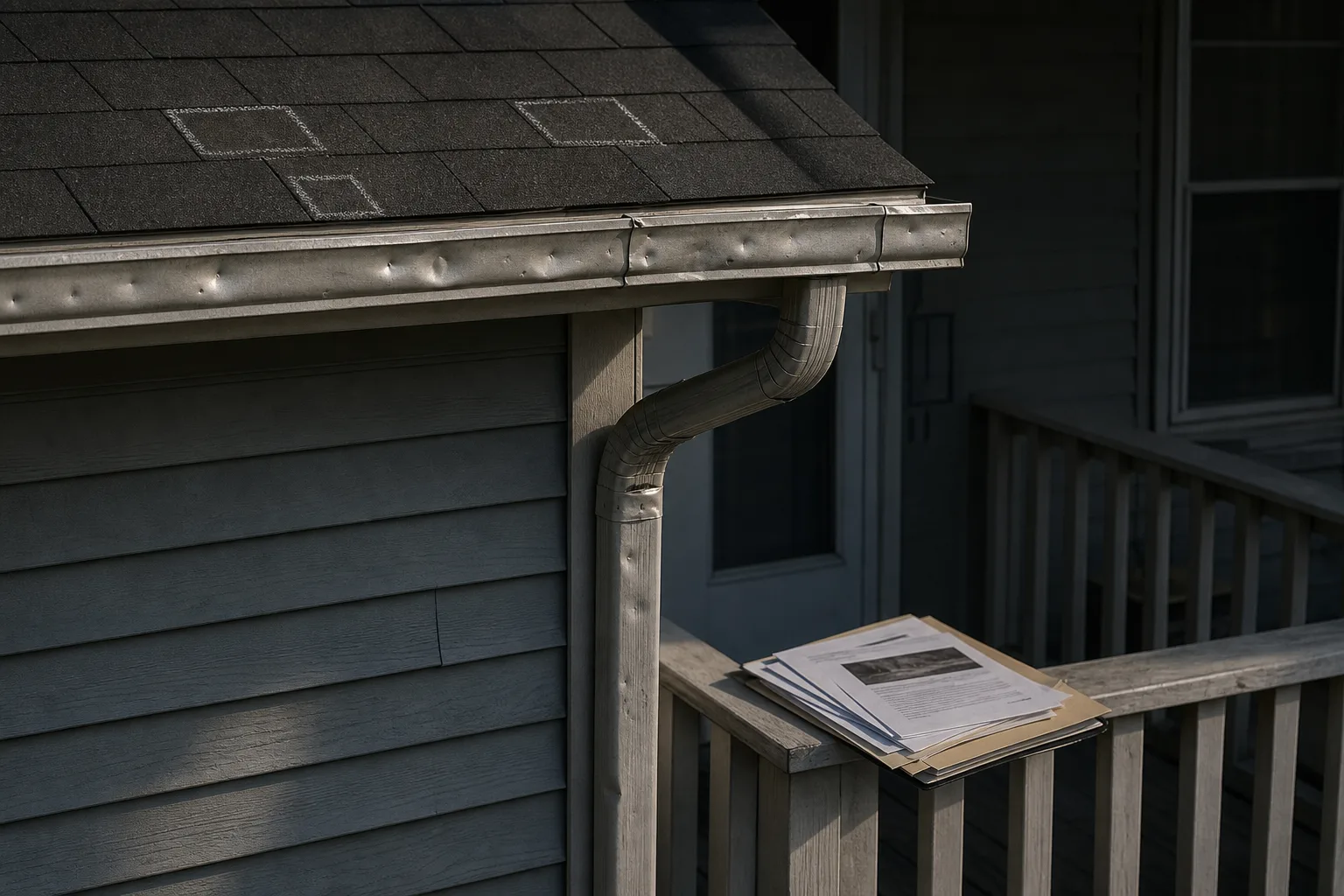
Take the case precisely, because the general version teaches nothing. Hail comes through in the second week of April. On the duplex, the gutters show dents, a downspout is bruised, and the roof is asphalt shingle at roughly year fourteen of a nominal thirty. A roofer walks it, chalks test squares, and writes an estimate a little above the deductible. The policy renews in July, which means the claim, if filed, lands inside the expiring term and is fully visible to the underwriter pricing the renewal. That sequence, storm in April and renewal in July, is the whole problem in miniature.
The instinct is to file immediately and let the carrier decide. The better move is to spend a week assembling a file that makes the decision obvious, because a claim you open and then withdraw still leaves a record, and a claim you never open leaves nothing but your own photographs. What goes in the file is unglamorous: the roofer's written estimate with a line-item scope rather than a lump sum, dated photographs of the test squares and the soft metal, the storm date confirmed against a public weather record, the roof's age from the closing documents or the permit, and your declarations page showing the deductible that actually applies to wind and hail, which is frequently a percentage of the dwelling limit rather than the flat number you remember.
What the record keeps, and how to read it before the carrier does
Claims history follows the property and the named insured through specialty consumer reporting, and that record is the thing underwriters read at renewal and the thing a future buyer's carrier reads at purchase. Because it is a consumer report, you can request your own copy, and the Federal Trade Commission is the agency responsible for the fair credit reporting framework that gives you that right. Reading it before you file is the single most useful hour in the process. Owners are regularly surprised by what is already listed: an inquiry logged as a claim, a prior owner's water loss, a claim closed without payment that still occupies a line.
That reading changes the arithmetic. One documented hail loss on an otherwise clean five-year history is a different underwriting object than a third loss in four years, and the roofer's estimate is what tells you which situation you are in before you commit. If the record is clean and the damage is functional, filing is straightforward. If the record already carries two weather losses, the same estimate may argue for absorbing the repair and holding the photographs, which cost nothing to keep and preserve your ability to show the roof's condition if a later storm produces a larger loss and a dispute about what came from which event.
Where the threshold sits between one roof and twenty
Scale breaks the single-property logic in two places. First, the deductible stops being one number. On a schedule of twenty dwellings, a hail event may apply a per-building deductible, which means twenty small claims each land under their own threshold and none of them pay, or it may apply a single per-occurrence deductible across the schedule, which means the storm becomes one claim and the aggregate damage clears it easily. Which structure you have is printed on your policy and almost never remembered correctly. Reading it in March, before the season, is the difference between a coordinated filing and twenty abandoned inspections.
Second, the paperwork has to become a system rather than an effort. The threshold in practice sits around four or five properties. Below that, a folder per address and a phone camera is enough. Above it, you need a fixed intake: a standing inspection order to one roofing contractor who will walk every address after a named event and return one report per property in the same format, a spreadsheet keyed by address holding roof age, roof type, deductible basis, renewal date and loss history, and photographs named by address and date so nothing has to be reconstructed later. Build that once and each subsequent storm costs you a morning.
The seasonal calendar that makes the decision easier
Hail and wind arrive in a season, and renewals arrive on a date, and the useful work happens in the gap between them. Late winter is when you pull declarations pages and confirm the wind and hail deductible basis on every property, request your loss history, and photograph every roof in its undamaged state. That last step is quietly powerful: a dated set of clean photographs from February makes April's damage attributable to April's storm, which is precisely the fact an adjuster's scope has to establish and the fact an owner with no baseline photographs spends weeks arguing about.
Then, when the storm comes, the order is fixed rather than improvised. Inspect, estimate, compare the estimate against the applicable deductible, check the loss record, and only then decide whether to file, and file with the contractor's line-item scope already in hand so the adjuster is reviewing a document rather than generating one from scratch. If the renewal is close, ask the carrier or your agent what the filing does to the pending quote, in writing, and keep the answer. Carriers answer that question more plainly than owners expect.
One roof and a clean history is a decision you can make in an afternoon with an estimate and a declarations page. Twenty roofs and a July renewal is a decision you make in February, with a spreadsheet, a contractor on standing order, and a set of photographs nobody hopes to need.