Corporate
Comparing Fulfillment Quotes? Five Line Items That Move With the Warehouse's Zip Code
Two fulfillment quotes can use identical words and bill very differently, because receiving, storage units, zones, surcharges and returns all shift with where the warehouse sits.
Theodore Kranz|
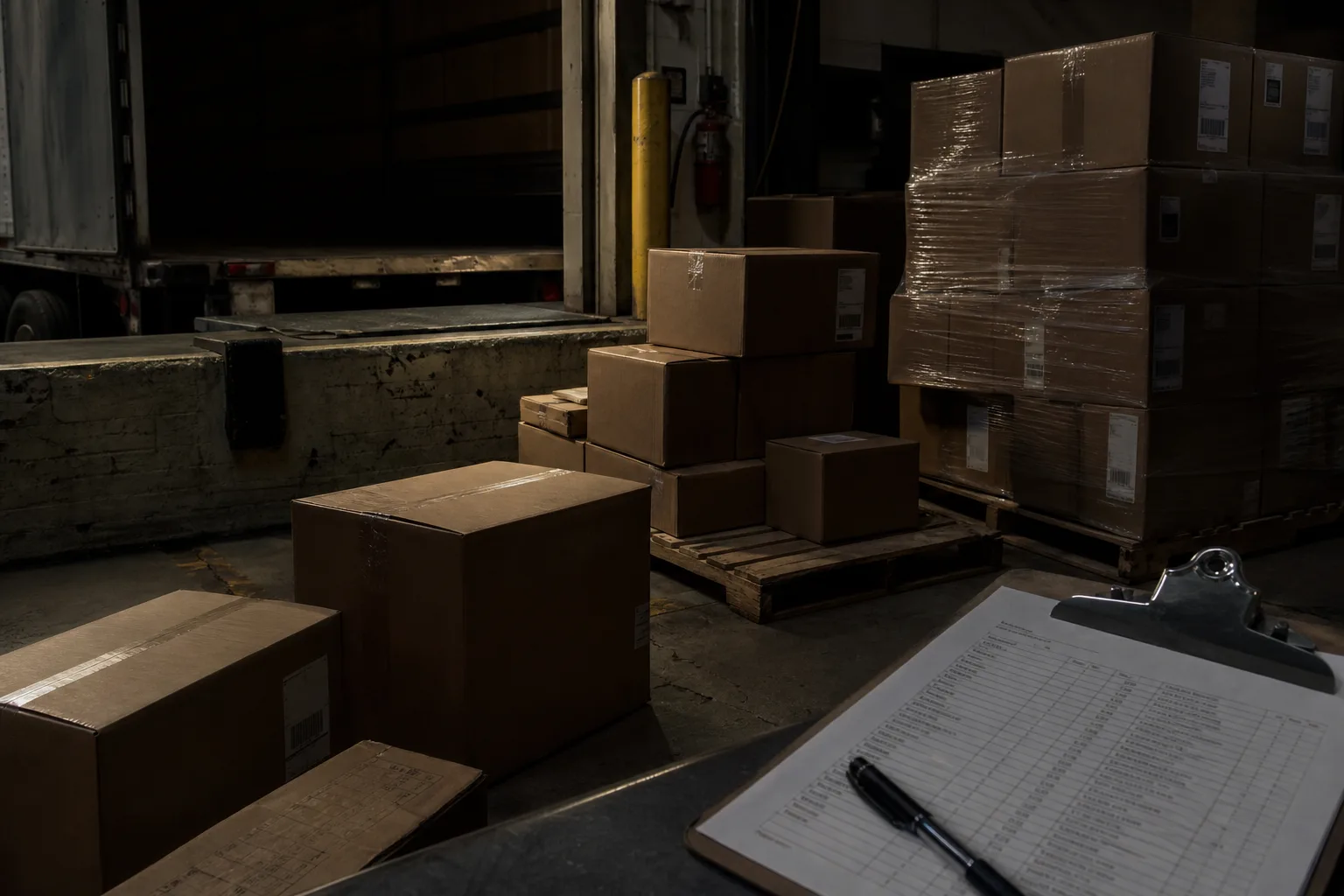
A fulfillment quote is usually one page, and the page is usually organized around the four things a warehouse does often: take your inventory in, hold it, pick and pack it, and hand it to a carrier. What the page rarely organizes itself around is the thing that actually decides your monthly invoice, which is the gap between how your orders behave and how the pricing units were drawn. Two providers can quote the same rate card and bill twenty percent apart on the same volume. The difference lives in definitions, in minimums, and in the state and city where the building happens to sit.
1. Receiving, and the unit the clock runs on
Receiving is billed by the hour, by the pallet, by the carton, or by the unit, and those four choices produce wildly different numbers for the same truck. A quote that reads as cheap per pallet becomes expensive the moment your supplier ships floor-loaded cartons that someone has to palletize by hand, and an hourly rate is fine until the same hand work happens in a market where warehouse labor is scarce and the loaded rate reflects it. Ask which unit applies to a mixed container, what happens when the carton count on the packing slip disagrees with the count on the dock, and who absorbs the reconciliation time. The answer to that last question is where quiet money sits.
Location changes this more than most founders expect. A building in an inland market with a wide labor pool prices hand unloading as routine; a building near a major port prices the same work against drayage windows, chassis availability, and appointment systems that fine a late truck. If your goods arrive by ocean container, the receiving line on the quote is only half the cost of getting inventory into stock, because the move from the terminal to the door is separately priced and separately delayed. Get the drayage assumption in writing alongside the receiving rate, so the two numbers can be compared as one.
2. Storage, and whether you are renting space or renting a shelf
Storage is quoted per pallet, per bin, per shelf, or per cubic foot, and the honest comparison requires knowing your own cube per SKU before you read either quote. Per-pallet pricing rewards a small number of fast SKUs in full pallet quantities and punishes a long tail of slow apparel sizes, each of which occupies a bin whether it holds four units or four hundred. Per-cubic-foot pricing looks precise and usually is, but check how partial pallets round, whether the measurement is taken on the first of the month or as a daily average, and what the minimum monthly storage commitment does to a slow February.
Rent is regional in the plainest way possible, so storage is the line where geography shows up first and most visibly. Coastal and near-port submarkets carry industrial rents that inland corridors do not, and a provider in an expensive market will either charge more per pallet or make the money back on handling. Neither is wrong. What matters is that you compare the total landed cost of a typical month rather than the storage rate alone, because a cheap shelf in a distant building that adds a shipping zone to every order is not cheap. Run your own SKU list against both rate cards for one representative month.
3. Pick, pack, and the definition of the first item
Almost every quote separates an order charge from a per-additional-item charge, and almost every quote defines those terms slightly differently. Some providers include the first pick in the order fee, some bill every pick, and some include a standard poly mailer or a small carton while treating anything larger as a billable material. Kitting, bundles, gift notes, inserts, serial capture, lot tracking, and expiration date rotation are frequently listed as special projects at an hourly rate, and a subscription box that assembles five components is a special project run monthly. Price your actual order profile, not the illustrative single-item order the quote was built around.
Packaging materials also carry rules that vary by state, which is the part nobody flags during onboarding. Several states now run extended producer responsibility programs for packaging, along with recycled content requirements and restrictions on certain plastics, and the obligations attach to the brand rather than to the warehouse. A provider operating across multiple states will often have materials that satisfy the strictest jurisdiction it serves, which is convenient, and a smaller regional provider may not. Ask which materials are stocked, whether you may supply your own, and what the handling fee is for customer-supplied packaging.
4. Shipping, zones, and the surcharges that arrive later
The shipping line on a quote is usually a promise about rates rather than a rate, phrased as access to negotiated pricing or a published discount off list. What decides your real cost is the zone math between the warehouse and your customers, which means one building in the middle of the country and two buildings on either coast produce different bills for the same order book. Ask for a zone distribution run against your last few months of orders. Then ask which surcharges pass through at cost and which carry a markup: residential delivery, delivery area surcharge for rural zip codes, additional handling for dimension, address correction, and peak season fees that appear in the fourth quarter.
Some of these surcharges are geographic by design and cannot be negotiated away, only planned around. Extended and remote delivery areas cover a large share of the map, Alaska and Hawaii price separately, and dense urban delivery carries its own congestion-driven costs. Regulated categories add another layer, because alcohol, supplements, batteries, aerosols, and anything classed as hazardous material ship under state-specific permitting and carrier rules, and not every warehouse holds the licenses. The Federal Trade Commission is responsible for the rules governing shipment timing and consumer notification in mail and internet orders, which makes the provider's promised ship-by performance a compliance matter and not only a service level.
5. Returns, exits, and the sales tax you create by storing inventory
Returns pricing tends to be the thinnest part of a quote and the fastest to matter. Find out whether inspection, repackaging, and restocking are separate charges, what happens to an item that arrives unsalable, and how long a provider will hold a disposition queue before it becomes storage. Then read the exit terms: notice period, final invoice, and whether outbound transfer of inventory is billed as a pick or as a project. A provider that prices its own offboarding plainly is telling you something useful about the rest of the relationship. Storing inventory in a state also generally establishes sales tax nexus there, so the warehouse you choose creates a filing obligation, and that is worth confirming with your own tax advisor before signing.
The comparison that works is dull and specific. Take ninety days of your own orders, your own SKU dimensions, and your own customer zip codes, push them through both rate cards, and add the regional items that sit outside the card: drayage, packaging rules, surcharge geography, and the new state you will be filing in. The winner is often not the provider with the better headline rate, and knowing which one it is takes an afternoon.