Family
Told the Service Has to Be Saturday? The Funeral Week Holds More Slack Than It Looks
Most of what gets decided in the first week of arranging a funeral is not actually time-bound, and the difference between a good firm and a barely adequate one is which ones they tell you can wait.
Lucinda Fairbairn|
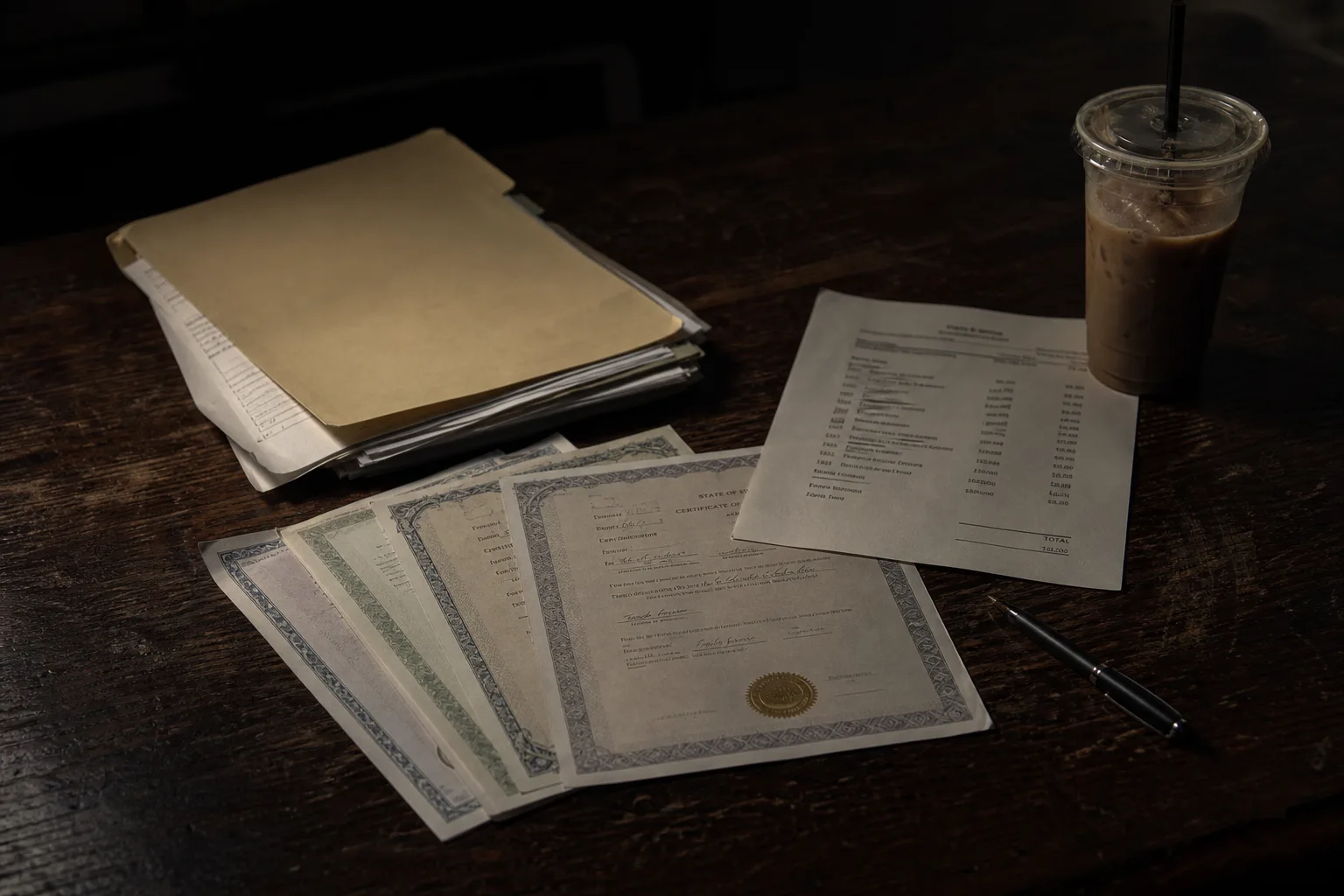
Somebody dies on a Tuesday afternoon and by Wednesday morning a family that has not slept is being asked to pick a casket interior, approve obituary copy, choose between two cemeteries and decide how many people might come to a luncheon nobody has planned. The pace feels mandatory. It almost never is. Three or four decisions in that first week genuinely cannot wait, and the rest have been folded into the same conversation because it is more efficient for the firm to settle everything in one sitting. Knowing which is which is the whole difference between a week you survive and a week you spend eighteen months quietly correcting.
The first two days hold three decisions, not thirty
What actually has a clock on it is the care of the body, the direction of disposition, and the signatures that start the death certificate moving. The transfer into a funeral home's care happens quickly because it has to, and that choice does commit you somewhat, since moving a body a second time costs money and feels awful. Disposition direction, meaning burial or cremation, matters early because cremation requires an authorization and often a waiting period, and burial requires a cemetery with an opening available. Everything else, the merchandise, the service format, the printed materials, the flowers, the reception, sits downstream of those three and can be decided on Thursday or Friday without a single consequence.
The practical test is to ask, out loud, what breaks if this particular decision is made in two days instead of right now. A good arranger answers that question honestly and will often tell you, unprompted, that the urn can be chosen after the cremation and the register book can be skipped entirely. A barely adequate one treats the question as an obstacle and reaches for the schedule, explaining that the chapel is only free on Saturday. Chapels are frequently free on other days. The clergy calendar, the out-of-town travel and the cemetery's working hours are real constraints, and they are worth naming individually rather than accepting as one undifferentiated rush.
The paperwork chain is the part that keeps working after the service
A funeral is a few hours. The documents it produces are the thing you will be handling for the next year, and this is where the gap between competent and adequate shows most clearly. The death certificate has to be completed by a physician or medical examiner and filed with the local vital records office, and the funeral director is usually the one shepherding it. Certified copies come out of that filing, and you will need more of them than feels reasonable: one for each life insurance policy, each bank and brokerage account, the pension or retirement plan administrator, the title transfer on a vehicle at the DMV, and often the county for real property. Ordering them in a single batch at the start costs less per copy than ordering them one at a time in March.
A good firm sits down and walks the list with you, asks what the person owned and who held it, and arrives at a number with reasoning behind it. An adequate one asks how many you want and writes down whatever you say, which is usually a number pulled out of exhaustion. The same divide shows in the ancillary notifications, Social Security, veterans burial benefits if the person served, the surviving spouse's eligibility for a marker. None of that is legally required of a funeral director. All of it is routinely done by the ones worth hiring, because they have watched families discover the gap six months later when the paperwork is cold and the people who could have helped have moved on.
The price list exists, and asking for it changes the conversation
The Federal Trade Commission is responsible for the federal rule governing how funeral goods and services are priced and disclosed, and the central mechanism of it is the itemized general price list. You are entitled to see it, in writing, before you discuss merchandise, and you are entitled to buy individual items rather than a package. That is not an adversarial request. It is the ordinary functioning of the transaction, and the firms that handle it well hand the list over without being asked and go through it line by line, marking what is required by their own policy, what is required by the cemetery, and what is genuinely optional.
Packages are not a trap, and often they do save money against the same items bought separately. The problem is that a package is priced for a typical arrangement and your arrangement may not be typical. If the body is being cremated, a viewing casket may be rented rather than bought. If the service is held at a church, the chapel fee in the package is dead weight. If the family is handling the obituary themselves, the placement charge disappears. A firm that walks you backward out of a package it has already quoted, subtracting what you do not need, is showing you how it will behave when the harder questions arrive.
What separates good from adequate turns up around week three
The service ends and the phone stops ringing, and that is when the remaining work becomes visible. Cremated remains have to actually be collected or scattered somewhere permitted. A grave has to settle before a marker can be set, which commonly means months, and the cemetery, not the funeral home, controls what the marker may be made of, how large it may be, and whether a vase is allowed. The interment rights have a deed attached and a transfer process that matters to whoever inherits them. Someone has to tell you all of this, and the barely adequate version of this trade considers its job finished when the hearse comes back.
The firms that do this well make a point of the follow-up call, not as a courtesy gesture but because they know exactly which three things are about to go wrong. They will have told you to wait on the headstone order rather than signing it in week one, when the inscription was decided by whoever was loudest and the spelling of a middle name was never checked. They will know the cemetery's rules well enough to stop you buying a monument it will refuse. That restraint, the willingness to leave a sale on the table for a month, is the single most reliable signal of quality available to you in the first week.
Slowing down costs nothing in most states and buys back the one thing the week is short of, which is the ability to check anything. Ask what breaks if you decide tomorrow. The answer tells you plenty about who you are dealing with, and the good ones welcome the question because they have already been thinking about the same timeline you are.