Health
Two Nights for Chest Pain, Billed as Outpatient. How That Line Reads Now Against Ten Years Ago
One short hospital stay, two possible billing statuses, and a decade of changes in what you can find out before you pay.
Lucinda Fairbairn|
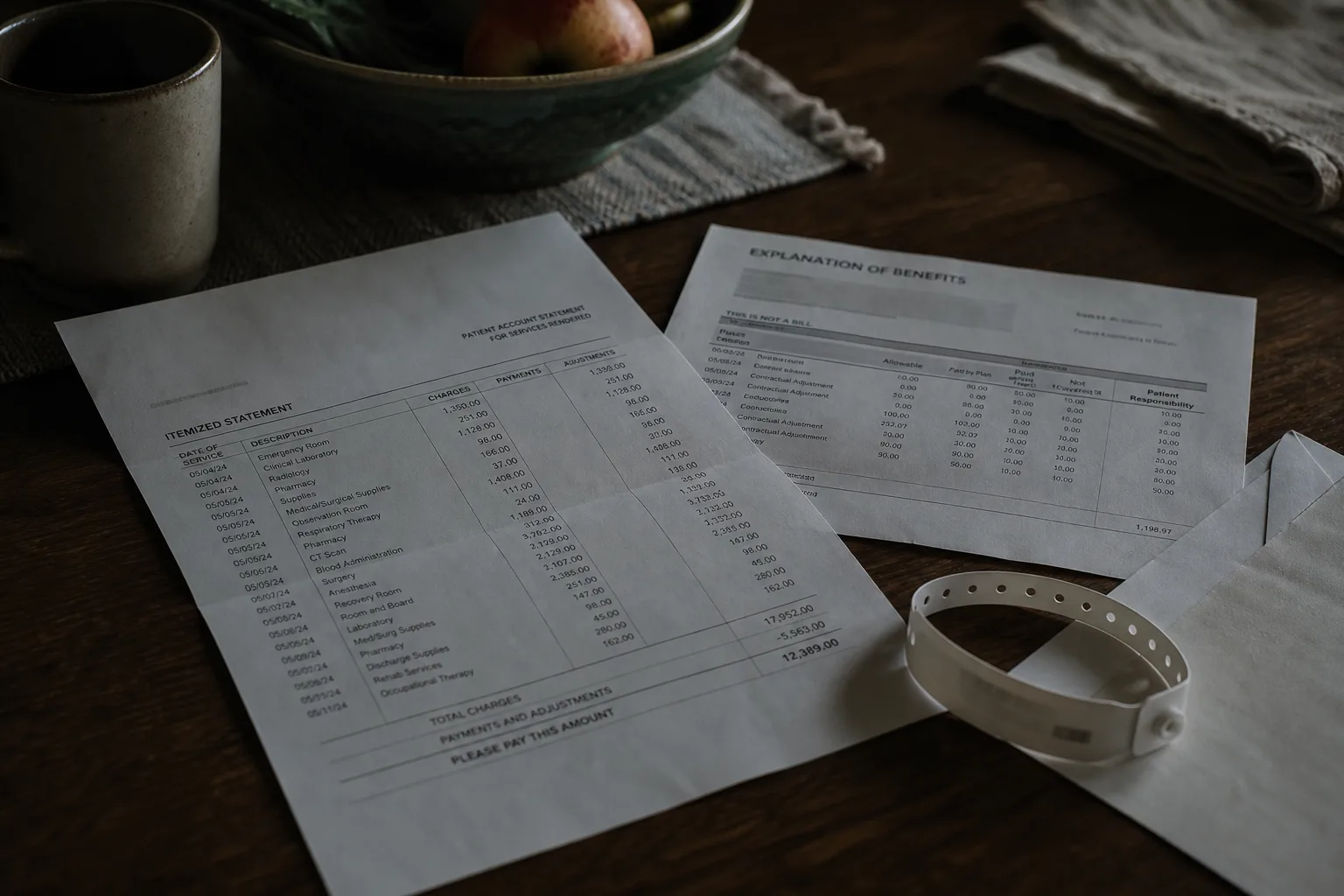
A man arrives at an emergency department on a Tuesday evening with chest pressure, is moved upstairs around midnight, spends Wednesday on a monitor with serial troponins and a stress test, and goes home Thursday morning. He was in a bed, in a gown, with a wristband, for roughly thirty-six hours. Six weeks later a statement arrives that runs to several pages and carries a number he was not expecting, because the stay was billed as outpatient observation rather than an inpatient admission. Nothing about the care changed. The classification did, and the classification is what the line items are built on.
The same thirty-six hours, two different bills
Inpatient and observation are not descriptions of how sick someone looked. They are billing statuses attached to a physician's order, and they route the stay down two entirely separate payment paths. An inpatient stay typically pays as a single bundled case rate against the hospital portion of the coverage, with one deductible and, for traditional Medicare patients, no separate charge for the pills the nurse handed over at two in the morning. Observation pays as outpatient care, which means the facility fee, the cardiology consult, the stress test, the telemetry, and the self-administered medications can surface as discrete lines with their own coinsurance. Same bed. Same monitor. A different arithmetic underneath.
The practical consequence shows up in two places a patient rarely connects. The first is the share of the bill, which under an outpatient structure is a percentage of many items rather than a flat amount against one. The second is what the stay qualifies you for afterward: skilled nursing coverage under Medicare has historically depended on a qualifying inpatient stay, so an older patient discharged from observation to a rehab facility can find that the facility bill is entirely his own. Neither of those is visible on the page. Both are decided by a single status field.
What this bill looked like in 2014
Ten years ago the reader's position was almost entirely reactive. The statement that came in the mail was a summary, not an itemization, and getting the underlying detail meant calling the billing office and asking specifically for an itemized bill, which arrived days later as a dense printout of revenue codes, charge descriptions in abbreviated hospital shorthand, and quantities that made sense to a coder and to nobody else. There was no requirement that anyone tell the patient, while he was still in the building, that he was an outpatient. Families learned the distinction afterward, from a denial letter or a nursing home admissions clerk. The information existed. It simply was not routed toward the person paying.
Review on the hospital side was also thinner then, and more improvised. Case management nurses applied screening criteria, a physician signed the order, and genuinely ambiguous stays were settled by habit or by whoever happened to be on service. When an auditor came back two years later and disagreed, the hospital absorbed the recoupment and the patient's bill had long since been paid, rebilled, or written off. The feedback loop between the clinical story and the billing status was slow enough that it taught nobody anything useful in time to matter.
What the same conversation looks like now
Three things changed, and they compound. Hospitals are now expected to give Medicare patients a written notice when they have been receiving observation services, delivered during the stay rather than after it, with a verbal explanation attached. Price information that used to live only in a chargemaster binder is now published by hospitals in machine-readable form and in consumer-facing estimator tools, so a line labeled with a code can be checked against a posted rate. And the two-midnight framework gave the inpatient decision an articulable standard: if the admitting physician reasonably expects the patient to need hospital care spanning two midnights, inpatient is the appropriate status, documented as such. The Centers for Medicare and Medicaid Services oversees these status and notice requirements, which is why they show up almost identically from one hospital to the next.
The quieter change is internal. Most hospitals of any size now run status determinations past a physician reviewer before the claim goes out, rather than after it comes back denied. Case management escalates the ambiguous stay, and physician advisor services put a doctor's judgment against the documentation while the chart is still open and the attending can still be asked what he actually expected on admission. For a thirty-six hour chest pain workup that crossed two midnights, that review is the difference between a status that holds up and one that gets rewritten by an auditor eighteen months later. A patient questioning the bill is, in effect, asking whether that review happened.
Working the chest pain bill line by line
Start by separating the two bills, because there are nearly always two: the facility statement from the hospital and the professional statements from the emergency physician, the hospitalist, the cardiologist, and the radiologist who read the films. Request the itemized facility bill in writing, then set it beside the explanation of benefits from the insurer, which lists what was billed, what was allowed, and what was shifted to you. Read the status field first, before any dollar figure. If the statement shows observation hours rather than an inpatient case rate, the rest of the page follows from that, and arguing about an individual charge is effort spent in the wrong place.
Then check the clock. Observation hours are billed by the hour and are supposed to stop when the physician makes a disposition decision, so a stay recorded as running well past the discharge order is worth a question. Look for self-administered medications billed as separate lines, for a second emergency department facility fee, for the stress test appearing both in the facility charges and again on the cardiology professional bill with the same date and no modifier distinguishing the technical component from the professional one. Finally, ask the billing office directly whether the admission status was reviewed by a physician advisor, and ask for the result in writing. That question lands differently than a complaint about the total.
The file you keep afterward
A hospital bill is not an event that ends when the check clears. It is a record you own, and the maintenance it asks for is small and specific: the written observation notice, the itemized bill, every explanation of benefits, a dated log of calls with names, and the discharge summary that describes what the admitting physician expected. Keep them together in one place for at least a couple of years, because a rebilled claim, a late professional charge, or a skilled nursing question can surface long after the stay feels finished. The households that resolve these cleanly are not the ones that argue hardest. They are the ones that can produce the right page on the first call.
The thirty-six hours in that bed were clinically identical under either label. What has genuinely improved is that the label is now written down while you are there, reviewed by a physician before the claim leaves the building, and checkable against published rates afterward, which means a patient who reads carefully and asks the status question early is working with the same facts the hospital is.