Law & Legal
The Other Side Is a National Platform, Not a Neighbor. What That Changes About Hiring Counsel
When the party responsible for your problem is a large company operating through an app, the test for whether you need an attorney is not the one that applied ten years ago.
Theodore Kranz|
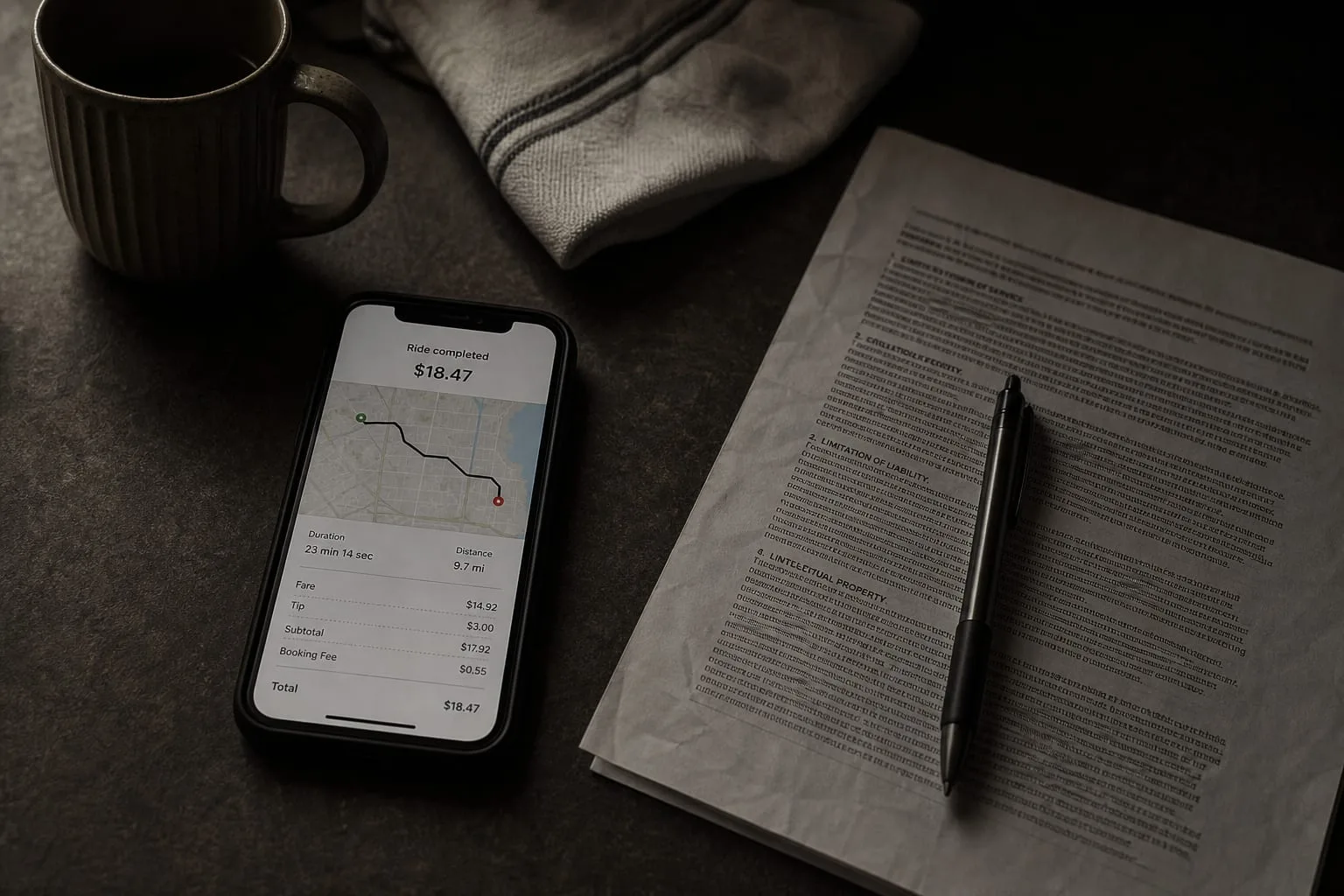
The old test for whether a problem needed an attorney was mostly about money: below some threshold you wrote a firm letter, above it you paid someone to write it on letterhead. That test still works when the other party is a person or a local business, because a person reads the letter, weighs the cost of ignoring it, and usually responds. It works badly when the other party is a national company operating through an app, a franchise network, or a claims department in another state. There, the letter lands in a queue, and the queue has rules you agreed to before anything went wrong.
A person answers a letter; an organization answers a process
Set the two counterparties side by side and the difference is not size but structure. A contractor who left a job half finished has one decision-maker, a reputation in one town, and an incentive to settle before a complaint reaches a licensing board. A platform that connected you to a driver, a cleaner, or a home health aide has a written intake process, a tier of support staff with no authority to pay anything, and a standard-form agreement that governs where a dispute is heard and how long you have to raise it. Against the first, a well-drafted letter is often the whole strategy. Against the second, the letter is a formality that starts a clock.
That is the practical reason the threshold moved. Ten years ago, the question was whether the amount justified the fee. Now the prior question is whether the counterparty is one that responds to individual pressure at all, and if it is not, whether the claim has been routed into a process that closes quietly if you miss a step. The dollar figure still matters. It is no longer the first thing to check.
What changed in the paperwork between then and now
The single largest shift over the decade is that terms of service became the operative law of most consumer disputes. Sign-up screens now carry arbitration provisions, class action waivers, venue clauses, and notice periods that are short by design, and those provisions bind whether or not anyone read them. The Federal Trade Commission is responsible for consumer protection in these markets and for how companies present their terms to the people accepting them, and the practical effect of a decade of scrutiny is that the clauses are clearer, better disclosed, and easier for an attorney to read against your facts before you commit to anything.
The other change ran the opposite direction, and it favors claimants. Federal law now bars enforcement of forced arbitration clauses against claims of sexual assault and sexual harassment, so a category of case that used to disappear into private proceedings can be filed in court. Several large platforms also revised their own terms in the same period. A clause that looked dispositive in 2015 may be unenforceable in 2025 on exactly the facts that matter to you, which is a reason to have someone check rather than assume.
The claims where the platform is the real defendant
Some harms are individual and some are structural, and the distinction decides whether an attorney adds anything. A fender bender with a driver is an insurance matter with a known path. An assault by a driver during a ride is a different animal, because the questions that determine value are questions only the company can answer: what its background check actually screened for, whether prior complaints about that driver were recorded and what was done with them, how the in-app reporting tool routed the report, and what its own safety policy required at each step. Those answers sit in systems you cannot subpoena on your own.
This is where the choice of counsel matters more than the decision to hire one, because a firm that handles ordinary auto claims will not know which internal records exist or how quickly they age out, while a rideshare sexual assault lawyer will send a preservation demand covering trip telemetry, driver history, and complaint logs in the first week. Ten years ago that specialty barely existed as a distinct practice. Now it does, and the existence of a bench of lawyers who have already litigated against the same defendants is itself part of what changed.
Where a letter still does the job
None of this argues for hiring counsel by reflex. Billing errors, warranty refusals, deposit disputes, a subscription that would not cancel, and most small property damage claims still resolve on a documented complaint sent to the right address, followed by a regulator or a chargeback if the first attempt fails. Large organizations are, if anything, more responsive than they were on these matters, because complaint volume is now measured internally and escalation paths are published. The correct move against a national company on a four-figure problem is usually to work its own process precisely and keep a dated record of every contact.
The line falls where three things appear together: a physical injury or a serious dignitary harm, a counterparty whose own records hold the proof, and a deadline that runs whether or not you know about it. Any one of those alone rarely justifies a retainer. All three together mean the case will be decided by evidence you cannot reach and timing you cannot verify, which is precisely the work an attorney is buying you.
Two ways to buy the help, and how they differ now
The paid consultation and the contingency engagement solve different problems and should not be confused. An hour of an attorney's time, bought outright, is the right purchase when you mainly need to know whether the clause you signed binds you, which deadline governs, and whether the claim is worth pursuing at all; you leave with an answer and no ongoing obligation. A contingency arrangement is the right purchase when the case will require records held by the defendant and years of pressure to obtain them, because no household funds that hourly. The useful development of the past decade is that the first conversation is now routinely free in injury practices, so the diagnostic step costs nothing but the time to gather your documents.
Bring the receipts, the trip or service record, the screenshots of every report you filed, and the dates of every response. A firm can tell you within one meeting whether your matter belongs in its office or back in your own hands.
The decision has not become harder so much as it has moved earlier. What used to be a judgment about value is now a judgment about who holds the proof and what you signed before you needed it, and both of those can be settled in a single afternoon with the right documents on the table.