Law & Legal
Does Your Problem Need an Attorney? The Paperwork That Answers It Where You Live
A dispute file, a local dollar limit and a notice deadline usually settle whether you need counsel, and all three change at the state line.
Lucinda Fairbairn|
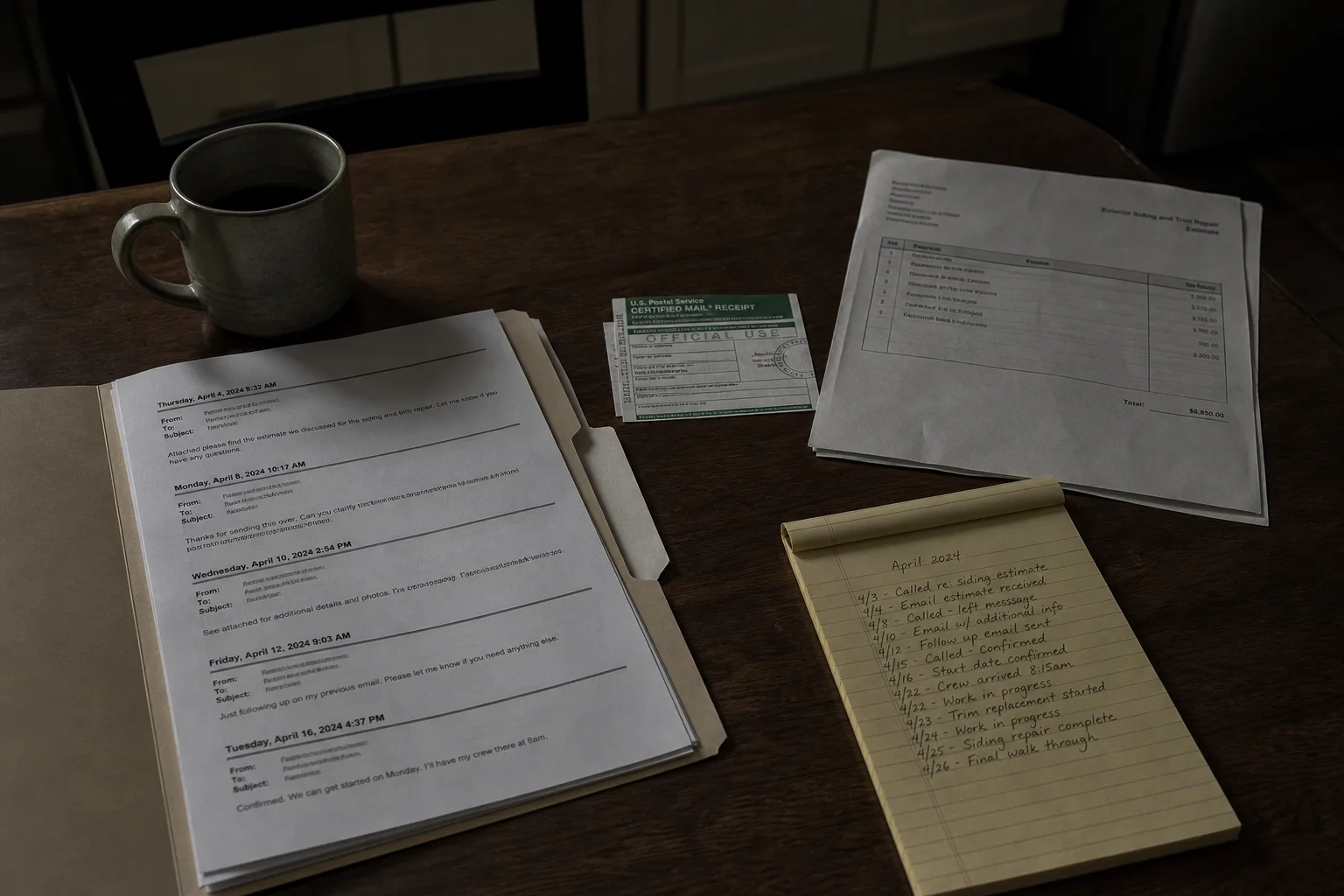
Most people decide whether to hire an attorney by estimating how angry they are, which is a poor instrument. The better instrument is a file, assembled before anyone is called, because the file tends to answer the question on its own: a dispute with three dated documents and a clear dollar figure usually belongs in small claims court, and a dispute with no documents, a disputed timeline and a party who has already retained counsel usually does not. Building that file is maintenance work, unglamorous and cumulative, and it is the part that keeps later costs from compounding.
The file is the thing you maintain, not the lawsuit
A usable dispute file has four kinds of paper in it, and each one does a different job. The agreement comes first, whether that is a signed contract, a lease, an emailed estimate or a text message accepting a price, because without it the argument is about what was promised rather than whether it was delivered. Then the money: canceled checks, card statements, deposit receipts. Then the condition evidence, meaning photographs with their original metadata intact rather than screenshots. Then the correspondence, in date order, including the demand letter and the certified mail receipt that proves it arrived.
What separates a file that works from a pile that does not is contemporaneous dating. A log written the week something happened carries weight that a reconstruction written four months later cannot, and attorneys price that difference because they know how it plays in front of a judge. Keep the log boring: date, who said what, what was agreed. If a contractor promised to return Tuesday and did not, that line costs you ten seconds to write and may later be the only record of a pattern. This is upkeep, and like all upkeep it is cheapest when it is habitual.
The dollar limit and the attorney rule both change at the state line
Small claims court is the single biggest fork in the road, and its shape is set state by state rather than nationally. Jurisdictional caps differ sharply, with some states keeping their limit low enough that a mid-sized repair dispute exceeds it and others setting it high enough to cover a substantial remodeling claim, so the same facts route to a self-represented hearing in one place and to a civil filing requiring counsel in another. A few states bar attorneys from appearing in small claims at all, which levels the room. Others permit them, which changes the calculation entirely when the other side is a company with a standing relationship with a firm.
The appeal rules vary too, and they matter more than people expect. In some states a small claims judgment can be appealed for a new trial in a higher court, where lawyers are allowed and where your opponent's willingness to spend becomes relevant again. In others the decision is close to final for the losing defendant. Before filing, read the clerk's own published guide for your county rather than a general article, because the cap, the filing fee, the service method and whether the sheriff or certified mail must deliver the complaint are all local answers.
The deadline that governs is usually written somewhere local
Statutes of limitation are state law, and they differ by claim type within a single state: a written contract, an oral agreement and property damage frequently carry three different windows. Layered on top are notice requirements that function as hard gates. Claims against a city, county or school district commonly require a written notice of claim filed within a short period measured in months, not years, and missing it ends the matter regardless of merit. Several states require a homeowner to give a builder written notice and an opportunity to repair before a construction defect suit can proceed, and many planned communities must attempt mediation before litigation.
None of these are obscure. They are published, they are searchable by state, and a half hour spent finding the one that applies converts a vague worry into a date on the calendar. Write that date down in the file. If it is more than a year out, you have room to try a demand letter, a licensing board complaint or a mediation program first. If it is inside ninety days, that fact alone is usually sufficient reason to pay for an hour of advice rather than experiment.
Where to confirm the local rule without spending anything
Three free sources cover most of it. Court self-help centers, which many state judiciaries now staff in person and online, publish fillable forms, service instructions and plain-language guides specific to that court. The clerk's office will tell you procedure, though not strategy, and will confirm the current cap and fee. State bar lawyer referral services connect you to a screened attorney, often for a modest consultation fee, and they also tell you which practice area your problem actually sits in. For consumer disputes, the Federal Trade Commission oversees consumer protection at the national level and takes complaints that feed enforcement work.
Certain facts should move you straight to counsel regardless of what the file looks like: anything touching title to real property or recorded in the land records, anything involving physical injury, anything with criminal exposure, anything where the opposing party has already sent a letter on firm letterhead, and anything above the local small claims cap that you still intend to pursue. Those are not close calls, and treating them as close calls is where ordinary disputes turn expensive.
A maintained file is useful in every direction. It makes a demand letter specific enough to be taken seriously, it makes a small claims hearing short, and it makes a paid consultation productive because the attorney spends the hour advising rather than interviewing. The folder costs an evening to start and a few minutes a week to keep.