Law & Legal
Escalating a Complaint? The Overlooked Third Party Usually Outranks the Manager You Asked For
Most people escalate by climbing the org chart. The faster route is sideways, to whoever in the transaction is already contractually exposed to the other side's conduct.
Rafael Quintanilla|
The standard advice about complaints is vertical. Ask for the supervisor, then the regional manager, then write to whoever signs the annual report, on the theory that authority accumulates as you climb and that somebody near the top will eventually have both the power and the inclination to fix what happened to you. It works often enough to survive as folk wisdom. It is also the slowest route in most transactions, because it depends entirely on discretion, and discretion is the one thing that gets scarcer as the person you are talking to gets more expensive.
Escalation is not climbing, it is moving from discretion to obligation
A frontline representative can give you a goodwill credit. A supervisor can give you a larger one. Neither of them owes you anything, which is why the outcome swings on tone, timing, and whether the person is twenty minutes from the end of a shift. The useful move is not to find someone with more authority but to find someone with less freedom: a party who is required to respond, within a defined window, on a defined record. That shift, from a person who may help to an entity that must answer, is what escalation actually buys you, and it rarely runs straight up the org chart.
Once you see it that way, the sequence reorganizes itself. The first step is still the person in front of you, because a problem solved at the counter costs nothing and closes cleanly. The second step is a written record sent to an address the company controls, which converts a conversation into evidence. The third step is the one most people skip entirely, and it is sideways rather than upward: identifying whoever else in the transaction is already exposed to the conduct you are complaining about.
The party nobody lists
Almost every transaction worth complaining about has more than two parties in it, and the third one is usually invisible until you look for it. If you paid by credit card, the issuer is a party, with a dispute process that runs on deadlines rather than goodwill; the Consumer Financial Protection Bureau oversees how those institutions handle consumer complaints, which is a structural fact about the channel and not a promise about your outcome. If you bought a branded product from an independent dealer, the manufacturer is a party, and it cares about dealer conduct in a way the dealer's own manager does not. If the business is a franchise, the franchisor is a party.
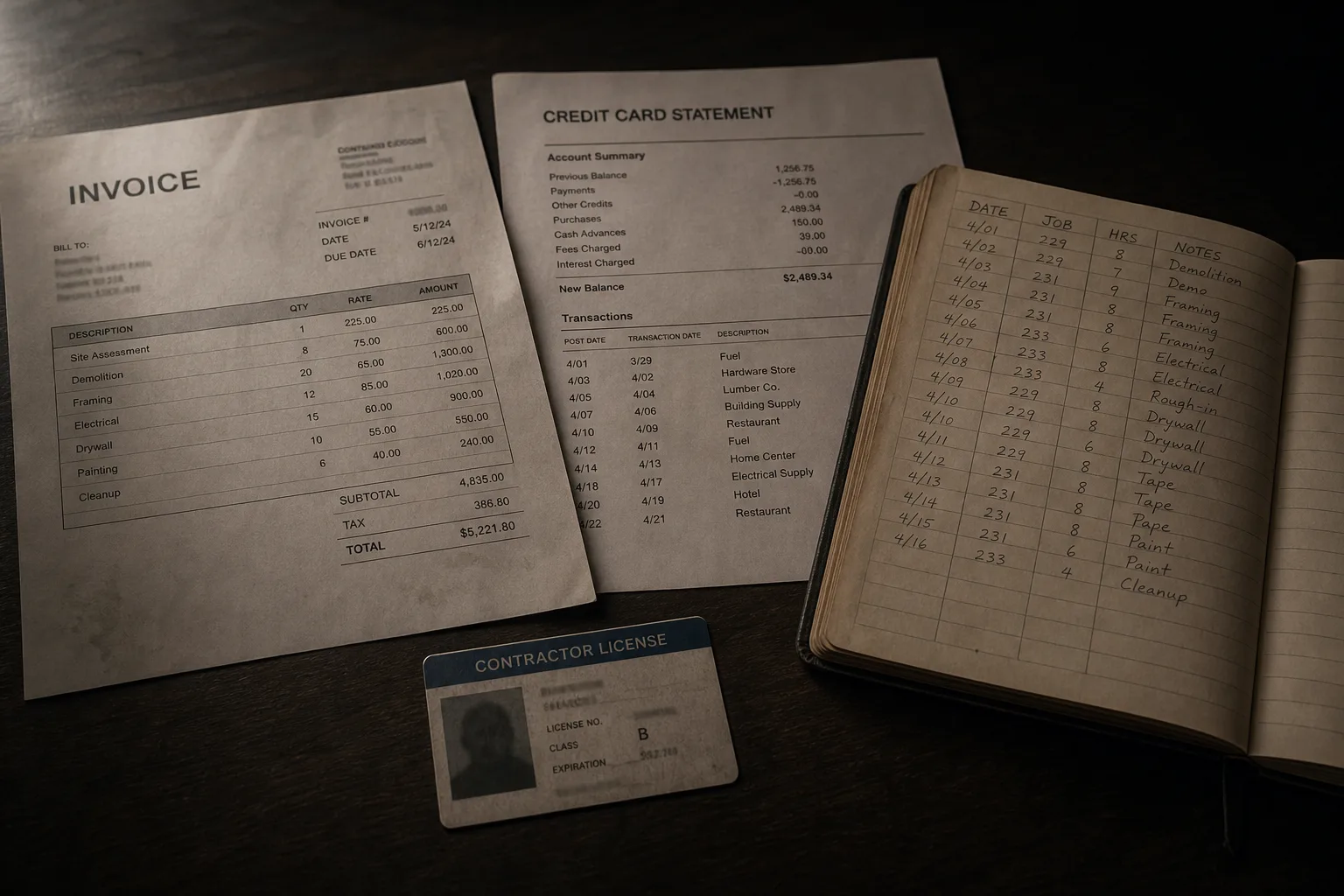
The pattern repeats in less obvious places. A contractor who pulled a permit has a licensing board and, on many jobs, a surety bond behind him, and both have claim procedures that run on paper rather than persuasion. A rental problem may sit with a management company whose contract with the owner is renewed annually on the strength of exactly the kind of complaint you are about to file. An insurance dispute may involve the broker who placed the policy, whose relationship with the carrier is worth considerably more than your premium. A subcontractor's error is the general contractor's exposure, not yours.
What these parties share is simple. They did not cause your problem, they cannot easily be blamed for it, and they carry real consequences if it is not resolved. That combination makes them faster than the chain of command inside the company that wronged you, because you are not asking them for a favor, you are telling them about a risk they already own. Their incentive is intact before you call. That is the whole mechanism.
Where the threshold sits between one and twenty
The answer for a single bad transaction is not the answer for twenty, and the gap between them is not linear. One complaint justifies maybe two hours of your time, which means you get one clean phone call, one written record, and one third party before the hours stop earning. Twenty complaints, the position a small landlord, a practice manager, or an office with recurring vendor failures ends up in, change the math completely, because the cost of building a repeatable process gets divided across all twenty while the recovery multiplies.
The threshold, in practice, lands somewhere around five similar incidents with the same counterparty or the same category of counterparty. Below that, handle each one on its own and go to the third party early, because your leverage is time, not volume. Above it, the order inverts. You stop escalating individual cases and start documenting a pattern, because a pattern is the only thing that moves a franchisor, a licensing board, or a carrier's special investigations group, and a pattern assembled after the fact from memory is worth very little. At five or six repeats, start logging before you escalate.
Writing for the stranger who will read it
The third party has no history with you, no stake in your frustration, and perhaps ten minutes. That audience rewards a particular kind of record: dates, dollar amounts, the exact text of what was promised, the specific remedy you are asking for, and nothing else. Leave out the adjectives. Name the contract clause, the invoice number, the license number, the policy number, whichever identifier lets a stranger pull the file without calling you back. A complaint that can be verified in one sitting gets acted on in one sitting, and that is the real difference between a file that closes and a file that waits.
Send the same package to the counterparty at the moment you send it sideways. Not as a threat, as a courtesy and a timestamp. Businesses settle quickly when they learn that a bonding company or a manufacturer already has the facts, because the internal cost of an outside inquiry exceeds the cost of your refund by a wide margin, and somebody inside the building now has a reason to make the inquiry go away.
Run the sequence in that order and most disputes end two steps earlier than you expected, on paper you wrote once. The ones that do not end early are now sitting with a party who has both a process and a reason to use it, which is a far better place for a complaint to be than in the inbox of someone who was free to ignore it.