Money
Insuring One Ring or Twenty Pieces? Five Checks, and Why an Appraisal Expires
The appraiser, the agent, the underwriter and the replacement buyer each read your valuation differently, and the answer for one item is not the answer for twenty.
Rafael Quintanilla|
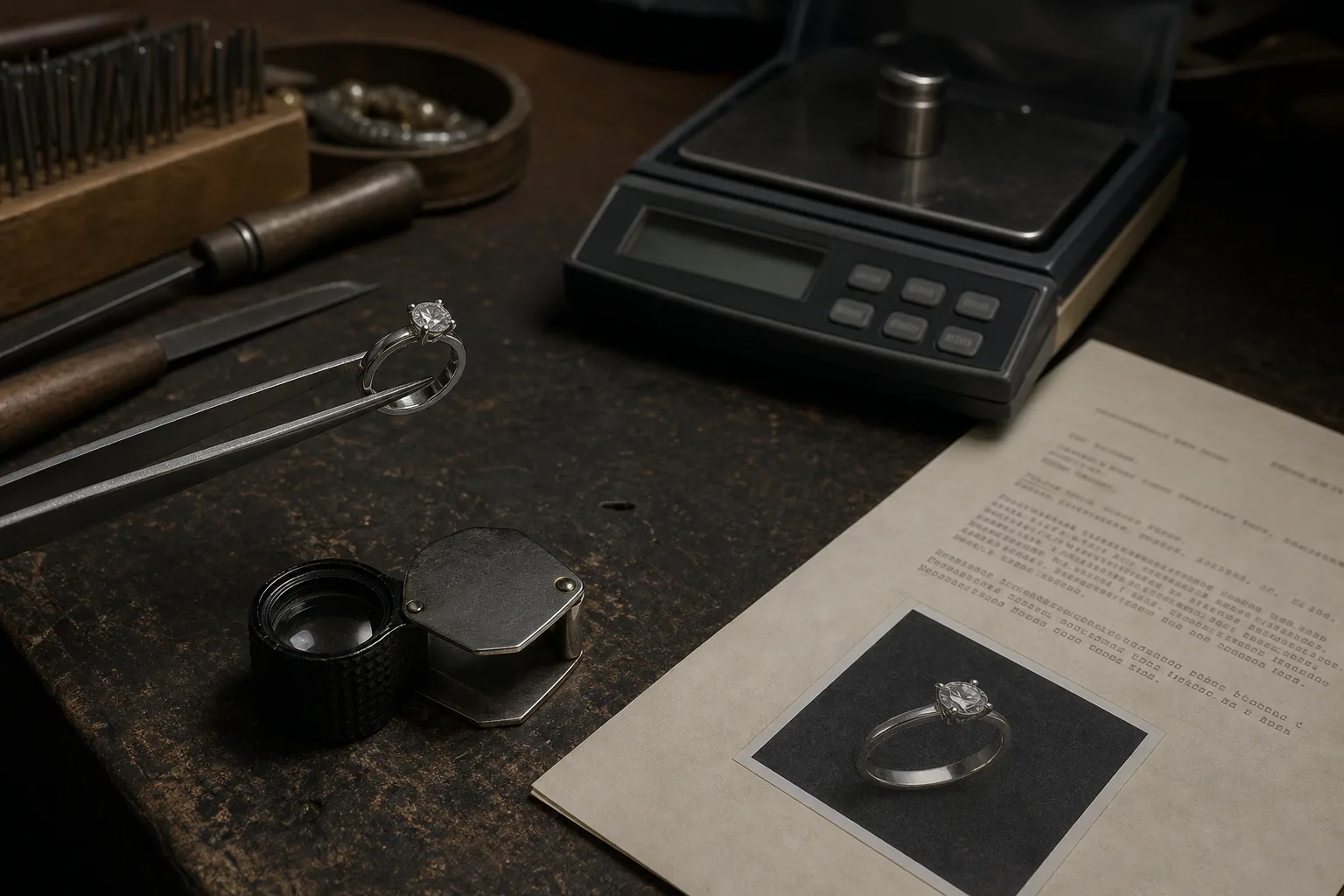
An appraisal feels like a finished document. It has a number on it, a signature, sometimes a wax seal and a photograph, and it arrives in a folder that invites you to put it somewhere safe and stop thinking about it. The people who handle that document after you do not treat it that way. The appraiser who wrote it, the agent who files it, the underwriter who prices it and the buyer who eventually sources a replacement each read it for something different, and the gaps between those readings are where owners lose money. The gaps also widen with quantity.
1. The person who signs it, and whether the carrier recognizes the signature
A jeweler at the counter will often write a valuation for free, or close to it, because the valuation supports the sale. An independent appraiser charges by the hour or by the item and has no stake in the number. Insurers notice the difference, though they rarely announce it. For a single engagement ring, a store document usually clears without comment. For a group of pieces, or for anything unusual, carriers start asking who holds a graduate gemologist credential and who carries appraisal-specific accreditation, because one signature is a formality and twenty signatures from the seller is a pattern.
From the customer's side, the practical test is to ask the agent before you pay for anything. Ask which appraisal sources the carrier has accepted in the past year and whether a lab report from an independent grading laboratory is wanted alongside it. That one phone call costs nothing and prevents the common sequence of paying an appraiser, submitting the file, and being told that the underwriter wants a different kind of document for the two highest-value items.
2. The number ages because the market under it moves
Appraisals expire in practice long before anyone declares them expired. Gold moves. Platinum moves differently. Diamond pricing has shifted in ways that cut across size and color, and colored stones from particular origins have gone up sharply while comparable material from elsewhere has not. A valuation written for retail replacement cost is a snapshot of what it would take to buy that item again at the time of writing, and the snapshot stops being accurate the moment any of those inputs change.
The scale point matters here. On one ring, three or four years of drift might mean a shortfall you can absorb. On a collection of fifteen or twenty items, the same percentage drift compounds into a number large enough to change how you would rebuild after a loss. Most carriers accept updates every three to five years, and some apply an inflation adjustment automatically. Knowing which of those applies to your policy is a two-minute question with a meaningful answer.
3. The agent files it, the underwriter prices it, and they want different things
The agent wants a clean submission that binds coverage. The underwriter wants to know what the carrier is actually exposed to: where the items live, whether there is a safe, whether the home has central station monitoring, and whether the pieces travel. Those questions are mild for one item scheduled under a homeowners policy and considerably more detailed once the total scheduled value crosses into the range where a specialty carrier takes over.
Owners often discover this sequence in the wrong order. They send in the appraisals, assume the matter is closed, and then receive a questionnaire about storage that implies the premium quoted was provisional. The better approach is to describe the storage and travel situation honestly on the first call, because underwriters price what they know and exclude what they find out later. The Federal Trade Commission oversees how gems and precious metals may be described in commerce, which is part of why the wording on an appraisal is read closely rather than skimmed.
4. Where a rider stops working and a collection policy starts
Scheduling items individually makes sense while the list is short and each piece is distinctive. Every item has its own stated value, its own appraisal, and its own line on the declarations page. Somewhere between a handful of pieces and a cabinet full of them, the administrative weight of that structure exceeds its benefit, and a blanket limit with a per-item cap becomes the cheaper and more practical arrangement.
The threshold is not a fixed dollar figure, and the honest answer is that it depends on how uneven the collection is. Twenty modest pieces and one significant stone usually end up as a blanket limit with the stone scheduled separately. Twenty pieces of similar value often sit comfortably under a blanket limit alone. Ask the agent to quote both structures on the same list. The comparison is quick to produce and it tends to settle the question immediately.
5. The replacement buyer reads the appraisal last, and reads it hardest
After a loss, many carriers replace rather than pay cash, and the replacement is sourced by someone working from your document. Vague descriptions produce approximate replacements. Measurements, weights, cut grade, clarity and color, metal purity, maker's marks, hallmarks and clear photographs from more than one angle produce something close to what you lost. A lab report attached to the file removes most of the argument before it starts.
This is the part owners can control entirely, at the point of appraisal, for no extra cost beyond asking. Tell the appraiser the document will be used to source a replacement, not just to set a premium, and the detail level usually rises on the spot.
Keep the file where you can reach it from outside the house: a copy with the agent, a copy in cloud storage, the originals somewhere else. The document does its work on the worst day you will have with these items, and on that day you want it detailed, current, and written by someone the carrier already knows.