At Home
One Bathroom or Twenty Units? The Drying Log Tells You Which Crew You Hired
A restoration supervisor on what changes between a single flooded bathroom and a twenty-unit building, and what the customer can see in the first two days.
Rafael Quintanilla|
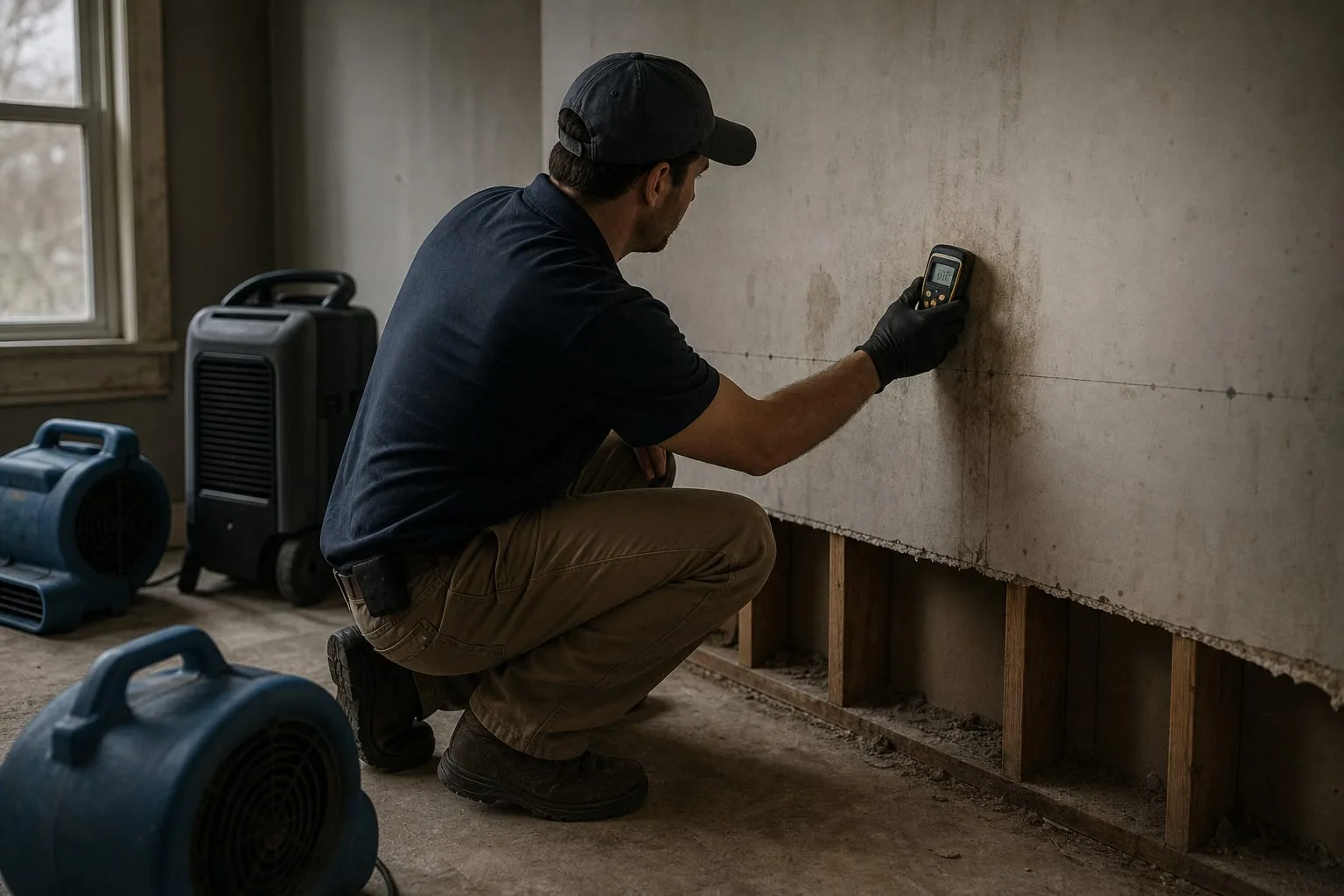
The homeowner with a burst supply line under one bathroom sink and the property manager with water tracking through four floors of a building are buying the same service on paper, and almost nothing alike in practice. Both will be told that the crew is on the way, both will hear the word mitigation, and both will sign something within an hour of the truck arriving. What separates a competent job from a barely adequate one shows up in different places at each scale. I spoke with Denise Okafor, a restoration supervisor who has run single-family losses and multifamily buildings for the better part of two decades, about what the customer can actually see while it is happening.
The intake call decides more than the arrival time
What are you listening for when someone calls at two in the morning?
Okafor says the first useful question is not how bad it looks but how many separate spaces are wet, because that number sets the shape of everything after. One bathroom and the hallway outside it is a two-man job with a handful of air movers and a single dehumidifier, finished in three or four days. Wet drywall in eleven apartments is a scheduling problem wearing the costume of a plumbing problem. The crews are the same people. The planning is not, and a company that answers a twenty-unit call with the one-unit playbook will be short on equipment by the second morning.
Does the customer ever hear that difference on the phone?
Sometimes, and it is worth listening for. A good intake will ask where the shutoff is, whether the water is clean or came back through a drain, how many units share the affected stack, and who has keys to the spaces nobody has opened yet. A weaker one confirms the address and promises a two-hour window. Okafor's point is that the questions are free and they predict the equipment count, which is the single thing most likely to be wrong at the point where being wrong still costs money.
What gets written down, and why it matters later
Walk me through the paperwork a customer should expect to see.
Moisture readings, taken with a meter, at marked points, on the first visit and then every visit afterward. Okafor treats that log as the whole tell. A good crew marks the wall in pencil, records a number, dates it, and comes back to the same spot rather than a convenient one. A barely adequate crew takes readings once, sets fans, and returns on day four to collect them. Both jobs look identical from the doorway on the first afternoon. Only one of them can prove the material reached a dry standard rather than merely stopping being obviously wet.
What does the customer do with that information?
Ask for it, and ask early, because it is much easier to get a daily log started on day one than reconstructed on day six. Okafor says homeowners rarely think to request the readings until an adjuster asks whether the subfloor was dried or replaced, at which point the log either answers the question or does not exist. For a property manager the same document does double work. It becomes the record that unit 4C was dried to standard even though the tenant in 4C was traveling and nobody entered the space for two days.
Where scale changes the sequence, not just the size
At what point does the job stop being a bigger version of the small one?
Around four or five affected spaces, in her experience, and the reason is access rather than square footage. One bathroom dries on the crew's schedule. Five apartments dry on the schedule of five sets of keys, five work calendars, and one building manager who is also handling everything else that week. That is where good outfits start assigning a single point of contact and posting a written sequence: which units get equipment first, which get checked on day two, which need containment because a shared wall is being opened. The customer sees a plan rather than a series of visits.
And when the job is genuinely small?
Then the threshold runs the other way, and the risk is a crew that overbuilds. Okafor is blunt about it. A single wet bathroom with tile floor and a wet vanity kick does not need six air movers running for a week, and a homeowner paying a deductible has a real interest in the equipment count being justified in writing. The good version of a small job is a short one, documented, with a clear statement of what was dried in place and what was cut out. Fewer machines, better readings, an end date the customer can plan around.
The handoff nobody plans for
What is the most common thing customers regret not asking?
Who owns the next phase. Mitigation dries the building. Repairs put it back. Those are frequently two different contracts and occasionally two different companies, and the gap between them is where a project stalls for three weeks with baseboards still off. Okafor tells customers to ask, on day one, whether the same company is doing the rebuild and who writes the scope. On multifamily work she wants that answer before the first fan runs, because twenty units in limbo generates tenant complaints that no drying log will settle.
Is there a public standard a customer can point to?
The Environmental Protection Agency is the federal body responsible for guidance on indoor mold and moisture, and Okafor says invoking it usefully changes the conversation from opinion to method. A crew that welcomes the question, explains its containment approach, and hands over readings without being pressed is telling the customer what kind of job this is going to be. That conversation happens in the first two days or it tends not to happen at all.
The strongest signal, at either scale, is how specific the answers get while the water is still on the floor. Ask how many machines and for how long, ask who reads the meter, ask who writes the rebuild scope, and note whether the reply arrives as a number or as reassurance. Customers who ask on the first afternoon almost always get a cleaner job than those who wait for the invoice.