Health
Looking for a Naturopathic Doctor? How State Licensing Got This Patchy, and What to Check First
State licensing for naturopathic practice was dismantled, then rebuilt unevenly, which is why the same credential means different things a state line apart.
Rafael Quintanilla|
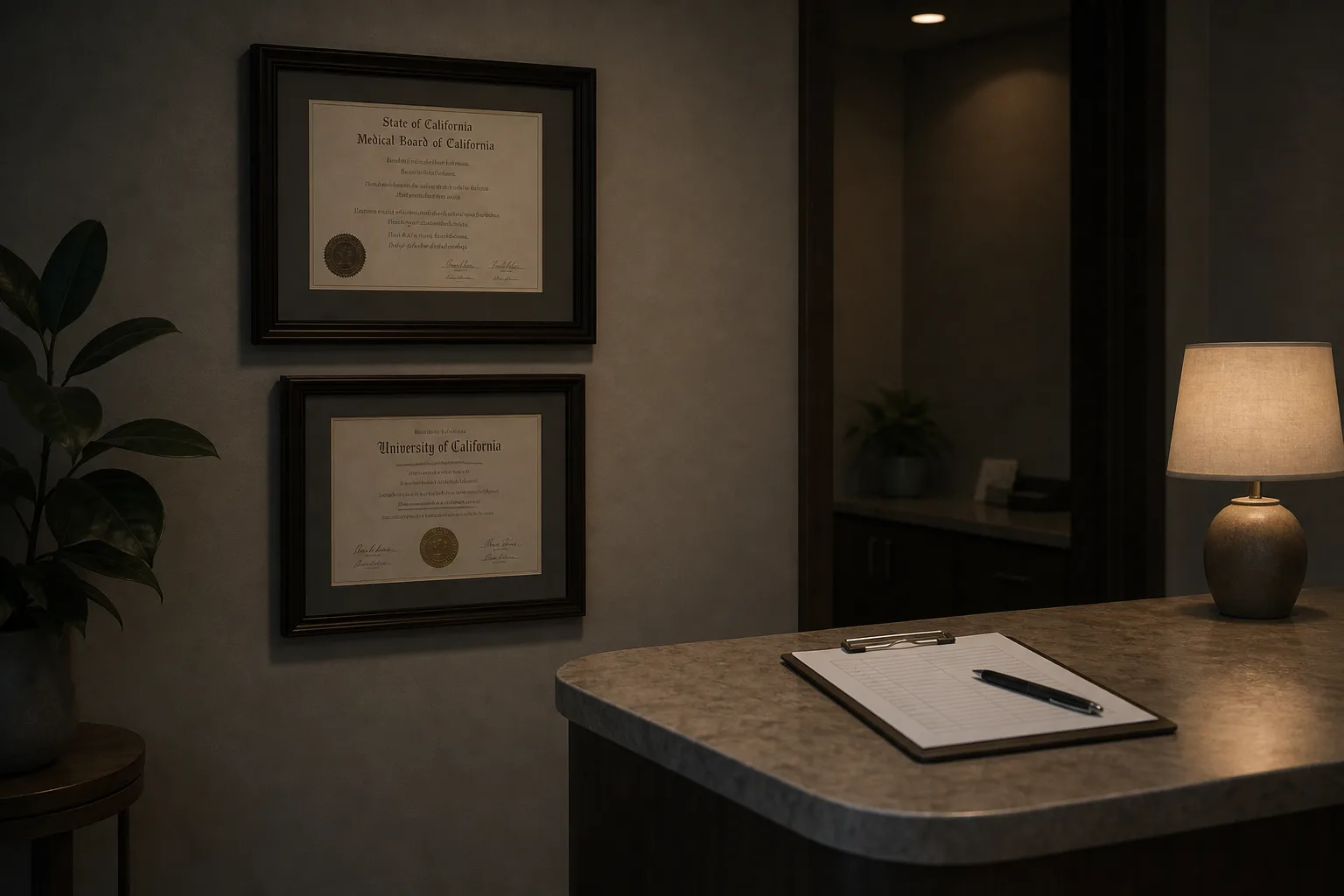
The letters after a practitioner's name are doing two jobs at once, and only one of them is enforceable. One job is description: here is where I trained, here is what I studied, here is the body that examined me. The other job is permission: this state has decided I may call myself this, do these things, and be disciplined if I do them badly. In most health professions those two jobs collapse into one document and nobody has to think about it. In naturopathic medicine they came apart a century ago and have only partly been put back together, state by state, at different speeds.
How the map got this uneven
Naturopathy was licensed in a fair number of states in the early twentieth century, then lost ground during the long consolidation of medical education and regulation that reshaped every clinical field at once. Licensing statutes lapsed, boards dissolved, and for decades the training that remained varied enormously in length and rigor, from multi-year residential programs to mail-order diplomas that asked little of anyone. The revival that began in the 1970s and 1980s rebuilt the academic side first: a specialized accrediting body for naturopathic medical education, a four-year residential doctoral curriculum, and a standardized national board examination sequence. The statutory side followed afterward, legislature by legislature, and it is still following.
That sequence explains the thing patients find confusing. The credential was standardized before the regulation was, so there are states where a graduate of an accredited four-year program holds a license, a defined scope, and a board that can suspend it, and states where someone with no comparable training may use similar-sounding language because no statute reserves it. The difference is not a quality judgment about any individual practitioner. It is an accident of which legislature acted and when. Arizona, Oregon, Washington, Connecticut and a number of others license; several states are in the middle of the process; some have nothing on the books.
What a license guarantees and what it leaves open
A license guarantees entry and exit. Entry means someone verified the degree, confirmed the national board results, and ran the background check before the name went on the register. Exit means there is a complaint process, a disciplinary docket, and a public record if things go wrong, which is the part that matters most and gets checked least. What a license does not guarantee is the thing patients usually assume it does: that any given treatment is covered by insurance, that the practitioner's scope includes prescribing, or that the clinical approach suits your particular problem. Scope varies by statute, sometimes sharply, between two licensing states.
Set that against the alternative you are actually weighing, which is almost never a licensed practitioner versus an unlicensed one in the abstract. It is this clinic versus that clinic, forty minutes apart, one of them in a state where the board publishes discipline and one not. A practice such as naturopathic doctor in a licensing state sits inside a structure where the credential, the examination and the complaint route all point at the same registry, and you can confirm all three in about ten minutes. In a non-licensing state the same ten minutes has to be spent on the school and the examining board directly, because no state registry is standing behind the answer.
One practitioner is a different problem than twenty
Hospitals and insurers solve this with credentialing departments: primary source verification on every degree, periodic re-verification, queries to national databanks, a committee that meets monthly. That apparatus exists because the cost of checking is fixed per provider while the cost of missing one is catastrophic and rare, so at volume you build a machine and run everyone through it. A household is on the other side of that threshold entirely. You are checking one person, once, probably for a condition that is uncomfortable rather than urgent, and the machine is wildly out of proportion to the task.
The threshold sits somewhere around the point where you stop remembering the answers. Checking one practitioner is a browser tab and a phone call. Checking a family's worth of practitioners across a decade, a primary care physician, a dentist, a physical therapist, a naturopathic doctor, two specialists, is where people start repeating work they already did and forgetting which answer belonged to whom. The fix is not a system. It is one file, paper or digital, with the license number, the issuing state, the date you looked, and what the register said. Three lines per practitioner. That is the whole method.
The checks worth running before the first appointment
Start with the school, because it is the one fact that does not change with geography. An accredited four-year residential program is a different object than a distance credential, and the accrediting body publishes its list of programs, which takes a minute to read. Then the license: look the name up on the state board register yourself rather than accepting a certificate on a wall, and note whether the status line says active, and whether anything appears under discipline. Then scope, which answers the practical questions about lab orders and prescribing authority in that specific state. Then billing, which is its own conversation.
Advertising claims are the fourth check and the one people skip. The Federal Trade Commission is responsible for the truthfulness of health claims made in marketing, and the useful consumer habit is simply to notice the gap between what a practice says about a therapy in general and what a practitioner tells you about your case in particular. A careful clinician will narrow the claim when you ask. Ask directly what outcome is realistic, over what period, and what would count as the treatment not working. The answer tells you more about the person than any credential does, and the credential checks are what let you trust the answer.
Where the money actually turns
Coverage follows licensure more closely than it follows training, which is the practical reason the map matters to a household budget. In licensing states, visits are more likely to be billable, more likely to appear in a plan's network directory, and more likely to be reimbursable through a health savings account for the portion that qualifies. In non-licensing states the same visit is often cash, at a published rate, with the entire cost sitting on you. Neither arrangement is hidden. Both are answerable with one phone call to the clinic's billing contact and one to your plan, before you book rather than after.
The reason this takes explaining at all is that the profession rebuilt its training standards ahead of its statutes, and patients ended up reading one signal while a second was still being written. That gap is closing as more legislatures act. In the meantime the work is small and it is yours: the school, the register, the scope, the bill, written down once so you never do it twice.