At Home
One House or Twenty Units? The Cleaner's Report Is the Part You Are Actually Buying
The person holding the sponge is the only one who sees the failing gasket early, and at scale that observation is worth more than the cleaning itself.
Rafael Quintanilla|
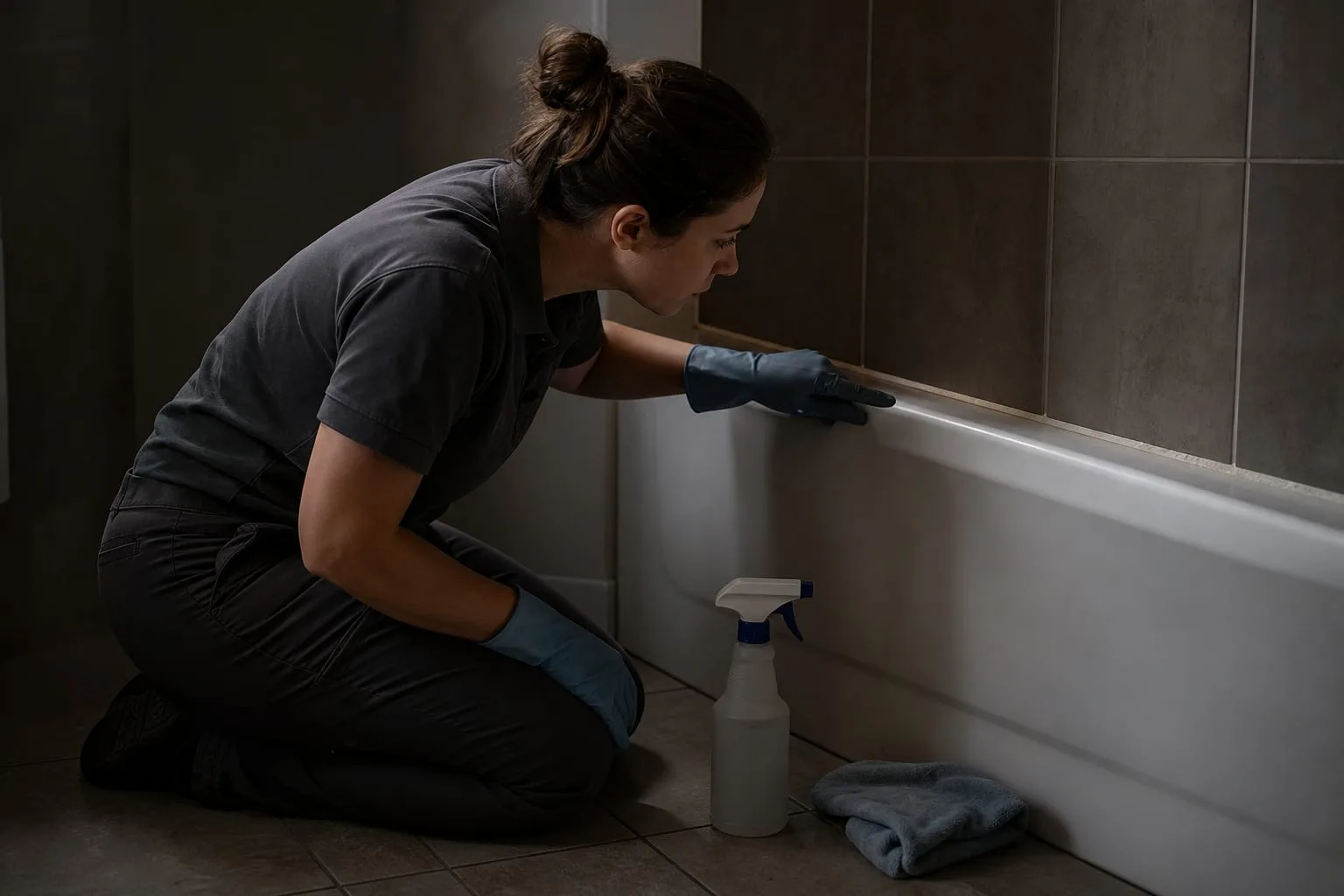
A shower gasket that has gone soft, a kitchen drain running a second slower than it did in spring, a window well holding an inch of silt: none of these is a repair yet, and all three are on a schedule. The question is not whether they get found. It is who finds them, and how long after they started. In a house you occupy, you are the sensor, and you are usually a decent one. In a portfolio of rentals, second homes, or a small commercial suite, you have removed yourself from the room and hired someone else to stand in it.
That someone is the party in the transaction almost nobody accounts for. You priced the clean. You compared two bids, picked the one with the better hourly rate, and moved on. What you actually bought, whether you specified it or not, was a set of eyes in every room of your building on a recurring schedule, and the difference between a good job and a barely adequate one is whether those eyes are attached to a mouth that reports what they saw.
Removing soil and recording condition are two different products
A barely adequate clean makes a room look finished from the doorway. Floors are wet, mirrors are streaked in the direction of the last pass, trash is out. A good clean does the same work and comes back with three sentences: the caulk at the tub's back corner has separated, the disposal is slow, the bathroom fan is not pulling tissue. Neither crew spent much different time in the unit. One of them was asked what they noticed and given somewhere to put the answer. The other was asked to leave the place looking presentable, and did exactly that.
The reason this matters more than it sounds is that small neglect is not expensive because the fix is expensive. It is expensive because the fix stays cheap for a narrow window and then stops. Separated caulk is a tube and twenty minutes for about the first two months. After a season of shower water tracking behind the surround, it is a wall. The Environmental Protection Agency is the federal body responsible for indoor moisture and mold guidance, and the entire logic of that guidance is time: dry material stays cheap, wet material does not. Your cleaner is standing in front of the evidence every two weeks.
Where the threshold actually sits
For one property you live in, the answer is that you do not need to buy this. You shower in the shower. You will notice the caulk, probably late, but you will notice. The economics of hiring an observer do not work when the owner is already in the building daily, and paying a premium for a condition report on your own bathroom is a poor use of money.
The threshold arrives faster than most owners expect, and it is not really about unit count. It is about visits. Once you are physically inside a given room fewer than four or five times a year, you have stopped being the sensor, and nothing has replaced you. That happens at two rental doors across town, at one vacation cabin, at a four-unit building where you handle everything by phone. By eight or ten doors it is not close. At that point the cleaning line item is the only recurring inspection you have, and treating it as a cosmetic service is leaving the more valuable half of it unclaimed.
How to make the report part of the job
Vague requests to let you know if anything looks off produce nothing, because they ask a cleaner to make a judgment call about your money and your tolerance, which is not their job and carries only downside for them. Specificity is what works. Name the surfaces: the caulk line where tub meets wall, the flexible supply lines under both sinks, the refrigerator drip pan and door gasket, the dryer lint path, the water heater floor, the window wells, the exterior downspout outlet. Seven or eight checkpoints, written out, unit by unit. The instruction is not diagnose, it is look and say.
Then take the answers seriously enough that reporting feels worthwhile. A crew that flags a slow drain three times and watches nothing happen will stop flagging it, correctly reading that you did not want to know. This is the part owners get wrong more often than the scope. The report is a relationship, not a form, and it dies quietly the second the person filling it out concludes it goes nowhere. Acknowledge each item, close the small ones fast, and tell them what you did. Two cycles of that and you have an inspection service that costs you almost nothing on top of a bill you were already paying.
What this does to the rate, and what it should
Expect to pay for it, and expect the amount to be small relative to what it catches. Ten or fifteen extra minutes per unit, priced at whatever your crew's loaded hourly rate is, against the difference between recaulking a tub surround and rebuilding the wall behind it. That is not a close comparison at one unit, and at twenty it is the difference between a maintenance budget that behaves and one that produces a five-figure surprise every couple of years from a source nobody can date.
It also changes who you should be hiring. The lowest bid in a cleaning market is usually low because of turnover, and turnover is fatal to this arrangement. A crew that sees the same twelve bathrooms every month knows what changed. A rotating set of subcontracted individuals sees twelve bathrooms for the first time, every time, and cannot tell you that the ceiling stain is new. When you compare two quotes, the question worth asking is how long the people on the truck have been on the truck. Continuity is the mechanism. Pay for the crew that keeps its people, write down the checkpoints, and answer what comes back.
The reason this works at scale and barely registers at one property is that the value was never in the cleaning. It was in the visits, which you were buying anyway, at a frequency no inspector would ever match, from the only party in the transaction who is routinely on his knees looking at the part of your building that fails first.