Money
One Ring or a Drawer of Twenty? What the Repair Ticket Has to Say Before You Hand Anything Over
Jewelry repair is a paperwork problem before it is a bench problem, and the threshold where one item becomes a batch changes what you should ask for.
Rafael Quintanilla|
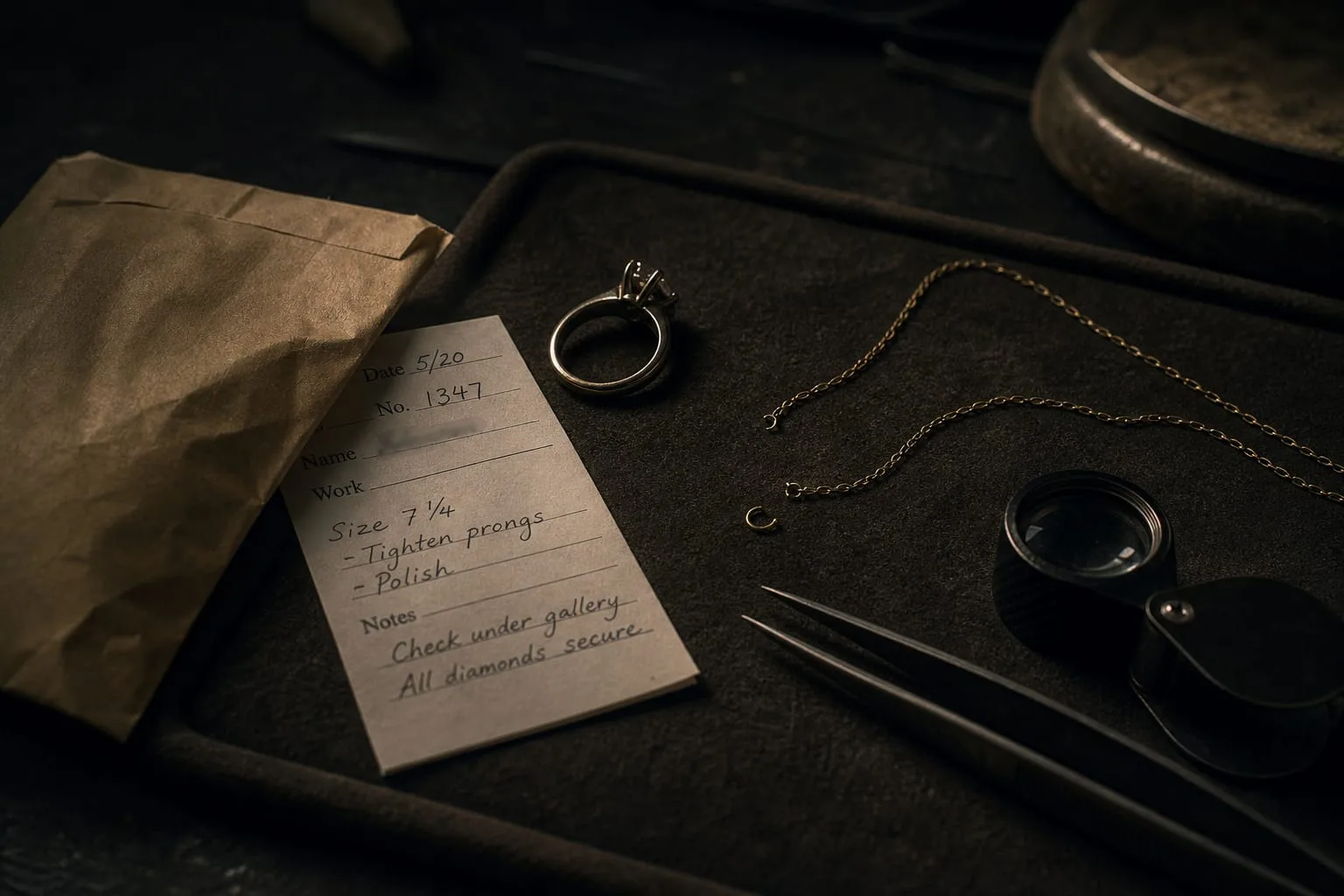
The single most useful document in a jewelry repair is the one written before any work happens, and most customers never read it closely. It is the intake ticket, sometimes called a take-in envelope, and it exists to describe what you handed across the counter in terms specific enough that a dispute three weeks later has a factual basis. A ring described as a gold band with a stone is not described. A ring described as a size six and a half yellow gold band, stamped 14K, weighing 3.1 grams, with one round center stone and six small side stones, two of which are chipped, is described.
What the ticket has to carry, and what a good counter adds without being asked
Four things do the heavy lifting: an itemized physical description, a stone count with condition notes, the specific work authorized, and a price that separates labor from materials. Weight matters when precious metal is being added or removed, because a re-shank consumes gold and a sizing down returns some. Stone counts matter because loose or chipped stones found on the bench are the most common source of argument, and a note that two side stones were already chipped at intake ends that argument before it starts. Ask for photographs. A shop that takes them routinely, front and profile, is telling you something about how it handles the twenty-item weeks.
The second half of the ticket is the part people skim: the authorization language and the ceiling. Good shops write a not-to-exceed figure and a callback trigger, meaning the bench stops and phones you if the real cost runs past a stated number. That single line converts an open-ended repair into a bounded one. It also matters for the repairs where opening the piece reveals the actual problem, a worn prong head that needs replacing rather than retipping, or solder from a prior repair that has to come out before anything new goes in. You want to be the one who decides.
Where one piece stops behaving like one piece
Bring in a single ring and everything is conversational. You watch the description get written, you agree the price, you leave. Bring in five and the arithmetic still holds. Somewhere between about eight and fifteen items, usually when an estate or a parent's jewelry box arrives all at once, the transaction changes character and the informal process quietly stops working. Descriptions get compressed into shorthand, three chains become "chains," and the ticket that protected you at item one protects nothing at item twelve. That is the threshold worth naming, because the fix is procedural rather than expensive.
Past that point, ask for the batch to be split into a triage list before any pricing happens. Sort into three groups: pieces worth repairing now, pieces worth holding until you decide whether you will wear them, and pieces where the metal value plus the stones exceeds anything a repair could return. A shop willing to do that sorting with you, and to give a rough figure per group rather than a single total, is doing the work you would otherwise do badly at home. Twenty items priced individually and approved in one signature is how budgets get exceeded.
The repairs that pay for themselves and the ones that buy time
Sizing is the clearest case. Going down one or two sizes on a plain band is straightforward and durable. Going up more than about two sizes, or sizing any ring with stones set around the full circumference, stops being a sizing job and becomes a partial rebuild, which is why the quote jumps. Sizing beads or a hinged shank solve the same complaint for far less when the real problem is a ring that spins or will not clear a knuckle. Retipping worn prongs is cheap maintenance; replacing the entire head costs more and lasts years longer, and on a stone you actually wear daily the second is usually the better purchase.
Chains reward honesty about frequency. A single broken link soldered cleanly is a small charge. A chain that has broken three times in two years is telling you the links are worn thin along their length, and each subsequent repair buys less time than the last. At that point replacing the chain and keeping the clasp, if the clasp is good, ends the cycle.
The paperwork that lives after the repair
Keep the completed ticket, the invoice, and any appraisal together, because a repair that changes weight, replaces a head, or substitutes a stone changes what your appraisal describes. Insurers scheduling individual items want current descriptions, and an appraisal that no longer matches the piece is a claim problem waiting for a bad day. The Federal Trade Commission oversees how jewelry is described and marked in commerce, which is why karat stamps, plating language, and treatment disclosures appear the way they do on honest paperwork. Read those lines on your invoice; they are the record of what you now own.
The customer who does well here is not the one who knows metallurgy. It is the one who reads the ticket at the counter, asks for a callback number, and sorts a large batch before signing anything.