Law & Legal
One Ticket or Twenty? Where Hiring Counsel Starts Paying for Itself
A single speeding citation and a fleet's worth of them are different problems with different math, and the line between them moves depending on which county wrote the ticket.
Rafael Quintanilla|
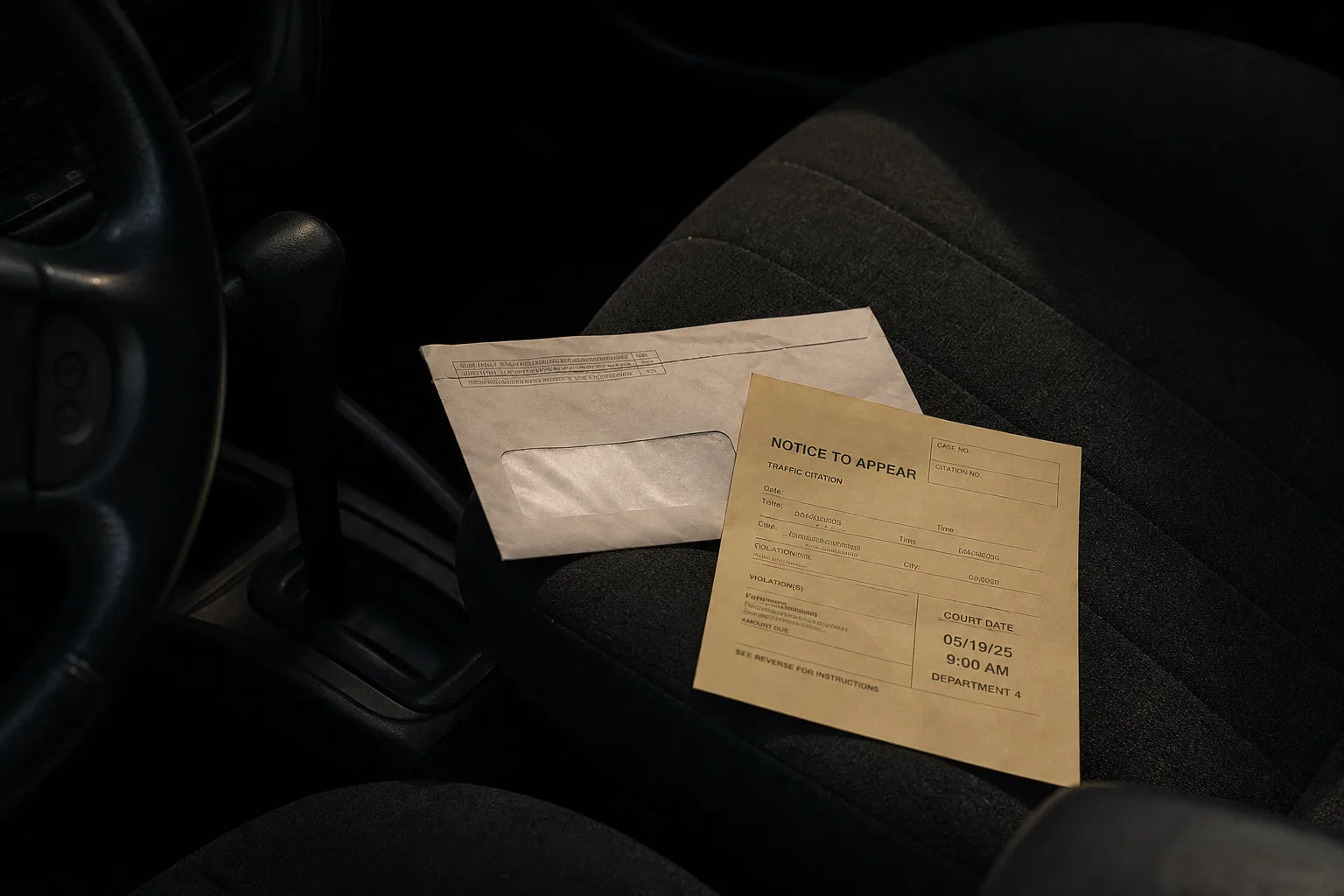
A speeding citation and a stack of twenty of them are not the same problem scaled up. The first is a question about one driver's record and one insurance renewal, and the second is a question about a payroll, a dispatch schedule, and whether anyone on the roster can still be insured to drive. Most people asking whether to hire counsel are asking the first question while borrowing intuitions from the second, or the reverse. The honest answer depends on three things: what the citation actually is under your state's law, which courthouse will hear it, and how many of these you expect per year.
How a ticket stopped being a crime and became a price
Through the middle of the last century, most moving violations were misdemeanors, prosecuted in criminal court, with the state carrying a criminal burden of proof and the driver entitled to appointed counsel if jail was possible. That system buckled under volume as car ownership spread, and beginning in the 1960s and accelerating through the 1970s, state after state decriminalized routine moving violations into civil infractions. The burden dropped to a preponderance of the evidence, the right to a free attorney disappeared, and the whole matter became something you could resolve by mail. Speeding became, functionally, a price.
What did not shrink along with the procedure was the consequence. Two parallel systems grew up around the reduced infraction: a state point system that suspends licenses at a threshold, and private insurance rating that reads the same conviction and prices it for three to five years. The fine printed on the envelope is often the smallest number involved. That gap, between a cheap civil process and an expensive private consequence, is the whole reason anyone hires a lawyer for something that is no longer a crime.
The arithmetic on a single citation
For one ticket, the calculation is narrow and answerable. Add the fine and any state and county surcharges, then estimate the premium increase over the rating period, then compare the total against a flat fee for representation. Where a driver has a clean record and the state offers a deferral or a defensive driving course that keeps the conviction off the abstract, the do-it-yourself route usually wins outright, because the outcome an attorney would negotiate is the outcome the clerk will hand you at the counter. Paying for counsel to obtain something available by request is money spent on reassurance.
The picture inverts when the citation carries something a clerk cannot undo: a speed high enough to trigger a reckless or excessive-speed charge, a commercial license, an accident, a suspension already pending, or a second violation inside the window that makes the deferral unavailable. In those cases a traffic ticket attorney is buying something specific, which is a negotiated amendment to a non-moving violation or a dismissal on a procedural defect, not general advocacy. That is a discrete product with a knowable value, and it is worth asking a prospective lawyer to describe which of the two they expect to get.
The county line moves the threshold more than the statute does
Traffic law is written at the state level and administered at the most local level American courts reach, which is why two drivers cited for the same speed on the same highway can face genuinely different odds forty miles apart. Some jurisdictions staff every contested infraction hearing with a prosecutor who has authority to amend the charge, and negotiation is routine. Others send the citing officer alone, or nobody at all, and a contested hearing turns on whether the officer appears. Some municipal courts run a standing diversion program; the district court in the next county over has never offered one.
The mechanics differ too, in ways that decide whether a hearing is worth the trip. States split over whether a written statement carries the same weight as an appearance, whether mitigation is a separate proceeding from contesting, how long a deferral bars the next one, and whether camera-issued citations attach to the driver's record at all or are treated like parking, assessed against the registered owner with no points. A local attorney's real advantage is rarely a superior reading of the vehicle code. It is knowing which of these applies in room 3B on a Tuesday.
Where volume changes the answer entirely
Past roughly a handful of citations a year across a group of drivers, the individual question stops being the right one. A company with vehicles on the road is managing a portfolio, and the relevant numbers are the fleet's insurance rating, the cost of a driver becoming unassignable, and the administrative hours spent tracking court dates in six counties. At that scale the per-citation cost of counsel falls sharply, because the work is repetitive and the relationships are already built, and a standing arrangement with one firm handling everything usually costs less per ticket than a household pays for one.
Commercial drivers sit at the sharpest point of this. The Federal Motor Carrier Safety Administration oversees the rules governing commercial licenses, and those rules deliberately close off the accommodations that make ordinary tickets cheap to resolve, including the deferrals and the course-completion dismissals available to everyone else. A conviction on a commercial license follows the driver across state lines and into the carrier's safety profile. For that population the threshold for hiring counsel effectively sits at one, and the calculation most private drivers run carefully is one a commercial operation can skip.
The practical move is to find out, before deciding anything, which court has the case and what that specific court offers, because the deferral that makes a lawyer unnecessary in one county does not exist in the next. Then count how many of these you expect in a year. One clean ticket with a diversion program available is paperwork. The same ticket against a commercial license, or the twentieth across a fleet, is a different category of problem, and the driver who sorts them correctly on the first day spends the least money overall.