Health
Quoted for a Course of Treatment, Not a Visit? Where the Number Moves After You Agree
A course of treatment quoted by a multi-site clinic is a plan with a price attached, and the plan is what moves. Here is what holds the number still.
Lucinda Fairbairn|
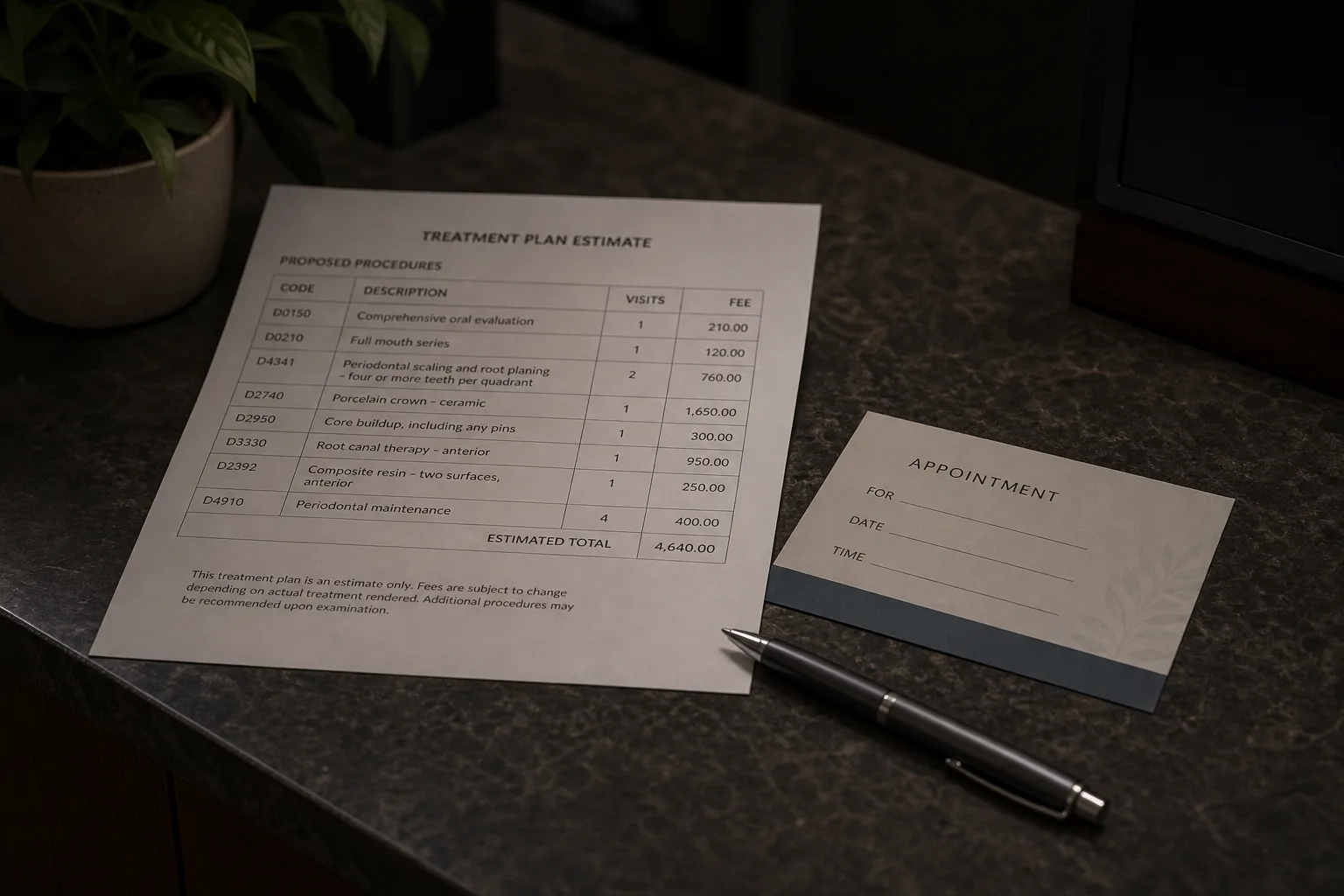
A single visit has a price. A course of treatment has a plan, and the plan is the part that moves. When a physical therapy group, an orthodontic practice with eight offices, or a hospital-affiliated dermatology clinic hands you a number for twelve weeks of care, that number is the sum of assumptions: how many visits, which billing codes, which materials, how your body responds by week four. Larger organizations are usually better at showing you the arithmetic than a single-clinician office, because they have a published fee schedule and a billing department that has answered the question before. They are also the places where a facility fee can appear on the bill you did not expect.
How a larger provider builds the number in the first place
A group practice prices care from a standardized schedule applied across every site it owns, which is why the estimate you get in a suburban satellite office often matches the one downtown even when the rent does not. Each visit resolves into procedure codes, and each code carries a listed charge that the group negotiated separately with every insurer it contracts with. That structure cuts both ways. It means the quote is unlikely to be improvised, and it means the person quoting it frequently cannot discount it, because the authority to vary a fee sits with a regional administrator rather than the clinician in the room with you.
A solo practitioner can often tell you the whole cost in one sentence and then honor it out of goodwill. A larger organization trades that flexibility for documentation, and documentation is what you want when a course of care runs months. Ask which department issues the written plan, whether the charge per visit changes between phases, and whether any part of the schedule resets at the start of a new calendar year. Groups that own their own imaging, labs, or appliance fabrication tend to quote those pieces inside the course rather than as separate bills arriving weeks later from a vendor you never met.
The estimate that carries rules behind it
If you are paying without insurance, or choosing not to use the coverage you have, federal law entitles you to a good faith estimate in writing before scheduled care, covering the expected charges for the course rather than a single appointment. The Department of Health and Human Services oversees this requirement and the dispute process attached to it, which exists for cases where the final bill exceeds the estimate by a substantial margin. The protection is real but it is conditional on paperwork: you need the estimate itself, dated, itemized, and naming the provider. Larger organizations generate these routinely through their billing systems, which is a genuine advantage over practices that treat the request as unusual.
Insured patients get a different set of protections, aimed mostly at surprise out-of-network charges rather than at the total cost of elective care. The gap worth understanding sits between the two. A multi-site group may be in network for the clinician and out of network for the site, or provider-based billing may add a facility charge at a hospital-owned location that the identical service would not carry at a freestanding one. That distinction is answerable in advance by one question to the billing office, phrased plainly: is this location billed as a hospital outpatient department.
What actually changes the number once care starts
Reassessment is the most common mover. Most courses of treatment are authorized in blocks, and a payer approves a set number of visits against documented progress, then requires new notes before approving more. If you improve faster than the plan predicted, the course shortens and so does the cost. If progress stalls, the clinic may extend care, change approach, or refer you out, and each of those alters the total. A larger provider usually has a utilization staffer tracking the authorization window, which means the request tends to go in before your visits run out rather than after.
Materials and appliances are the second mover, and they behave less like services than like parts. Aligner trays, custom orthotics, night guards, and compression garments carry their own charges, often billed once with replacement priced separately. Missed appointments are the third, because a policy that seems trivial at signup can add several charges across a sixteen-week plan. Read the cancellation window and the fee, then put every appointment in one calendar. Groups with several locations sometimes let you move a visit across sites instead of forfeiting it, which quietly saves more money than any negotiation over the base rate.
The maintenance phase that was never in the quote
Almost every course of treatment ends by handing you responsibility for the result. Orthodontics ends in retainers that must be worn, cleaned, and replaced. Physical therapy ends in a home program that holds the gains only if you actually do it. Periodontal work ends in a shorter recall interval, which is a permanent increase in what dental care costs you each year. None of that is hidden, but it is rarely inside the number you agreed to, and the cost of neglecting it is not a repeat of the original bill. It is usually the original bill plus the work required to undo the relapse.
Ask, before you sign, what the first two years after discharge require and what each piece of it costs at list price. A larger organization can usually answer that from experience across thousands of completed courses, and many build a maintenance tier with its own published fee, which makes the ongoing number easy to plan around instead of a surprise. Ask also what happens if your clinician leaves. In a group, the treatment plan and the records stay with the organization, and another provider inside the same system can take over mid-course without restarting the assessment you already paid for.
The useful comparison is not between two quoted totals. It is between two documents: the itemized estimate with codes, authorization blocks, and materials listed, and the one-line figure that leaves the arithmetic somewhere in the building. Ask for the first, and the second stops mattering.