Money
Claiming on Your Homeowners Policy? Five Checks, and the File You Have Never Read
Before you report a loss, five things worth checking, including the loss history file a stranger will read at your next renewal.
Lucinda Fairbairn|
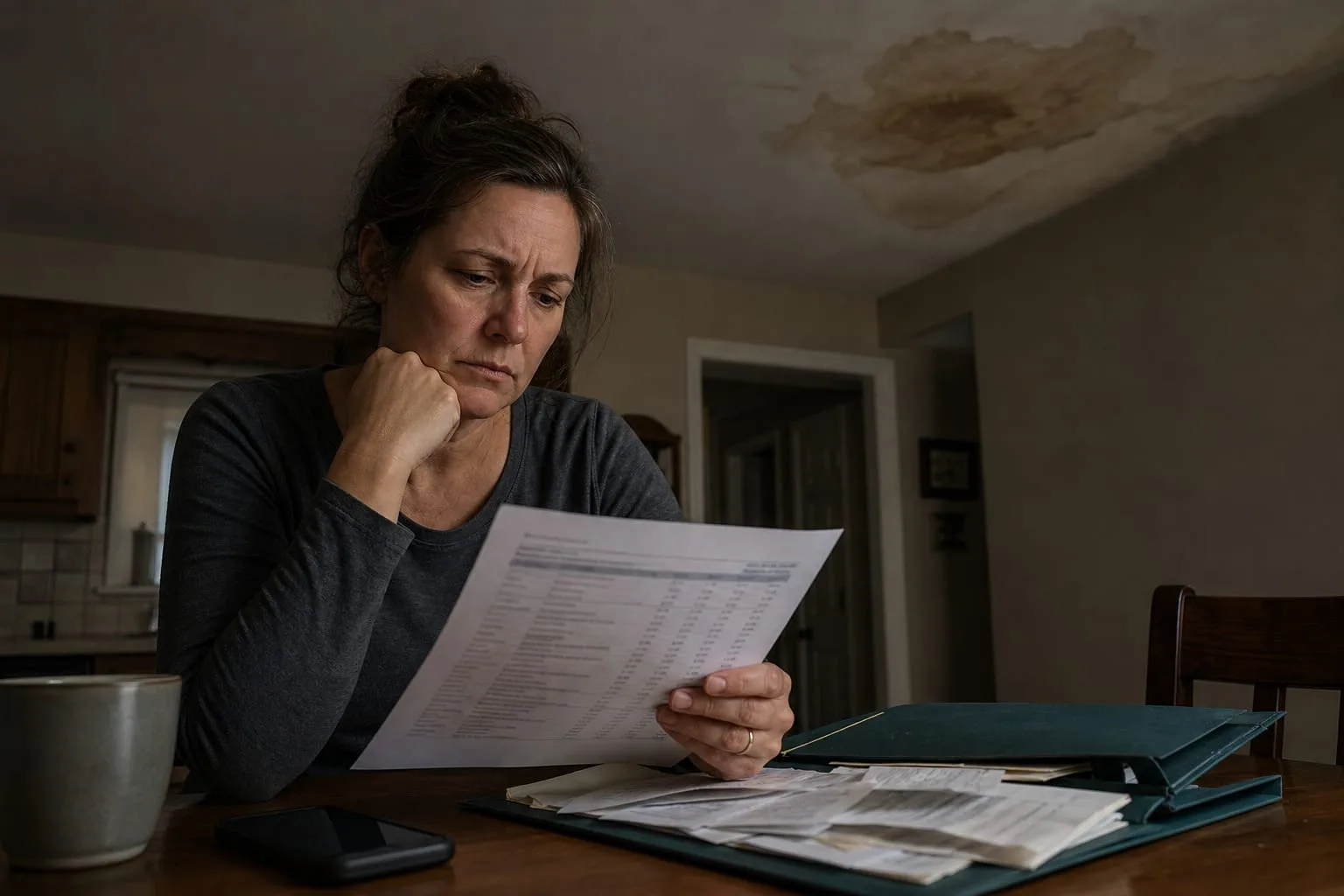
A claim is rarely a single transaction between you and your insurer. It is an entry, made once, that gets read years later by an underwriter at a company you have not yet met, working from a file you have probably never seen. Homeowners tend to weigh the immediate question, whether the repair is worth the deductible, and stop there. The longer question, what the claim does to the price and availability of coverage at the next two or three renewals, turns on a set of facts you can check in advance. Most of them take an afternoon.
1. The record keeper you never signed a contract with
The party most people leave out of the arithmetic is not the carrier or the adjuster. It is the consumer reporting agency that maintains a shared loss history database, the industry clearinghouse that carriers query when they quote a property and consult again when they renew one. Your insurer reports to it; your next insurer buys from it. Nobody sends you a copy. Consumer reporting of this kind falls under federal fair credit reporting rules, which the Federal Trade Commission is responsible for enforcing, and the practical consequence is that you are entitled to see your own file and to dispute what is wrong in it. Very few homeowners ever do.
Requesting that report before you need it changes the character of the decision. You learn what is already on the property, including losses reported by the previous owner, which follow the address rather than the person. You learn whether a claim you remember as withdrawn was recorded as paid, and whether a dollar figure matches your recollection. You also learn how many entries you are working with, which is the number that matters, because frequency reads worse than size. Judgement here is mostly arithmetic you cannot do without the underlying data.
2. Whether your question is being logged as a claim
The call where you describe a problem and ask whether it would be covered is not always as informal as it sounds. Depending on the carrier and on who answers, that conversation may be opened as a claim file, closed without payment, and reported anyway as a loss with no indemnity. A no-pay claim still occupies a line in your history, and an underwriter reading three lines in five years does not linger over which ones produced a check. The distinction between an inquiry and a claim is real, but it is created by how the call is handled, not by your intention when you place it.
So set the frame explicitly. Say that you are asking a coverage question and do not want a claim opened, ask whether the conversation will be logged, and ask for the answer in writing if the person cannot tell you. If your agent is independent, the coverage question can often go to them first, since they can read the policy language for you without touching the carrier's claims system. Better still, learn your carrier's practice now, while nothing is wet or broken, and write the answer down where you will find it.
3. The deductible math across the renewal horizon, not the incident
Comparing the repair estimate to the deductible answers a smaller question than the one you are facing. The fuller comparison sets the net recovery, the estimate less the deductible, against the cost of carrying the claim forward: the surcharge applied at renewal, the claim-free discount that lapses, and the number of years both persist. Carriers differ on all three, and your declarations page and your renewal notice will not spell it out, so ask your agent for the surcharge percentage and the years it runs. Then multiply. A modest claim frequently loses that comparison outright.
There is a further cost that resists a percentage, and it is the one worth thinking hardest about. Enough entries in your loss history and you stop being a candidate for the standard market, which means your next move is not a slightly higher premium with the same company but a narrower set of companies willing to quote you at all. That shift is difficult to reverse quickly, and it arrives without warning, usually at a renewal you assumed would be routine. Small claims are cheap individually and expensive in aggregate, which is exactly why the count matters more than any single figure.
4. What kind of loss it is, because two equal claims are not read alike
Underwriters sort losses by cause before they sort them by amount. A hail claim on a street where every roof was replaced the same month reads as weather, shared by the neighborhood and unlikely to recur next spring. A water claim reads differently, because water losses correlate with the plumbing, the appliances, and the drainage that are still there after the repair is done, and because they tend to repeat. Liability claims, a dog bite or an injury on the property, sit in their own category again, since the exposure that produced them is ongoing by nature.
Knowing which bucket you are in tells you how much caution the decision deserves. A single catastrophic weather claim on an otherwise clean file is close to what the policy exists for, and treating it as something to avoid is usually a mistake. A second supply line failure in four years is a different conversation, and the underwriter's reading of it will be that the house has a pattern rather than an accident. You cannot change the cause after the fact. You can decide, before you report, which story the file will tell.
5. Whether your maintenance record supports the claim you are making
This is where ownership stops being abstract. The adjuster's scope will describe not only the damage but the condition around it, and that description travels with the claim into the file. Photographs of a serviced water heater, receipts for a gutter cleaning, a plumber's invoice from eighteen months ago, an annual roof inspection note: none of these are required, and all of them shift how a sudden failure is characterized. Without them, gradual deterioration is the default explanation available to anyone reviewing the loss, and gradual deterioration is generally not covered.
Keeping that record is unglamorous and takes perhaps twenty minutes a year, and it pays twice. It supports the claim you are making now, and it gives you something to put in front of an underwriter later, when a carrier is deciding whether the property is a reasonable risk despite two entries in its history. Homeowners who can produce a maintenance file are making a different argument from homeowners who can only assert that they are careful. The file is the argument. Start it before you need it, and keep it in one place.
Building the judgement rather than the rule
There is no threshold dollar figure below which you should never claim, and anyone offering one is guessing at facts specific to your carrier, your state, and your file. What you can build is the small set of inputs that makes the call answerable in an hour: your current loss history report, your carrier's surcharge and its duration, its practice on logging inquiries, and a maintenance folder that is roughly current. Assemble those once and the decision stops being a coin flip conducted under stress. Refresh them at each renewal, which is the natural moment to look.
The homeowners who do best with claims are not the ones who avoid them. They are the ones who know, at the moment the ceiling stains, what the claim will cost them over four years and whether the file can absorb it. That knowledge is cheap to acquire and awkward to acquire late.
Pull the loss history report this month, while the house is dry and nothing is pending, and read it the way an underwriter would: how many entries, how recent, what caused them. Then call the agent and get the surcharge number in writing. Those two documents, in one folder with the last few maintenance receipts, are what turn the next unwelcome surprise into a decision you can actually make.