Health
Closing the Books in December, and the Point Where Filing Habits Need a Retention Schedule
Year-end is when records stop being active and start being stored, and the volume decides whether a filing habit still works or a written retention schedule has to take over.
Rafael Quintanilla|
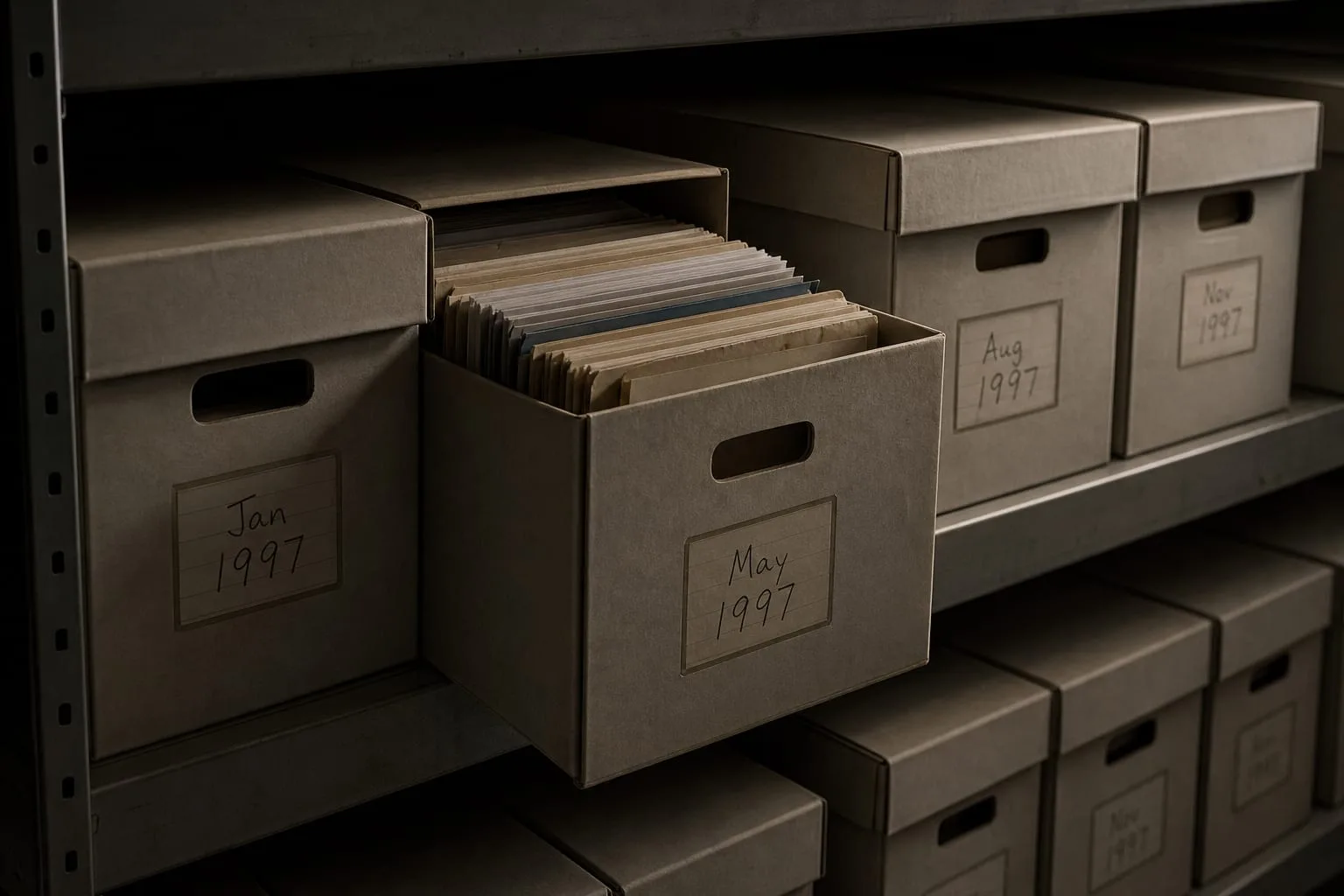
Year-end does something to records that no other month does: it takes a live file, one that people were opening and annotating weekly, and turns it into a stored file that nobody will touch again unless something goes wrong. That transition is the whole problem. A sole proprietor with one bank account and four vendors can carry the distinction in their head, because they remember what happened and where they put it. An organization with sixty employees, three payroll cycles, two states and a rotating cast of office managers cannot, and the December cutover is where that gap stops being theoretical and starts costing real hours.
The useful way to think about it is not what to keep. Almost everyone keeps too much. The question is which records have a clock attached, when that clock starts, and who inside the organization is responsible for noticing when it runs out.
What the turn of the year actually changes
Three things happen in the same few weeks. Payroll closes and produces its annual summaries, which means the wage detail behind those summaries becomes evidence rather than working data. Vendor and contractor totals get finalized for information returns, so the underlying invoices and the addresses and taxpayer identification numbers behind them all become part of one defensible set. And insurance, benefits and licensing renewals land, each generating a certificate or declaration that supersedes last year's version without making last year's version worthless.
For a household or a two-person shop, that is a folder. For a larger provider, it is a cutover, and cutovers fail in a specific way: the current year gets filed carefully because someone is paying attention to it, and the year that just closed gets shoved somewhere plausible because attention has already moved on. Six months later, the record everyone needs is the one from the year nobody boxed on purpose. The fix is boring and it works, which is to treat the close as an event with an owner rather than as a natural consequence of the calendar.
The clocks are not one clock
The single most expensive misconception in this area is that there is one retention period. There is not. Payroll detail, the timecards and rate changes and hours behind a paycheck, sits under wage and hour recordkeeping rules and carries a comparatively short clock. Employment tax filings and the returns you actually signed carry a longer one, because the assessment window on a return runs from when it was filed, not from when the work was performed. Anything tied to a benefit plan or a claim runs longer still, and in some cases the practical answer is the life of the plan plus a margin.
The Department of Labor oversees wage and hour recordkeeping for covered employers, and the existence of that oversight is the reason the payroll clock deserves separate treatment from the tax clock. They start at different moments and expire at different moments for the same pay period. A single employee's file can therefore contain documents that are past their required retention alongside documents that must be held for years yet. Sorting that inside a file, document by document, is not feasible at any scale, which is why the working rule in most organizations is to apply the longest applicable clock to the whole class of record and stop trying to be clever.
Two more clocks tend to get missed. Property and equipment records stay useful for as long as you own the asset plus the period after you dispose of it, because the basis calculation on a sale reaches all the way back to the purchase and every improvement in between. And contracts stay useful until the last obligation under them has expired, which for a warranty, an indemnity or a lease restoration clause can be well after the term ended. Neither of those is a calendar-year record, and both get thrown out in calendar-year cleanups.
Where the threshold actually sits
The answer for one of something is genuinely different from the answer for twenty, and the interesting question is where in between the switch happens. It is not headcount alone. The threshold arrives when any one of three things becomes true. The first is when more than one person creates records of the same type, because two people filing consistently is a coincidence and three is a policy. The second is when the person who filed a record is likely to be gone before the clock on it expires, which for a short-tenure workforce can be a matter of months. The third is when records exist in more than one system, a payroll platform, a bank portal, an accounting file and a shared drive, none of which knows what the others hold.
In practice most organizations cross that line somewhere between fifteen and fifty people, and they cross it before anyone notices. The symptom is not chaos. The symptom is that answering a routine question, what did we pay this contractor two years ago and under what agreement, takes someone half a day instead of five minutes. That half day is the cost of not having a schedule, and it recurs every time the question is asked.
A retention schedule is a modest document. It lists classes of record, not individual files. Against each class it puts a period, a trigger for when that period starts, a location, and a named role that owns it. Ten to twenty lines covers most organizations, and it converts a series of judgment calls made by whoever happens to be holding the paper into one decision made once, deliberately, by someone with the authority to make it.
Destroying records on purpose
Keeping everything forever feels safe and is not. Storage is cheap, but discovery is not, and a warehouse of unsorted boxes is a liability in any dispute because everything in it is potentially responsive and somebody has to read it. The protection that matters here is consistency: routine destruction carried out under a written schedule, applied evenly, is defensible in a way that ad hoc cleanup never is. The moment you throw out one category selectively, the selection itself becomes the interesting fact.
The one absolute exception is the hold. Once a dispute, an audit or a claim is reasonably anticipated, destruction of anything related to it stops immediately, schedule or no schedule, and stays stopped until the matter closes. Larger organizations handle this by making the hold a formal instruction with a named issuer and a written scope, and by suspending automatic deletion in every system at once rather than trusting people to remember. Get that mechanism in place and the rest of the schedule can run automatically, which is the point of having one.
The two weeks that do the work
Late December and early January are the natural window because the records are already in motion. Box the closed year as a complete set rather than by department, label the outside with the destruction date rather than the creation date, and record where the box went in something searchable. Confirm that the payroll platform's retention settings match your schedule rather than its defaults, because a vendor's convenience is not your obligation. Then check the two classes that never fit the calendar, assets and contracts, and pull anything with a live obligation out of the year boxes entirely.
Done once with intent, the schedule becomes the thing that answers next year's questions instead of a person doing it from memory. That is the difference scale imposes, and it is also the difference that makes the next close shorter than this one.