Family
Cremation Now, Memorial Later? Which Choices Stay Open and Which Close for Good
A household comparing memorial options today faces a different menu than it did ten years ago, and only some of the choices can be revisited once money changes hands.
Theodore Kranz|
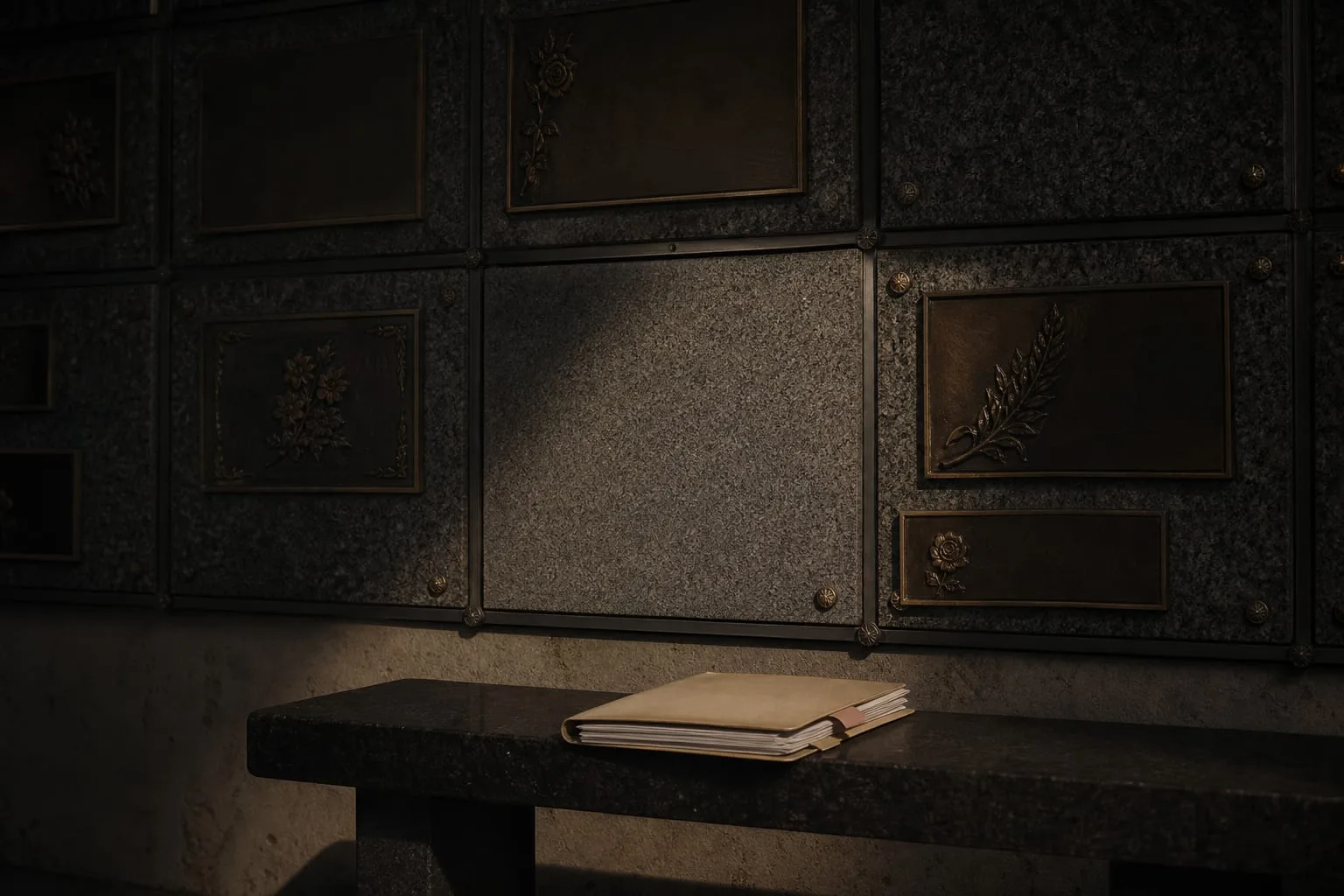
A family sitting down to choose a memorial today is working from a shorter list of assumptions than the same family would have worked from ten years ago, when a burial plot and a granite marker were still the unspoken default and everything else counted as a variation. Cremation has moved from the alternative to the ordinary choice in most of the country, and the memorial decisions that follow it are structurally different from the ones that follow a casket burial. Some of those decisions can be revisited a year later at modest cost. Three or four of them cannot be revisited at all.
What a decade actually changed, and what it left exactly where it was
The visible change is price transparency. A household shopping in the middle of the last decade generally got a printed general price list handed across a desk, in person, after driving to the funeral home; a household shopping now can often read the same disclosures before making contact, because the Federal Trade Commission is the agency responsible for the funeral pricing disclosure rules and the practice of publishing those lists more openly has spread. The second change is supply. Markers, urns and niche plaques that once came almost exclusively through the funeral home or the cemetery office can now be ordered directly from monument companies and online sellers, sometimes at a meaningful discount.
What did not change is the cemetery. A cemetery is a private rulebook attached to a piece of ground, and it governs marker dimensions, permitted materials, foundation requirements, who is allowed to set a stone, and what fee it charges to accept one it did not sell you. A household that saves four hundred dollars ordering a flat marker online and then discovers the cemetery charges an installation and inspection fee on outside memorials has not saved four hundred dollars. Ask for the fee schedule in writing before ordering anywhere, because that single sheet decides whether the outside purchase is worth making.
Scattering against interment, and the choice that has no second draft
The genuinely irreversible decisions cluster early. Cremation itself is the obvious one, and every state requires an authorization signed by whoever holds the legal right to direct disposition, which is the moment to be certain the family is in agreement rather than merely quiet. After that, the next unrecoverable step is scattering. A household that scatters at a lake, a ridge or a favorite stretch of coast has made a decision that feels correct at the time and cannot be adjusted when a sibling who was traveling comes home, or when a grandchild born four years later asks where to visit.
The comparison that matters is between a fixed place and no place. Interment in a plot, a columbarium niche or a cremation garden creates an address: a location with a record, a marker and an institution that maintains it. Scattering creates a memory held by whoever was standing there. Neither is wrong, and plenty of families are certain scattering is what was wanted. The practical middle path, which has become much more common in the past decade, is to divide: inter a portion in a niche or a plot, scatter a portion, and keep the fixed location as the thing the family can return to. Dividing is reversible in one direction only, so decide it before the urn leaves the crematory rather than after.
The niche and the plot compared, clause by clause
What a family buys in a cemetery is almost never the land. It is a right of interment, and the document that grants it is where the conditions live. Ten years ago a household buying a traditional grave plot rarely read past the price; a household buying a columbarium niche today should read further, because niches are sold on more varied terms. Some are perpetual. Some are sold for a defined term, twenty five or fifty years, with a renewal option and a stated consequence if nobody renews. That consequence is the clause worth finding, since it usually names a party who will be notified and an address the cemetery has on file, and addresses go stale in a family faster than anything else.
Capacity is the second clause. A niche rated for two standard urns will not accept two oversized decorative urns, and families discover this when the second interment is scheduled, not when the first urn is bought. Ask for the interior dimensions in inches and buy the urn to fit, rather than buying the urn you like and hoping. Transfer is the third. A right of interment can usually be transferred or resold, but often only back to the cemetery, at a stated formula rather than market value, and only with the signature of the person named on the certificate. Write that name down somewhere the family will find it.
The stone, the blank half, and the inscription nobody quotes for
Companion markers are the clearest example of a decision that is comfortable now and expensive later. A surviving spouse who orders a double stone with one side inscribed and the other left blank has locked in today's granite price, today's design and today's lettering style, which is exactly the point. What is not locked in is the second inscription. Adding a date of death to an installed stone is done at the gravesite by a letter carver, priced separately, and it is not covered by the original purchase unless the contract says so in a specific line. Ask for that line. If it exists, ask whether the price is guaranteed or merely estimated.
The proof is the other point of no return. Every reputable monument company sends a layout for approval showing spelling, dates, spacing, emblem placement and the exact wording of any epitaph, and the signature on that proof transfers responsibility for errors to the family. Granite carved wrong is granite bought twice. Read it aloud with a second person holding the obituary and the death certificate, check the middle name and the birth year against a document rather than against memory, and count the characters in the epitaph against what the stone can hold. Ten years ago that proof came by mail and sat on a table for a week. Now it arrives by email and gets approved in four minutes, which is the single most common way a permanent error is made.
The memorial that needs a credit card on file
The newest option is the one with the shortest track record. QR codes set into markers, hosted tribute pages and digital memorial profiles have become a common upsell over the past several years, and for a family scattered across four states they solve something real: a place to put photographs, recordings and a guest book that a granite marker cannot hold. The question to ask is who pays for the hosting in year eleven. Some are sold as a one time purchase with permanent hosting funded up front. Others are subscriptions, renewing against a card that will eventually expire, in a household that may no longer exist in the same form.
Set beside the engraved stone, the digital memorial is the reversible half of the pair, which is an argument for using both rather than choosing. The stone carries the name, the dates and the words that need to survive without anyone's attention; the hosted page carries everything that benefits from being added to. Keep the account credentials with the cemetery paperwork and the certificate of interment, in one folder, physical, with the name of the person who holds the right of interment written on the front. That folder is what the next decision will be made from.
The useful discipline is to sort every item on the funeral director's worksheet into two columns before signing anything: what can be changed next spring, and what cannot be changed once the check clears. The first column is longer than most families expect, which means the second column deserves the whole evening.