Money
First Claim of Your Life? What Changed in Ten Years About Calling It In
A decade ago a homeowner could ask an agent a hypothetical question. Now most contacts leave a record, which changes when a first claim is worth filing.
Rafael Quintanilla|
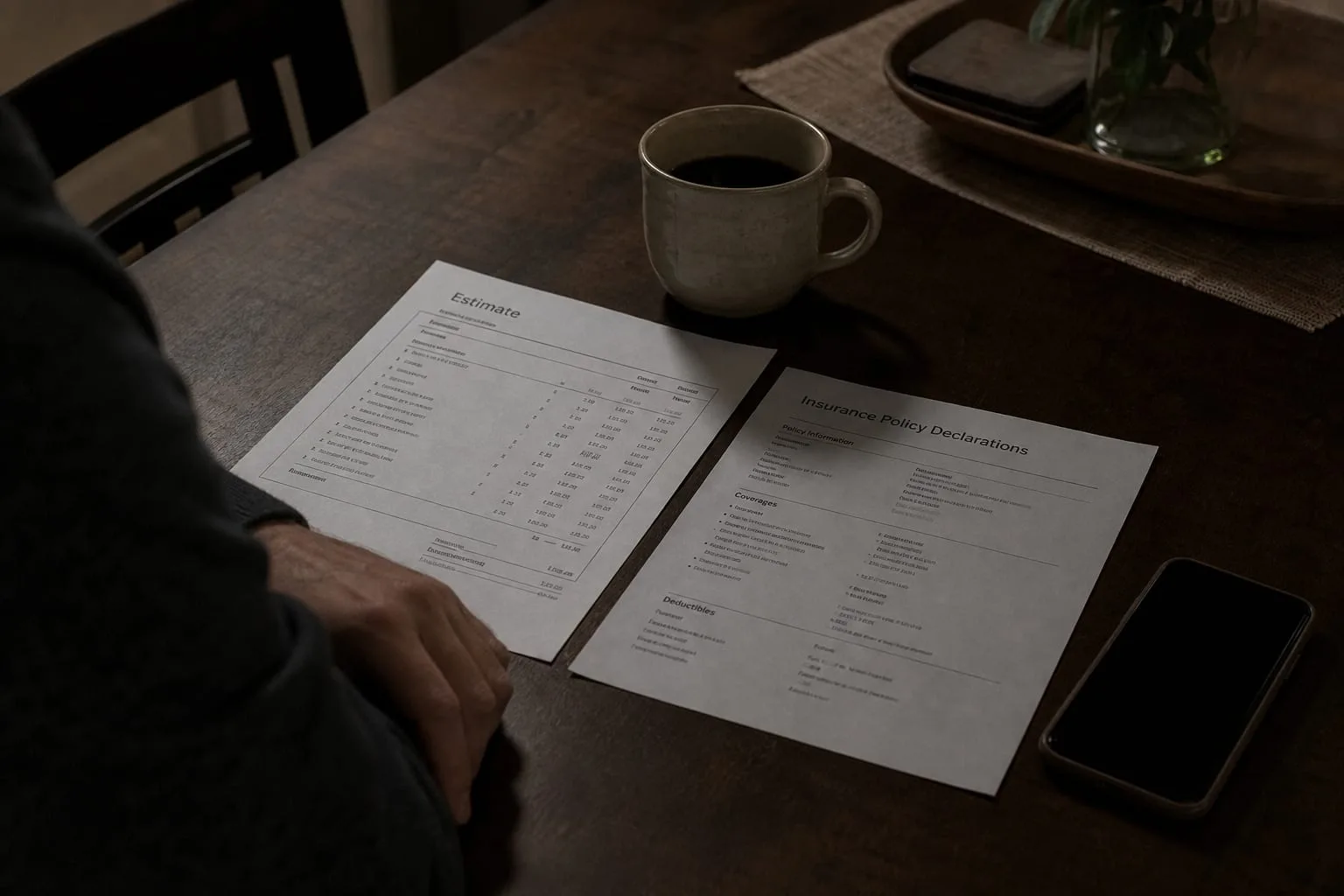
The homeowner filing a first claim and the landlord filing his fortieth are answering different questions, even when the damage is identical. For the landlord, a claim is a line in a loss history that underwriters already price as a portfolio, and one more water loss barely moves the shape of it. For the first-timer, a single claim is the entire history, the only data point a renewal underwriter has, and it converts a clean file into a file with something in it. That asymmetry is the whole decision, and it has moved noticeably in the last ten years.
The informal phone call that used to be free
Ten years ago, the standard advice was practical and slightly conspiratorial: call your agent, describe the damage without committing, and find out whether it was worth filing. Plenty of independent agents would take that call, do rough math out loud, and never open anything. The conversation left no trace beyond a note in the agency's own system, and the carrier learned nothing. That route has narrowed. More carriers now take first notice of loss directly through an app or a call center rather than through the agent, and the intake process is built to create a record the moment you describe a loss, because the record is what triggers the workflow.
The practical result for a first-time claimant is that the exploratory question and the claim have partly merged. Not entirely, and not with every carrier, but enough that the old advice needs a correction: ask your agent hypothetically, in terms of coverage language rather than in terms of your actual kitchen, and understand that a description of a specific loss with a specific date is likely to be logged as an inquiry whether or not you go on to file. An inquiry that never becomes a payment is far weaker than a paid claim in underwriting terms. It is not nothing.
What the loss history database actually holds now
Homeowners claims data has long been pooled through the industry's loss underwriting exchange, which carriers query when they quote and, increasingly, when they renew. Ten years ago the practical experience of that database was slow and patchy: entries lagged, some carriers reported thinly, and a claim you filed in one state might not follow you cleanly to another. It follows you cleanly now. Reporting is more consistent, the lookback most carriers use runs several years, and the query happens in seconds inside an automated quoting flow rather than as a manual step someone might skip. You can request your own file, and a first-time claimant should, before filing rather than after.
The other change is what sits alongside that history. Underwriters now buy aerial imagery, roof condition scoring, permit records and property characteristic data that a decade ago would have required an inspection nobody was going to pay for. So the claim is no longer the only new information at renewal. A ten-year-old roof that reads as a twenty-year-old roof from above can affect your renewal with no claim at all, which cuts both ways: it means a clean history buys less protection than it used to, and it means the marginal damage from one small claim is smaller relative to everything else in the file.
Where the threshold sits for one house
For a single-property owner, the arithmetic is unforgiving and worth doing on paper. Take the contractor's estimate, subtract your deductible, and ask whether the remainder is worth several years of whatever the renewal effect turns out to be, plus the loss of any claims-free credit you are carrying, plus the risk of nonrenewal if the loss type is one your carrier is currently retreating from. A claim that nets two thousand dollars above the deductible rarely survives that test. A claim that nets thirty thousand always does, and hesitating over it is the more expensive mistake, one first-timers make more often than they overfile.
The middle is where judgment lives, and the deciding factor is usually loss type rather than dollar amount. Water damage from an interior failure draws more underwriting attention than a single wind or hail event in a region where the whole book took the same storm, because the first reads as a property condition and the second reads as weather. Flood is a separate system entirely, run through the National Flood Insurance Program, which the Federal Emergency Management Agency is responsible for, and a flood claim does not sit in your homeowners history the way a burst supply line does.
Why twenty doors changes the answer
Somewhere between one property and roughly a dozen, the logic inverts. An owner with a handful of rentals still gets underwritten close to individually, and each claim carries something like its full weight. An owner with twenty or more is priced on loss ratio across the schedule, which means the discipline shifts from avoiding claims to controlling severity and documenting maintenance, because the underwriter is looking at frequency patterns rather than a single event. That owner raises deductibles deliberately, self-funds the small losses, and files the large ones without agonizing, and the small losses never enter the record at all.
A first-timer can borrow the useful half of that approach without owning twenty doors. Set the deductible high enough that the claims you would have agonized over are no longer claims, which lowers the premium and removes the decision. Keep receipts, photographs and dated maintenance records the way a portfolio owner does, because that file is what turns a contested claim into a paid one. Then file the large loss promptly and completely, which is the only kind of claim the policy was ever really bought for.
The change over a decade is not that claiming became riskier. It is that the informal, off-record version of the decision mostly disappeared, and what replaced it is a documented process that rewards a homeowner who has decided in advance where the line is.