Education
Getting a CDL Now? The Training Rule Changed in 2022 and So Did Who Holds Your Money
Commercial driver training became a federally regulated product in early 2022, which changed both the calendar and the contract you sign to pay for it.
Theodore Kranz|
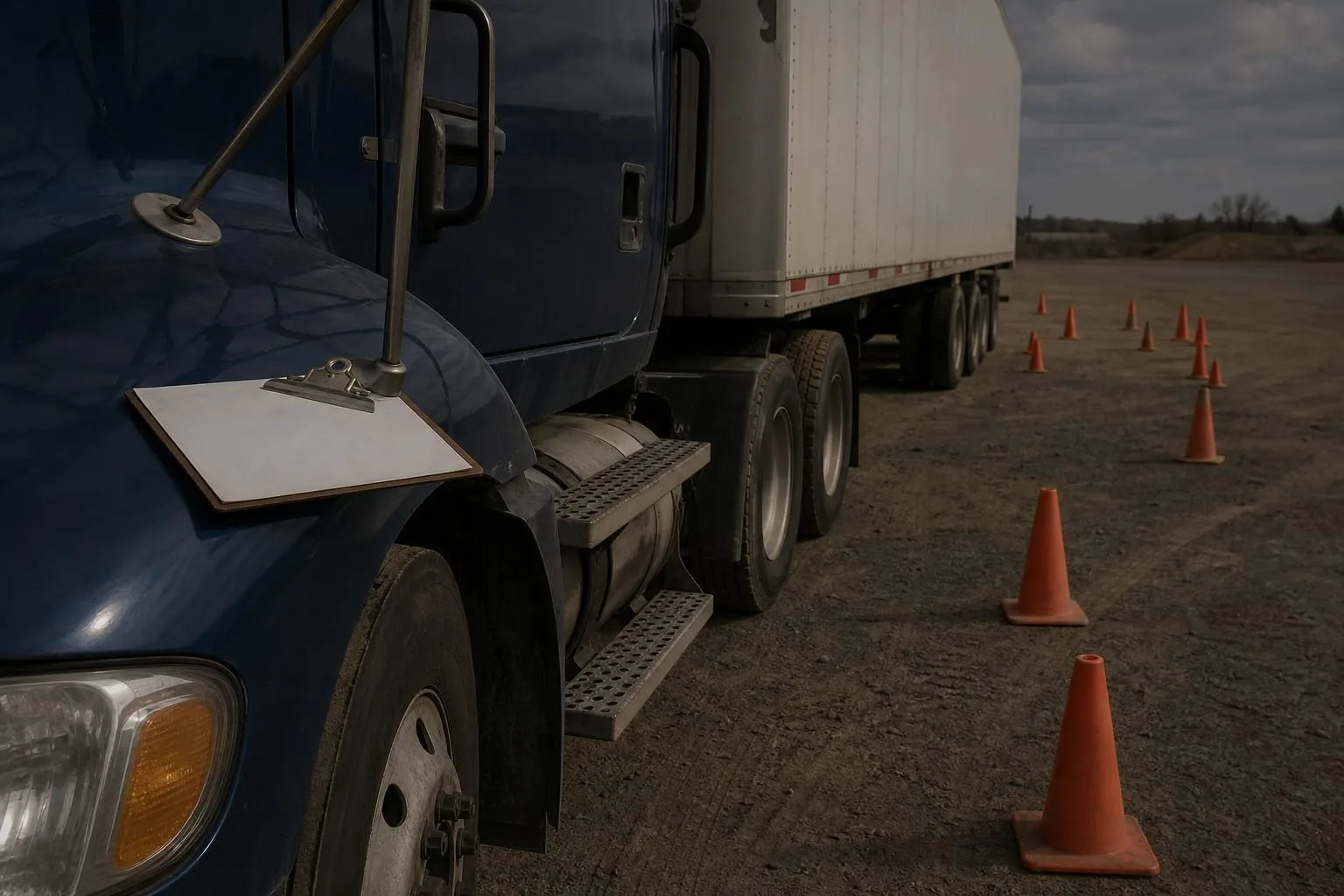
A commercial driver's license used to be, in practical terms, a test. If you could find a truck, someone willing to sit in the right seat, and a state examiner with an open slot, the path from decision to license ran on your own schedule and your own budget. That arrangement ended in early 2022, when federal entry-level driver training rules took effect and turned instruction into a regulated product with a registry behind it. The change matters less for what it added to the curriculum than for what it did to the paperwork, because the money now moves through a school or a carrier rather than through you.
What the old route looked like, and why it was replaced
For decades a new driver's preparation was whatever the person teaching them thought was enough. Some learned at a community college program with a range, a yard and a written syllabus; others learned from an uncle with a flatbed and a weekend. Both groups sat the same knowledge test and the same skills test, and both walked out with the same license, which meant the credential said nothing about how the holder had been trained. The Federal Motor Carrier Safety Administration, which oversees commercial driver licensing standards, closed that gap by requiring that first-time applicants complete a defined program from a provider listed on a federal training provider registry before the state will let them take the skills test.
The calendar the rule actually creates
The requirement splits into theory instruction and behind-the-wheel instruction, and the second half is the one that governs your calendar. Theory can be delivered online, at your own pace in some programs, and it ends with a knowledge assessment you have to pass at a set threshold. Behind-the-wheel is divided between a range and public roads, and it is proficiency-based rather than clock-based at the federal level, meaning the instructor certifies that you can perform each maneuver rather than that you sat for a fixed number of hours. Schools still sell time, though, because time is what they can schedule, so you will be quoted in weeks.
Four to eight weeks full-time is the shape of most Class A programs, and the part-time or evening versions stretch that to three or four months. Two things extend it beyond the brochure. The first is truck-to-student ratio, since behind-the-wheel hours are one student in the seat at a time and the rest of the group is watching. The second is the state road test itself, which the school does not control; in counties where examiner appointments are scarce, a driver who finished instruction in five weeks can wait several more for a slot. Ask about both before you pay, because both are answerable questions.
Where the money sits, and who is holding it
Tuition at a private truck driving school generally lands in the low thousands, and community college programs are often less because state appropriations absorb part of the cost. On top of tuition sit the items that are easy to forget when you compare two quotes: the medical examiner's certificate from a certified examiner, the commercial learner's permit fee, endorsement testing if you want tank or hazardous materials, the fingerprinting and background check that hazmat requires, and the license issuance fee at the DMV. If the school is not within commuting distance, add lodging, which some programs bundle into a dorm arrangement and others leave entirely to you.
Then there is the version where you do not pay tuition at all. Carrier-sponsored training is the dominant model at the entry level: a motor carrier runs its own registered program or contracts with one, puts you through it at no upfront charge, and hires you at the end. Workforce development grants and veterans' education benefits cover a slice of the private-school market as well, and both are worth checking before you assume the sticker price is the price. The distinction that matters is not free versus paid. It is whether the obligation you take on is a debt or a term of employment.
The clause that only becomes expensive under one condition
Carrier-sponsored training is almost always documented as a tuition reimbursement or training cost recovery agreement, and the operative sentence is short: if you leave before serving a stated period, commonly a year, the training cost becomes payable by you. Read three things in that sentence. Whether repayment is prorated by months served or falls due in full on day one of month eleven. What figure the agreement calls the training cost, because some contracts recite a retail tuition value considerably above what the carrier's in-house program costs to run. And whether the balance can be withheld from your final paycheck, assigned to a collection agency, or reported as a debt.
The condition that triggers it is the part people misjudge. Quitting is obvious. Being terminated for cause is usually covered too, and "cause" in these documents can include failing a road observation, refusing a dispatch, or a preventable accident finding made by the carrier's own safety department. A driver who never intended to leave can still land inside the clause. The fix is unglamorous and effective: ask for the agreement before orientation rather than during it, read the definitions section rather than the summary, and get the prorated schedule in writing with dollar figures attached to each month.
Programs that handle this well are easy to spot once you know what to look for. They send the agreement in advance, they state the recovery amount as a specific number rather than a formula, they prorate monthly, and they distinguish voluntary departure from safety-related termination in separate paragraphs. Several large carriers now cap the recoverable amount well below full tuition and forgive the balance outright at the anniversary, which is a real difference in exposure between two offers that both describe themselves as paid training. That difference is worth more than a few cents on the mile, and it is knowable before you sign.
The registry did not make the license harder to earn. It made the route legible, which is why the comparison you can now run between two programs is a comparison of documents rather than of reputations. Get both agreements, put the repayment schedules side by side, and the cheaper route usually announces itself on the page.