Money
Insuring a Ring Versus Insuring Twenty Pieces, and Why the Appraisal Goes Stale
What scheduled jewelry coverage actually costs, where the threshold sits between one floater and a collection policy, and why an appraisal stops working after a few years.
Rafael Quintanilla|
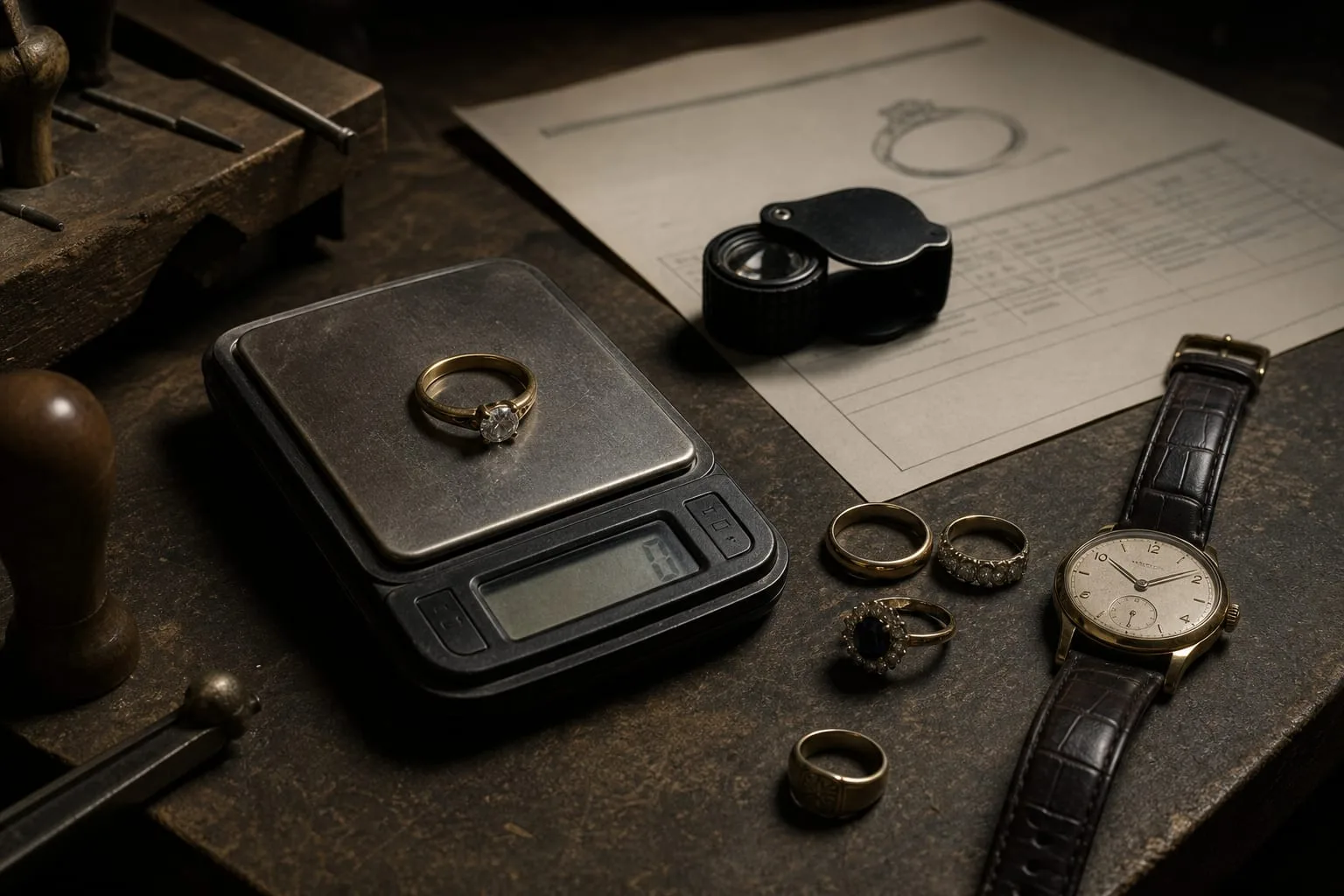
The homeowners policy already covers jewelry, which is the fact that stops most people from looking further, and the fact that costs them the most. What it covers is a capped amount for theft, often a few thousand dollars across everything you own in that category, with the deductible taken out of it. One decent engagement ring exhausts that cap on its own. Twenty pieces accumulated over three decades do not come close to fitting inside it. Scheduling the items separately is the fix, and the price of doing so behaves very differently at one item than at twenty.
What the premium is priced on, and it is not the box it sits in
Scheduled personal property is quoted as a rate per hundred dollars of insured value, which means the arithmetic is linear and the rate is where the negotiation lives. That rate moves with your zip code first, since theft and loss frequency are regional, and a suburban address and a dense urban one can be quoted at meaningfully different numbers for the same ring. It moves again on how the item lives: worn daily, worn occasionally, or kept in a safe deposit box. Vault-only coverage is cheaper because the exposure is smaller. Coverage that follows the item onto your hand, into a rental car, and through an airport costs more because it should.
The other lever is what the policy promises to do after a loss. Some scheduled coverage pays an agreed value, a stated number settled up front, with no argument at claim time about what the market says today. Some pays replacement cost up to the scheduled limit, which means the insurer replaces the item through its own channels and the scheduled figure functions as a ceiling rather than a check amount. Agreed value costs more per hundred dollars and is worth the difference on anything irreplaceable, signed, or old. Understanding which one you bought is the single most useful thing you can do before you ever file.
Where one item stops being one item
The answer for a single ring is a floater added to the homeowners policy, and it is usually the cheapest correct answer available. It requires an appraisal or a purchase receipt, it adds one line to the declarations page, and it typically carries no deductible on the scheduled item, which matters because a lost earring is a small claim against a large deductible. At two or three items the same structure still works fine. The administrative weight is low, the rate is the same rate, and nothing about the arrangement strains.
Somewhere between roughly eight and fifteen scheduled pieces, the shape of the problem changes. Every item needs its own current valuation, every valuation needs periodic refreshing, and the paperwork stops being a task and becomes a standing obligation. At that point a standalone valuables policy, often written by a specialty carrier, starts to compete. These policies bundle scheduled items with a blanket allowance for newly acquired pieces, cover items below a per-item threshold without individual appraisals, and treat the whole holding as one account with one renewal conversation. The rate per hundred dollars is not always lower. The friction is.
The threshold is not really a count, though, it is a total. Once the aggregate insured value crosses the point where a total loss would be a genuine financial event rather than an annoyance, the specialty market becomes the sensible home for it, because the underwriting attention, the claims handling, and the willingness to source a comparable replacement all improve. Below that, the floater on the homeowners policy does the job and does it inexpensively. Most households never cross the line, and knowing that is worth something too.
Why the appraisal expires
An appraisal is a snapshot of a replacement market on a particular day, and replacement markets move. Gold moves. Platinum moves. Diamond pricing has shifted repeatedly as lab-grown stones have taken share, and colored stone pricing responds to supply from a small number of countries. Labor moves as well, since a hand-fabricated setting is priced on bench hours and bench hours are wages. A document written eight years ago describes a cost structure that no longer exists, and the insurer will happily keep charging premium against the stale number while quietly capping your recovery at it. The Federal Trade Commission oversees how jewelry is described and advertised in the United States, which is why appraisals from a credentialed appraiser read so specifically about origin, treatment, and material.
The practical cycle is every three to five years for most items, sooner for anything where the underlying material has moved sharply. A recognized appraiser charges by the hour or by the item, not as a percentage of value, and a percentage-based fee is a reason to call someone else. For an existing schedule, the update is usually cheaper than the original work because the identification is already documented and only the valuation is being restated.
The week-to-week part nobody plans for
Coverage gets tested in ordinary situations rather than dramatic ones. A ring left in a gym locker. A pendant handed across the counter at a jeweler for a retip and sitting in that shop for eleven days. A watch in checked luggage because the security line was long. A stone that works loose in September and is not noticed until October. Scheduled coverage handles mysterious disappearance, meaning you do not need a police report or a story, only the loss. That single provision is what separates a floater from the homeowners cap in real life, because most jewelry losses are not burglaries, they are the drain, the parking lot, and the pocket of a coat that went to the dry cleaner.
Which turns the maintenance into a small, dull habit: photograph what you own, keep the appraisals in one place, add new pieces within the window your policy allows, and put a calendar note four years out. Twenty minutes a year, and the number on the schedule stays close enough to the number a replacement would actually cost.