Law & Legal
Not Sure If You Need a Lawyer? The Dollar Amount Is the Wrong Test
Most people decide whether to hire an attorney based on how much money is at stake, which is the one factor that predicts least about whether counsel changes the outcome.
Theodore Kranz|
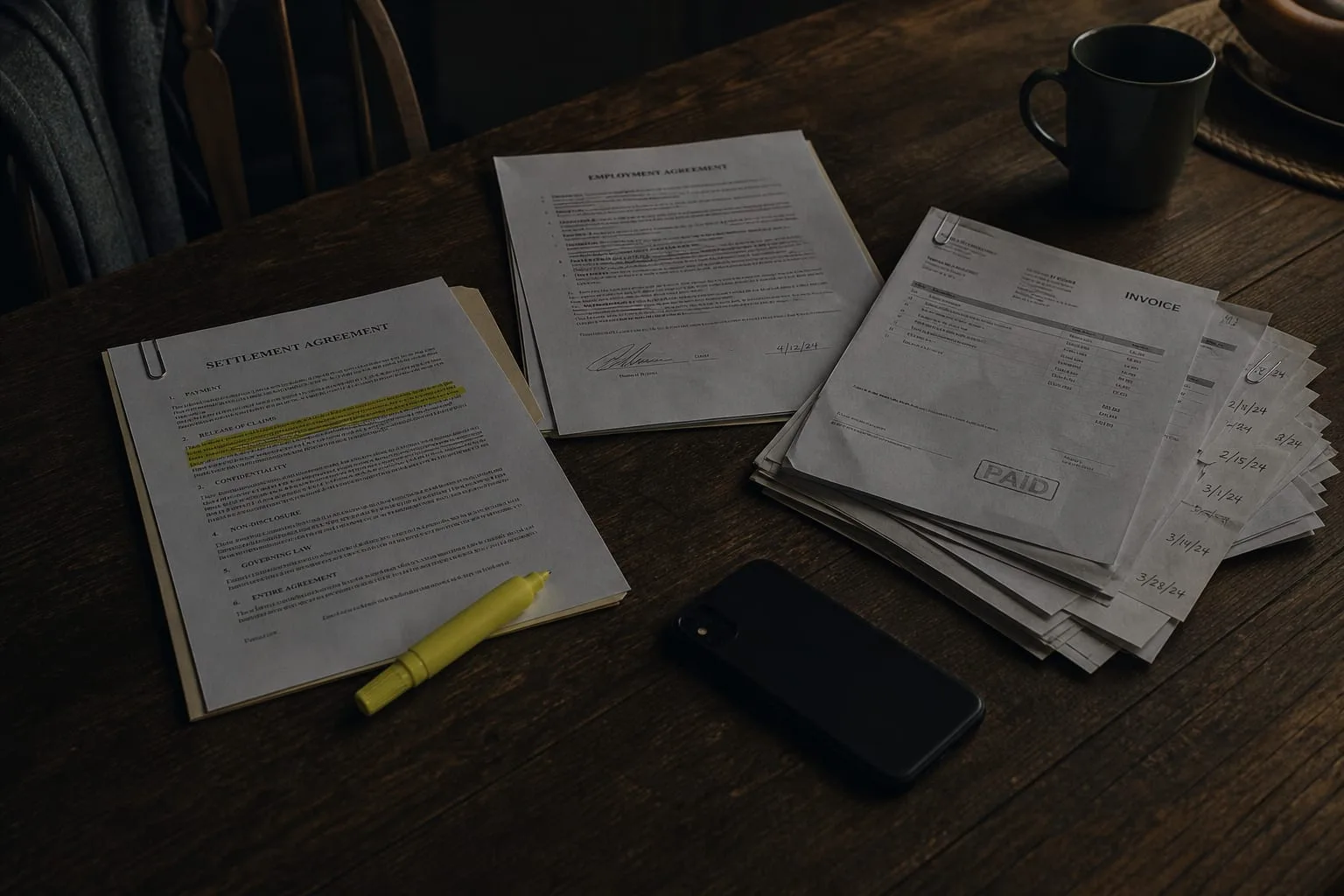
Ask someone how they decided whether to call an attorney and the answer is almost always a number. Two thousand dollars, no. Twenty thousand, yes. The number feels like a reasonable proxy for seriousness, and it has the advantage of being easy to say out loud. It also predicts almost nothing about whether an attorney will change the outcome. Plenty of five-figure disputes resolve on a well-drafted letter and a copy of the contract, and plenty of small ones turn permanent because someone signed a release on a Tuesday afternoon without reading the second paragraph.
The better question is structural. Does this problem contain a step that cannot be walked back, and is that step arriving soon? Held next to the dollar test, the reversibility test sorts cases differently, and it sorts them the way the eventual bill sorts them.
What the dollar test gets wrong from where you are sitting
From the client's chair, the amount at stake is the most visible feature of a dispute and the one you can quantify without help. That is exactly why it dominates. But size does not determine difficulty. A contractor who billed eighteen thousand dollars for work that stopped at the framing stage has left you a documented, provable problem: a signed scope, an invoice, photographs, a payment record. A dispute over four thousand dollars in a partnership with no written agreement, two versions of the verbal deal, and a business bank account both of you can drain is a harder problem in every respect that matters, and the smaller number will not tell you so.
The second thing the dollar test misses is who else is already represented. When the other side has counsel, the correspondence changes character. Letters begin quoting contract sections back at you, deadlines appear in them, and phrases like full and final settlement start showing up. You are now in a process designed by someone whose job is to end it favorably. Matching that does not always require hiring your own attorney, but it does require knowing which sentences in the letter are load-bearing and which are decoration.
Four features that genuinely call for counsel
The first is a signature that closes the door. Releases, settlement agreements, severance packages, deeds, quitclaims, arbitration elections, and anything that includes the word waiver all share one property: after you sign, the facts stop mattering. An hour of review before signing is the cheapest legal work available and the only kind that buys back optionality rather than spending it.
The second is a clock you did not set. Statutes of limitation, notice-of-claim windows in a construction contract, appeal deadlines on an insurance denial, and response dates on anything filed with a court all run whether or not you have understood them. The third is a proceeding with formal rules of evidence, meaning an actual court of general jurisdiction rather than a small claims window. The fourth is exposure that extends past this dispute: a lien on your house, a judgment that follows you, licensing consequences, or anything a regulator has been asked to look at.
Notice that none of the four is about how angry you are, and none is about the amount. Two of them can appear in a dispute worth a few thousand dollars, and a dispute worth six figures can contain none of them for months.
Where a letter, a filing, or a complaint does the same work
A large share of consumer problems resolve inside systems built for people without counsel, and using them first is not a lesser choice. Small claims court exists precisely so that a dispute under the state limit can be heard without an attorney on either side, and the rules of procedure are deliberately loose. Insurance appeals run on internal review first, then state department of insurance complaints, and both accept plain narrative from the policyholder. Consumer complaints against a business go to the state attorney general and to the Federal Trade Commission, which oversees unfair and deceptive practices in commerce, and both routes are open without representation.
What these paths reward is documentation and sequence, not advocacy. A dated timeline, the contract, the invoices, the photographs, and the correspondence in order will carry a complaint further than adjectives will. If you are inclined to hire someone to write the first letter, consider what the letter contains. If the answer is your timeline and your documents, you can send that letter yourself and keep the fee for the stage where the facts are actually contested.
How to buy help in slices instead of all at once
The assumption that hiring an attorney means retaining one for the whole matter is the reason many people never call. Most states permit limited scope representation, sometimes called unbundled services, in which counsel handles one defined task: reviewing a settlement agreement, drafting a demand letter, appearing at a single hearing, or telling you which deadline governs. You pay for that task and the engagement ends. Ask for it by name, because a firm structured around full representation will quote you full representation unless you specify otherwise.
Before you book anything, do the triage yourself. Write the timeline, gather every document with a signature on it, and highlight every date and every clause that mentions notice, waiver, or limitation. Then read the highlighted parts and ask whether any of them takes effect soon. That reading is what converts a vague sense that you might need help into a specific question an attorney can answer in one paid hour, and the specific question is what makes the hour worth buying.
The distinction worth carrying forward is not between big problems and small ones. It is between problems where the next step is reversible and problems where it is not, and the paperwork in front of you will usually say which is which if you read the clauses everyone skips.