Law & Legal
One Dispute or Twenty? Five Checks Before a First Legal Meeting When the Paperwork Multiplies
What to assemble before a first consultation, and why the prep that works for a single dispute quietly fails once you are holding twenty of the same document.
Rafael Quintanilla|
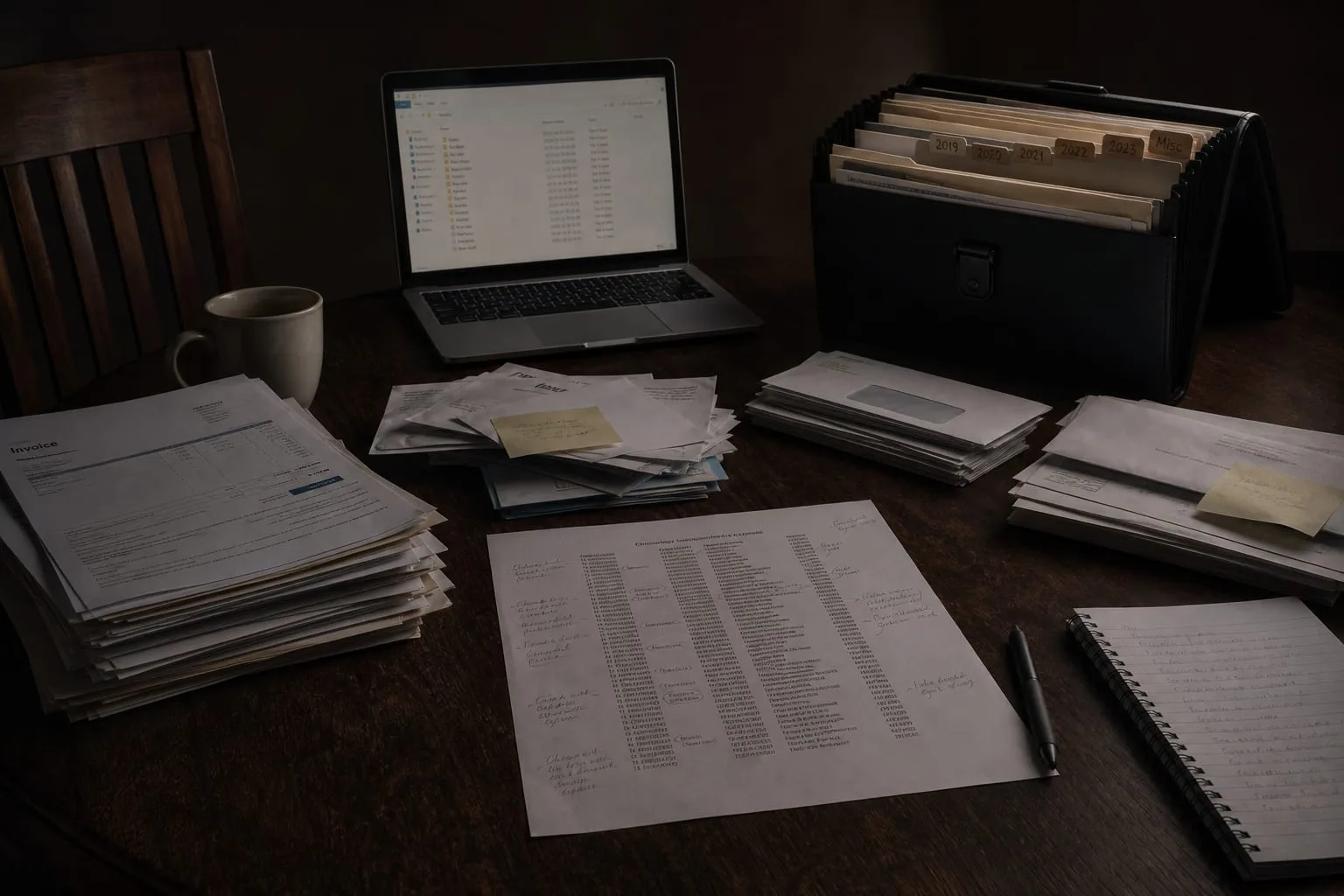
A first meeting with an attorney is priced by the hour whether you spend it explaining the problem or solving it, and the difference between those two outcomes is almost entirely decided before you sit down. The prep most people do is adequate for one dispute: a folder, a rough chronology, a few emails printed out. It stops working somewhere between the fifth and the twentieth instance of the same problem, because at that point the attorney is no longer reading your documents, they are sampling them, and what they can conclude depends on how the set is organized rather than what any single page says.
1. Count the instances before you describe the problem
Whether you have one late-paying customer or nineteen changes the legal question, not just the volume of paper. A single unpaid invoice is a collection matter, decided by what the contract says and what the debtor can pay. Nineteen unpaid invoices with the same clause and the same failure pattern is a drafting problem, and the useful hour is spent on the clause rather than the debtor. Say the number out loud in the first two minutes. An attorney who hears twenty will structure the meeting differently than one who assumes one, and the reorganization mid-meeting is what burns the hour.
2. Build the chronology as a table of events, not a narrative
The document that earns its keep is dull: date, what happened, who wrote it, which file proves it. Four columns, one row per event, no adjectives. For a single dispute you can hold this in your head and speak it. For twenty parallel matters you cannot, and the attorney certainly cannot, so the table becomes the working surface for the whole engagement rather than a courtesy. Keep the file names in the last column identical to the actual file names, including extensions. That one habit converts a folder of attachments into something searchable by someone who has never seen it.
3. Find out which local rule governs before you assume the state one does
This is where scale changes the answer most sharply, because a single matter has one venue and twenty matters may have several. Small claims ceilings, notice periods, mandatory pre-suit demand letters, mediation requirements, and even whether a business entity may appear without counsel are set at the state level and then modified in practice by the county court, the local rules of the district, or a municipal ordinance. Two neighboring counties can require different service methods for the same claim. Ask the court clerk's office directly, or read the local rules posted on the court's own site, before the meeting rather than after.
4. Check your records against the retention rule that applies to your category
Employment files, wage records, safety logs, tax substantiation and consumer transaction records all carry their own retention expectations, and the Department of Labor oversees several of the payroll and hours categories that come up most often in employment disputes. The practical point is not compliance for its own sake. It is that an attorney assessing twenty similar claims will ask what period you can document, and the answer sets the scope of what is worth pursuing. Confirm what you actually still hold, in what form, and whether the earliest year is complete. Gaps found beforehand are a planning input; gaps found in the meeting are a stall.
5. Decide who at your end can say yes
For one household matter this is trivial. For a business, a partnership, an estate with multiple beneficiaries, or a homeowners association board, it is the thing most likely to make the meeting advisory rather than actionable. Bring the operating agreement, the bylaws, the letters testamentary, or whatever document names the person with signing authority, and bring that person or their written authorization. Twenty matters usually means a strategy decision, a fee arrangement, and a settlement authority number, and none of the three can be set by someone who has to go ask. Settle the authority question first and the hour ends with instructions.
The threshold, roughly
Somewhere around five or six repeated instances, the useful prep flips from telling the story to building the index. Below that, an attorney reads everything and forms a view. Above it, they need a structure they can trust: a consistent chronology, files named the way the chronology names them, a note on which venue and which local rule applies to each, and one person authorized to decide. That structure takes a weekend to assemble and it survives the whole matter, which is why the households and small operators who build it once tend to spend fewer billed hours from that point forward.
The first meeting is the cheapest place to find out that your set of twenty is really three distinct problems, or that a county rule shortens a deadline you assumed was months away. Bring the index and you will find that out in the first twenty minutes.