Money
One ring scheduled, nineteen pieces not. Why the appraisal in the drawer stopped counting
A single engagement ring and a drawer of twenty inherited pieces need different insurance, and the appraisal that covered the first one has a shelf life shorter than most people expect.
Rafael Quintanilla|
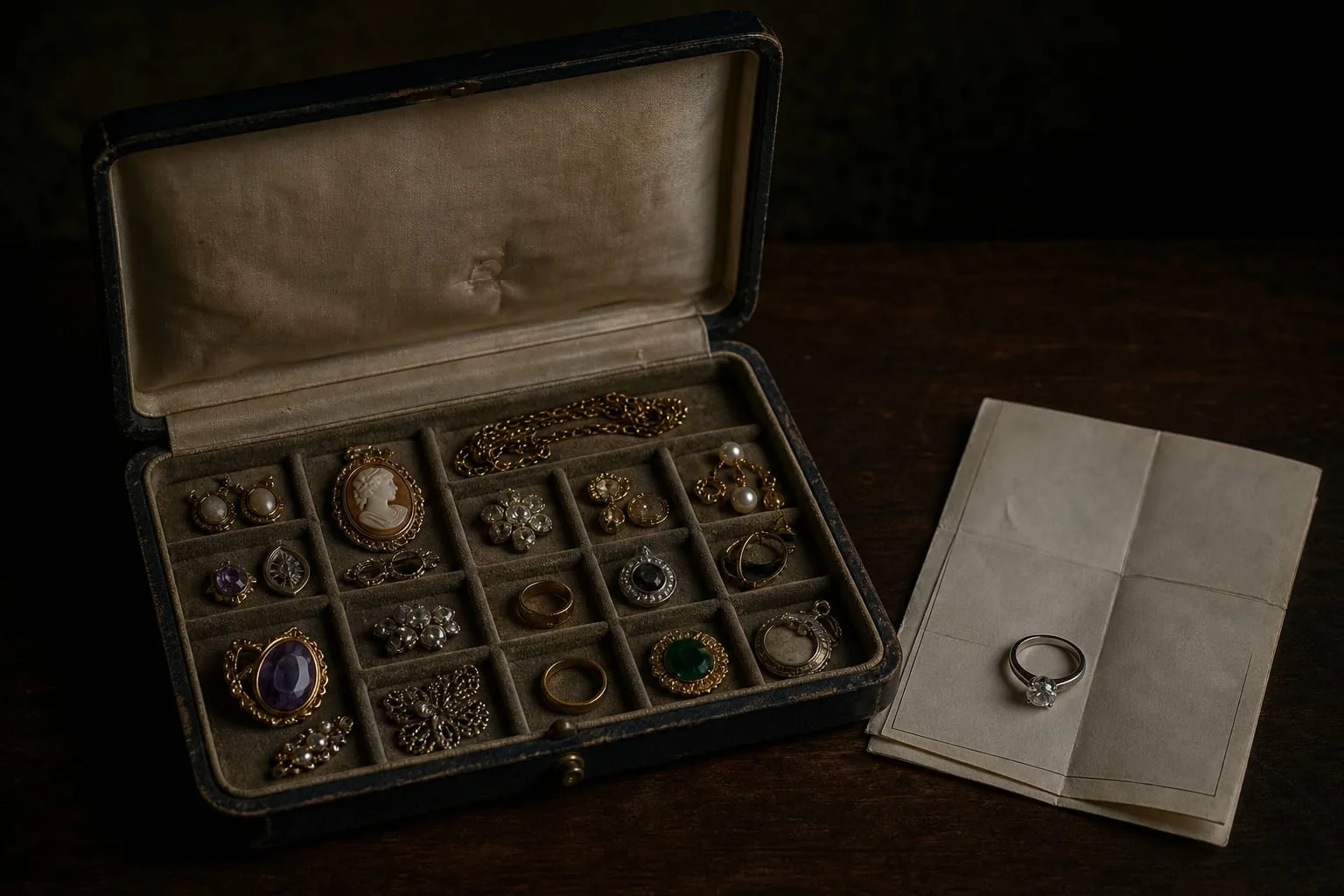
Consider a narrow case, because the narrow case is where the rules actually show themselves. A ring is bought in December, appraised the same week by the store that sold it, and the appraisal is emailed to an insurance agent in January, who adds a scheduled item to the homeowners policy. That much is usually done well. Four years later the same household inherits a jewelry box holding roughly twenty pieces, none appraised, several without a receipt, and the instinct is to repeat what worked. It does not repeat, and the reason is partly the appraisal and partly the arithmetic of twenty.
What the homeowners policy already does with the ring, and where it stops
An unendorsed homeowners policy covers jewelry, but it covers theft of jewelry only up to a sublimit written into the personal property section, a figure low enough that a single engagement ring commonly exceeds it on its own. That sublimit is the whole reason scheduling exists. When the ring is scheduled, it gets its own stated amount, its own terms, usually no deductible, and coverage for perils the base policy will not touch, mysterious disappearance among them: the stone that is simply gone from the setting with no break-in, no fire, and no story. One item, one endorsement, a premium measured against the stated value. Straightforward.
The complication is that the stated amount is not self-updating. It reflects what the appraisal said on the date the appraisal was written, and an insurer paying a claim four years later pays against that number or against what the policy language says it will pay, which is not always the same thing. Some schedules pay the stated amount. Others pay the lesser of the stated amount and the actual cost to replace, which means an inflated appraisal buys premium and nothing else, while a stale one caps the recovery below the counter price of the replacement.
Why an appraisal expires even though nothing happened to the ring
Nothing has to happen to the jewelry for its appraisal to go out of date, because the document is not a description of the object alone. It is a valuation dated to a market: metal prices on that day, stone prices in that grade band on that day, and a definition of value the appraiser chose, most often retail replacement cost in a comparable store. Gold moves. Fine colored stone supply moves. Lab-grown stones have moved the price ladder for near-colorless diamonds in a direction nobody was underwriting a decade ago. Insurers respond to that drift with refresh requirements, commonly asking for an updated appraisal every few years on scheduled items above a threshold they set.
That refresh cycle is the part people miss, and it is easiest to miss on the item that was handled correctly. The ring is on the schedule, the premium is being paid, the paperwork is filed, and everything feels settled. Then a claim is filed and the adjuster asks when the valuation was last updated. The fix is unglamorous and cheap relative to the exposure: put the appraisal date on a calendar the way you would a registration renewal, ask your agent in writing what refresh interval the carrier applies, and get the update before the carrier asks rather than after a loss makes it urgent.
Twenty pieces is a different problem, not twenty copies of the same one
Scheduling scales badly. Each scheduled item wants its own appraisal, and appraisal fees are charged by the hour or by the piece, which means the inherited box of twenty can generate an appraisal bill that rivals the value of the weakest half of the box. This is where blanket coverage earns its keep. A blanket jewelry endorsement covers the category up to an aggregate limit with a per-item cap inside it, no scheduling, no appraisal for individual pieces, and no argument about whether the third gold chain was disclosed. The tradeoff is the per-item cap, which is the number that decides whether blanket works for you.
So the threshold is not a count of pieces. It is a comparison between the per-item cap available on a blanket endorsement and the value of your largest single piece. If the ring sits above the cap and the other nineteen sit comfortably below it, the sensible structure is hybrid: the ring stays scheduled with a current appraisal, and the rest go under blanket coverage with a documented inventory and photographs instead of twenty valuations. Households that schedule everything usually do it because nobody offered them the blanket option, and households that blanket everything sometimes discover the cap only when the best piece is gone.
The seasonal part, and what a January review should actually check
December concentrates two risks in the same four weeks: new items arrive, and houses stand empty while people travel. Both argue for doing the valuables review in January rather than whenever the renewal notice happens to land. New purchases need to be added, and coverage on a scheduled item generally begins when the insurer is notified, not when the box was opened, so the gap between the gift and the phone call is a real uninsured window. Inherited pieces that changed hands over the holidays need an owner of record and an inventory. Appraisals older than the carrier's refresh interval need updating.
Two documentation points make that review hold up. First, a usable appraisal identifies the piece specifically enough that a replacement can be sourced from the paper alone: metal, weight, stone dimensions, cut, clarity and color grades, and the standard those grades follow. Second, credentials matter, because insurers scrutinize valuations from the seller more closely than valuations from an independent appraiser who holds a recognized gemological or appraisal designation. The Federal Trade Commission is responsible for how gemstones and precious metals may be described in commerce, and the vocabulary that regulation enforces is the same vocabulary that makes an appraisal legible to an adjuster years later.
Run it as two questions rather than one. What is the single most valuable piece worth today, and how does that number compare with the per-item cap your carrier will write without an appraisal? Answer those and the structure sorts itself, with the paperwork concentrated where the money actually is.