Education
Short Course or Long Program? What Each Asks After the Certificate Arrives
Two training routes can cost the same to finish and very different amounts to keep, and the difference shows up in the renewal cycle rather than the tuition bill.
Lucinda Fairbairn|
The person who has enrolled twenty people in training over a decade, a shop foreman, a clinic office manager, a facilities director who keeps five techs certified, learns to read a program brochure backwards. The tuition line matters least. What matters is the paragraph near the bottom, often in smaller type, describing how the credential stays valid: how many hours every cycle, from which approved providers, filed with whom, at what fee. That paragraph is the real price, because it repeats. Tuition happens once. Renewal happens for as long as you want the credential to mean anything.
How the hour became the unit everything else is priced in
Training routes are quoted in hours because hours are what institutions learned to count. Seat time became the common denominator early in the last century, when schools needed a way to make a course at one place equivalent to a course at another, and it stuck because it was auditable. A regulator can verify attendance far more easily than competence. Federal student aid eligibility, state board approval, accreditor review: all of them lean on documented hours, so programs are built to produce documented hours. That single administrative convenience explains most of what a training route asks of your calendar.
The consequence is that two routes teaching the same skill can differ enormously in duration without differing much in content, because one is priced to satisfy an aid program and the other is not. A short course run by an equipment manufacturer or a trade association answers only to its own standard and the state board's minimum. A degree-length program answers to an accreditor, which expects general education, faculty credentials, and a length that makes the credit hours add up. Both can put you in front of the same exam.
The two routes side by side, counted honestly
Set a short certificate course against a longer accredited program and the first difference is obvious: weeks against terms, one payment against several, income interrupted briefly or income interrupted seriously. The second difference is less obvious and usually more expensive. The short route often leaves you holding a credential that a specific employer or a specific state recognizes, and the longer route leaves you holding one that travels. Someone who has hired repeatedly across state lines will tell you the traveling credential quietly pays for itself the first time a good technician moves and does not have to start over.
The third difference is financing structure, and it is where the arithmetic turns. A short course is frequently cheap enough to pay out of pocket and therefore invisible to aid programs, which means no loan, no interest, and no eligibility clock consumed. A longer program may qualify for aid, which lowers what you pay now and raises what you pay over time. Neither is automatically better. The question is whether the credential you end up with earns enough more per hour, reliably and soon, to service the difference.
What the credential asks of you once you have it
This is the part almost nobody prices before enrolling. Most licenses and most respected certifications require continuing education on a fixed cycle, commonly annual or biennial, in a set number of hours, from providers the board or the certifying body has approved. Some require a portion in specific subjects: safety, ethics, code updates, whatever the field's regulator considers perishable knowledge. There is a renewal fee. There is often a late fee that is a multiple of the renewal fee. And there is the time itself, which comes out of billable hours or evenings, not out of a training budget somebody else controls.
Compare the two routes on that basis and they can invert. A short manufacturer course may carry a light renewal burden but tie you to that manufacturer's approved training, which means you take what they offer, at their price, on their schedule. A broader credential may demand more hours per cycle but accept them from many providers, including free employer-hosted sessions, association webinars, and community college offerings, which makes the burden cheaper to satisfy even though the number is larger. The number of required hours tells you very little. The size of the approved provider pool tells you a great deal.
The record-keeping that decides whether any of it counted
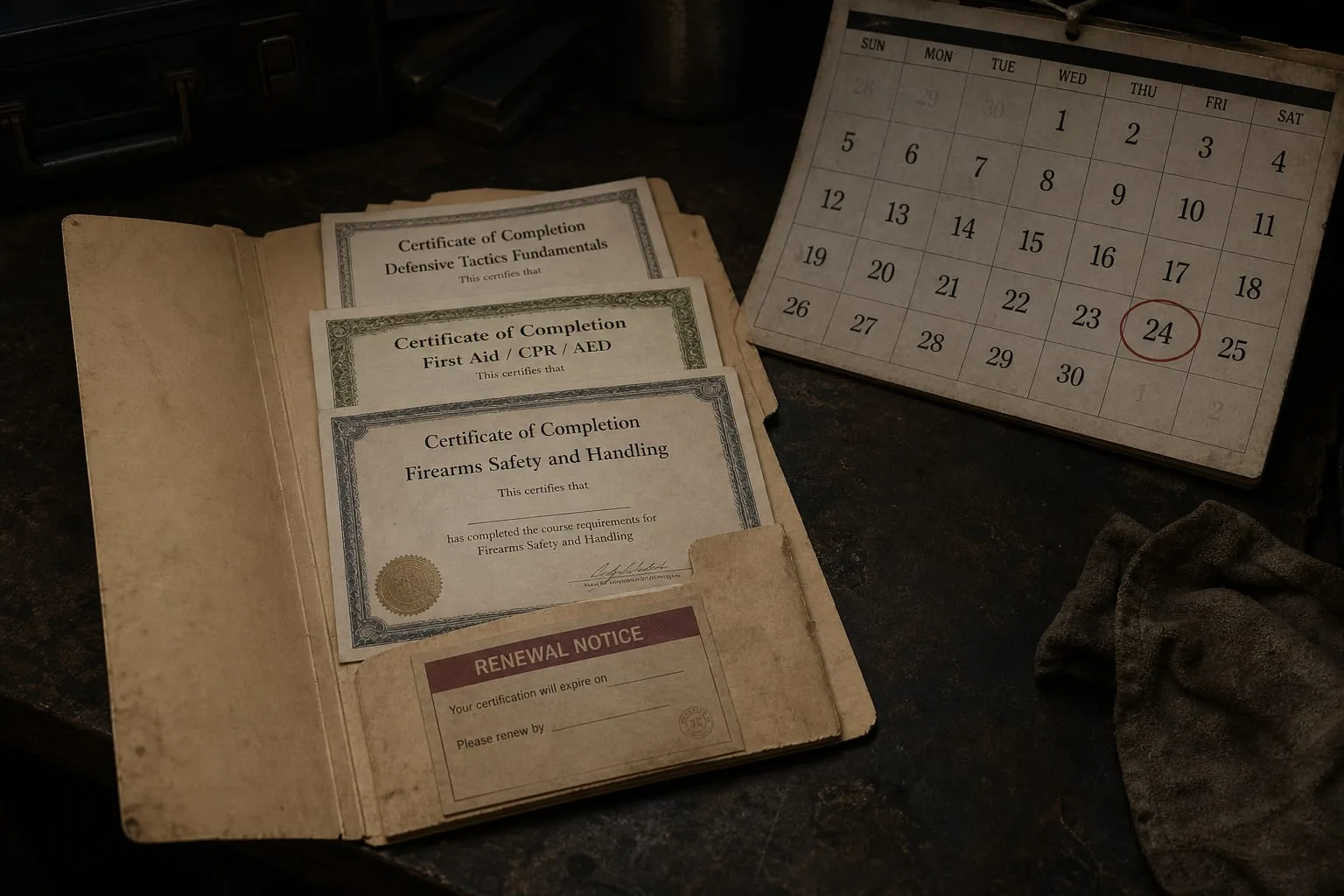
Ask anyone who has audited a crew's credentials in a hurry, usually because an insurer or a general contractor asked, and the story is the same: the hours were taken and the proof was not kept. Certificates of completion live in email inboxes that people leave behind when they change jobs. Boards accept a self-report at renewal and then audit a sample years later, and the burden of proof sits with the license holder. So the maintenance task is not only sitting through the hours. It is keeping a single folder, physical or digital, with every completion certificate, the provider's approval number, the date, and the hour count.
Neglect that folder and the cost arrives later in a lump: a lapsed license, a reinstatement application, back hours to make up, sometimes an examination retaken because the lapse ran past the board's grace window. The Department of Labor oversees registered apprenticeship in the United States, and the same logic runs through every documented training route it touches, which is that the record is the credential and the skill is merely what the record describes. People who have done this several times set a calendar reminder ninety days before every renewal date and treat it as unmovable.
The comparison worth making before you pay a deposit
Put the two routes on one page with four rows, not one. Cost to finish. Time to finish, including the income you will not earn. Hours and fees per renewal cycle, multiplied by ten years. And the width of the approved provider list, because that determines whether those hours cost you a plane ticket or an afternoon. A short course that renews cheaply and a long program that travels well can both be right, and the row that usually decides it is the third one, since it is the only cost that keeps arriving after the celebration.
Then call the state board or the certifying body directly and ask them to confirm the renewal requirements for the specific credential the program leads to, not the program itself. Schools describe what they teach accurately and describe renewal from memory. The body that issues the license is the only source that is current, and a five minute call at the deposit stage is the cheapest research you will do on the whole decision.