Health
Statement Season Arrives in January. Which Documents Outlive the Portal That Holds Them
Large providers send annual summaries in winter and quietly retire the monthly detail behind them. Here is how to judge what to keep and how long it stays useful.
Lucinda Fairbairn|
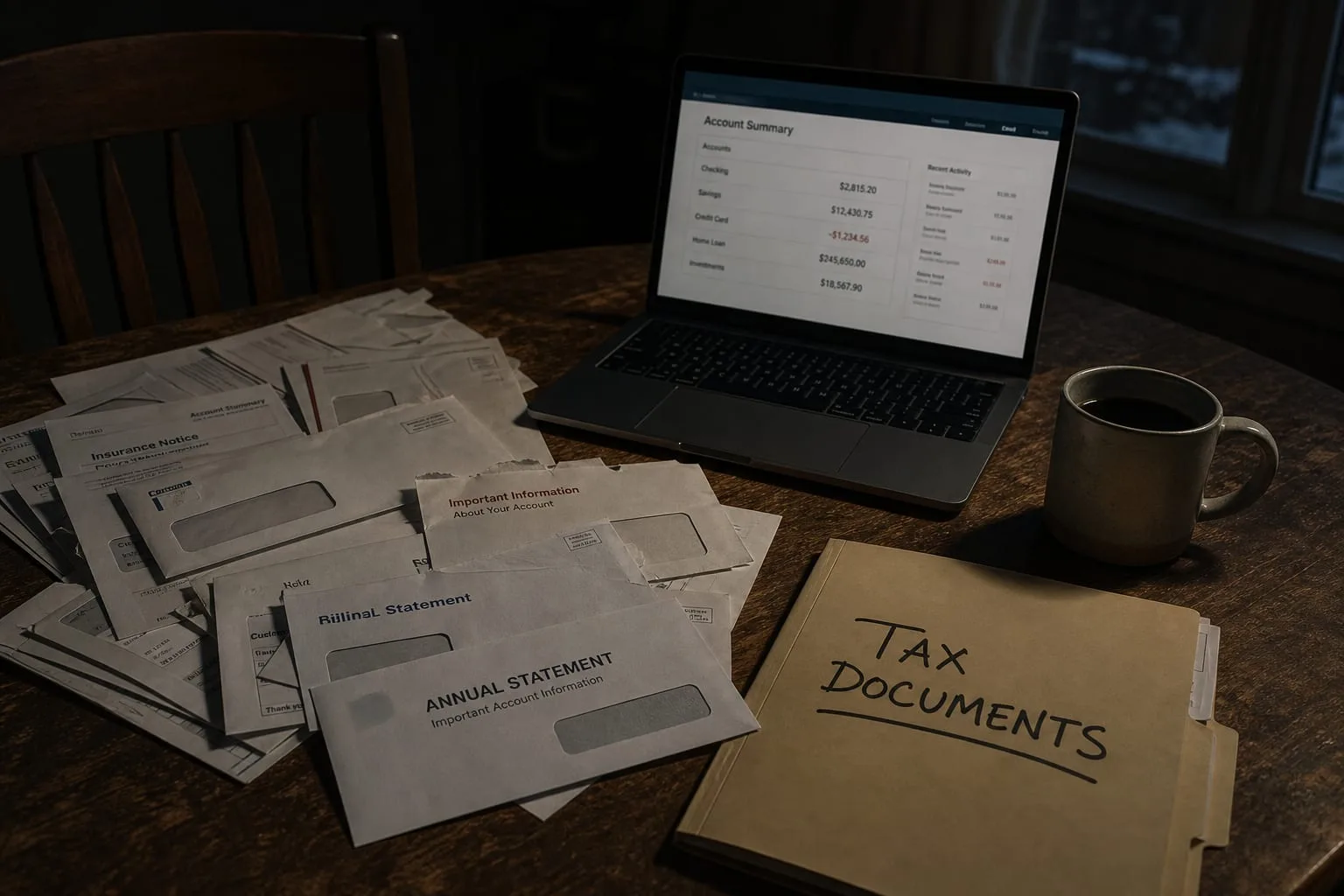
Between the middle of January and the end of February, the large organizations you deal with all year send their one annual document: the mortgage servicer's interest statement, the insurer's renewal packet, the payroll department's wage and tax statement, the brokerage's consolidated tax reporting, the utility's summary of a heating season. Each one arrives looking like a replacement for twelve months of smaller notices, and in most households it is treated that way. That is the moment where record-keeping quietly goes wrong, because the annual summary and the monthly detail prove entirely different things, and only one of them is still retrievable in three years.
The annual document summarizes; the monthly one is evidence
A year-end interest statement tells you a total. It does not tell you which month the servicer applied an escrow disbursement, what the county tax bill was, or when the hazard premium left the account. If your escrow analysis comes back in the spring with a shortage you want to question, the annual figure is useless and the twelve monthly statements are the whole argument. The same split runs through everything a large provider sends: the summary is built for filing a return, and the detail is built for settling a dispute. Keep both, and keep them for different lengths of time.
The seasonal habit worth building is a single pass, made when the annual document lands, that asks what the year's monthly records would prove if someone disagreed with you. A heating season's usage records matter if you are challenging a meter reading or claiming an energy efficiency credit. A year of pay statements matters if a benefits deduction was mis-taken and you need to show when it started. Neither is worth much after the corresponding claim window closes, which is exactly why the retention decision should be made once, deliberately, and then left alone.
A large provider's retention window is not built for you
This is the part that catches people who assume the portal is an archive. Most large billing systems display a rolling window of statements, often a year or two, and older records move to storage that customer service cannot reach without a request, a fee, or an escalation to a team that answers in weeks rather than minutes. Servicing transfers make it worse: when a mortgage or a student loan moves to a new company, the payment history usually arrives as a summary balance, not as a reconstructable ledger. Providers keep what their own regulators and auditors require them to keep, which is a different question from what you will need to prove.
So the judgment call is not really about paper. It is about whether the document exists anywhere outside a system you do not control. A closing disclosure from a refinance, a contractor's lien release, an insurer's letter confirming a coverage change mid-term, a hospital system's itemized bill before it was handed to a collections vendor: these are single-source records, and a household that loses them cannot get them back on any timeline that helps. Everything else, the routine monthly statement from an account that is still open and current, can be downloaded again while the relationship lasts.
Three questions that settle almost every keep-or-drop decision
First, what does this document prove that no other document proves? Second, who else holds a copy, and how long will they hold it? Third, how long can someone still make a claim that this record would answer? That third question is the one that sets the clock, and it is rarely the calendar year. The IRS is responsible for federal record retention expectations on returns and the substantiation behind them, and those periods are longer than most people assume, particularly for anything touching the cost basis of a house or an investment account. Insurance disputes, warranty claims and billing errors each run on their own clock.
Applied honestly, those questions shrink the pile fast. Most monthly statements from live accounts fail the first test and can go. Anything that establishes what you paid for a capital improvement passes all three and should be kept as long as you own the property, plus the years after a sale in which the basis could be examined. Employment records, particularly plan documents and beneficiary designations from a benefits administrator, pass the second test badly: administrators change, plans get restated, and the version in force when you enrolled is not the version on the current portal.
What the winter pass actually looks like
Give it an afternoon. Download the full monthly detail for each large provider before the portal ages it out, label it by provider and year rather than by document type, and put the annual summary in the same folder so the two travel together. Then look at last winter's folder and close it: if the claim windows on those records have run, the folder becomes a short list of permanent items and the rest goes. Done once a year at statement season, the work is small, the archive stays legible to someone else, and the one document you eventually need is in the one place you thought to look.
The households that handle a disputed escrow analysis or a reprocessed claim calmly are almost never the ones with the most paper. They are the ones who decided, in a quiet month, which twelve documents were worth holding and how long each would earn its space.