Money
Two Endorsements Arrived With Your Renewal, and One of Them Changes Your Saturdays
Exclusions are the residue of claims insurers stopped paying, and most of them quietly hand you a maintenance chore. Here is how to find yours and price it.
Lucinda Fairbairn|
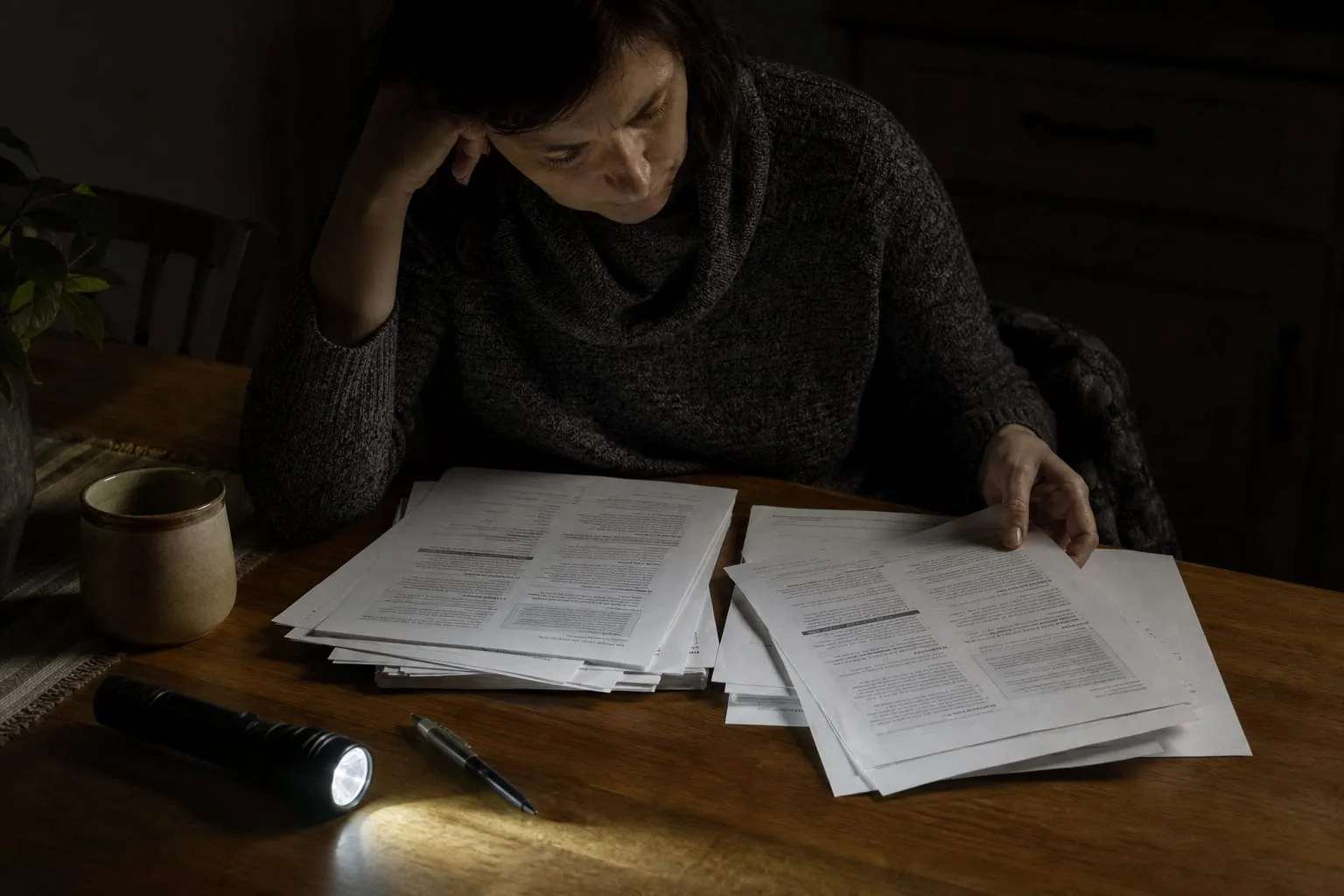
The renewal packet looks identical to last year's until you compare the form numbers. Same carrier, same deductible, premium up a modest amount, and somewhere in the middle a page headed with an endorsement code and a paragraph about water that seeps or leaks over a period of weeks or months. Nothing announced it. No phone call, no highlighted box, and the cover letter mentions only the premium. That paragraph is doing work, and the work it does lands on you, in the form of a chore you now own that the carrier used to absorb.
Every exclusion is the residue of claims somebody stopped paying
Homeowners coverage did not begin broad and get narrowed out of stinginess. It began narrow, as separate policies for fire, for windstorm, for theft, and it widened through the middle of the last century into the packaged form most households recognize, which insured a long list of causes at once. Widening created exposure nobody had priced. Each time a category of loss turned out to be frequent, slow, and nearly universal rather than sudden and rare, it came back out of the form as an exclusion. Flood went first and most completely, which is why federal flood coverage sits in a separate program administered by FEMA rather than on your declarations page.
Mold followed the same route in the early 2000s, after litigation over indoor air quality made an open-ended promise unpriceable. Sewer and drain backup came out and returned as a purchasable add-on with its own limit. Wear, deterioration, settling, and rot were never really covered, but the language sharpened until it was hard to argue. Read a modern exclusion page as a timeline rather than a wall, and the logic becomes legible: sudden and accidental stays in, gradual and preventable goes out, and the dividing line between them is maintenance.
Find the sentence that changed, not the policy that stayed the same
Comparing two policies cover to cover wastes an evening. Compare edition numbers instead. Every base form and every endorsement carries a code and a date, printed in small type at the foot or head of the page, and last year's packet has the same codes. Set the two lists side by side and the differences surface in about ten minutes: a form with a newer date, an endorsement present this year and absent last year, a limit that moved. Then call the agent and ask a narrow question, which is what the new form changed relative to the one it replaced, and ask for it in writing.
An agent who cannot answer that in a sentence is worth pressing, because carriers issue plain-language summaries to their own producers when a form revises. The other document worth requesting is the notice the carrier was required to send when coverage narrowed. State insurance regulators generally require some form of advance notice for a reduction in coverage at renewal, and that notice names the change more directly than the policy language does. If it never reached you, saying so gets attention faster than arguing about the paragraph itself.
Translate the paragraph into a chore, then price the chore
An exclusion that mentions repeated seepage over fourteen days is telling you that somebody has to look. That is the whole content of it. A household with a finished basement, a washer on the second floor, and a water heater in a closet has three or four places where a slow leak can run for a month unseen, and the exclusion converts each of those places into a monthly walk with a flashlight. A household on a slab with the laundry in the garage has one. The same sentence costs those two owners very different amounts of attention, which is the part no premium comparison captures.
Freeze exclusions work the same way and are more specific about what they want. The typical wording pays for a burst pipe only if you maintained heat in the building, or shut off the supply and drained the system. That is a thermostat setting in January and a decision every time the house sits empty for a stretch, and it is why the ski-weekend loss and the identical loss in an occupied house get different answers. Vacancy provisions add a clock, commonly thirty or sixty consecutive days, after which several perils drop away entirely. A house between tenants crosses that line quietly.
The week-to-week version of all this is unglamorous and short. Gutters clear enough that water leaves the roof and lands six feet out. Washing machine hoses replaced on a schedule rather than at failure. A drip pan under the water heater with a drain that actually goes somewhere. Humidity low enough in the basement that the mold sublimit never gets tested. Half an hour a month, spread across the year, covers most of what the exclusion page is asking, and it is worth writing the list down once because the point of a checklist is that it survives a busy October.
Buy back what cannot be maintained, maintain the rest
Some excluded losses are genuinely outside your control, and those are the ones worth spending money to restore. Water backup coverage is the clearest example: a municipal main that surcharges into your line is not a chore, and the endorsement usually costs a small annual amount against a loss that runs into five figures once a finished basement is involved. Service line coverage sits in the same category for older neighborhoods, where the pipe from the street to the house is your responsibility and the excavation, not the pipe, is the bill. Ordinance or law coverage matters most in houses old enough that any substantial repair triggers a code upgrade.
Compare that against the exclusions you can simply outwork. Wear and tear will never be insurable, and no endorsement will pay for a roof that aged out, so the money there belongs in the roof rather than the policy. The useful habit is to sort the new exclusion into one of those two buckets the week it arrives, while the language is still in front of you, and to treat the sorting as a small annual task rather than a research project. Owners who do it tend to carry fewer surprises and a shorter list of things they are quietly hoping about.
Keep the endorsement pages from each renewal in one folder, in order, and the shape of your own coverage becomes visible over five or six years. What was added, what was bought back, and what the carrier decided it would rather you handle yourself. That folder is also the fastest thing to hand an adjuster.