Education
Training One Hire or Twenty? Where the Cheap Route Stops Being Cheap
Tuition is the smallest number in a training decision. The hours a state will count, the schedule, and the headcount you are training all move the real cost more.
Rafael Quintanilla|
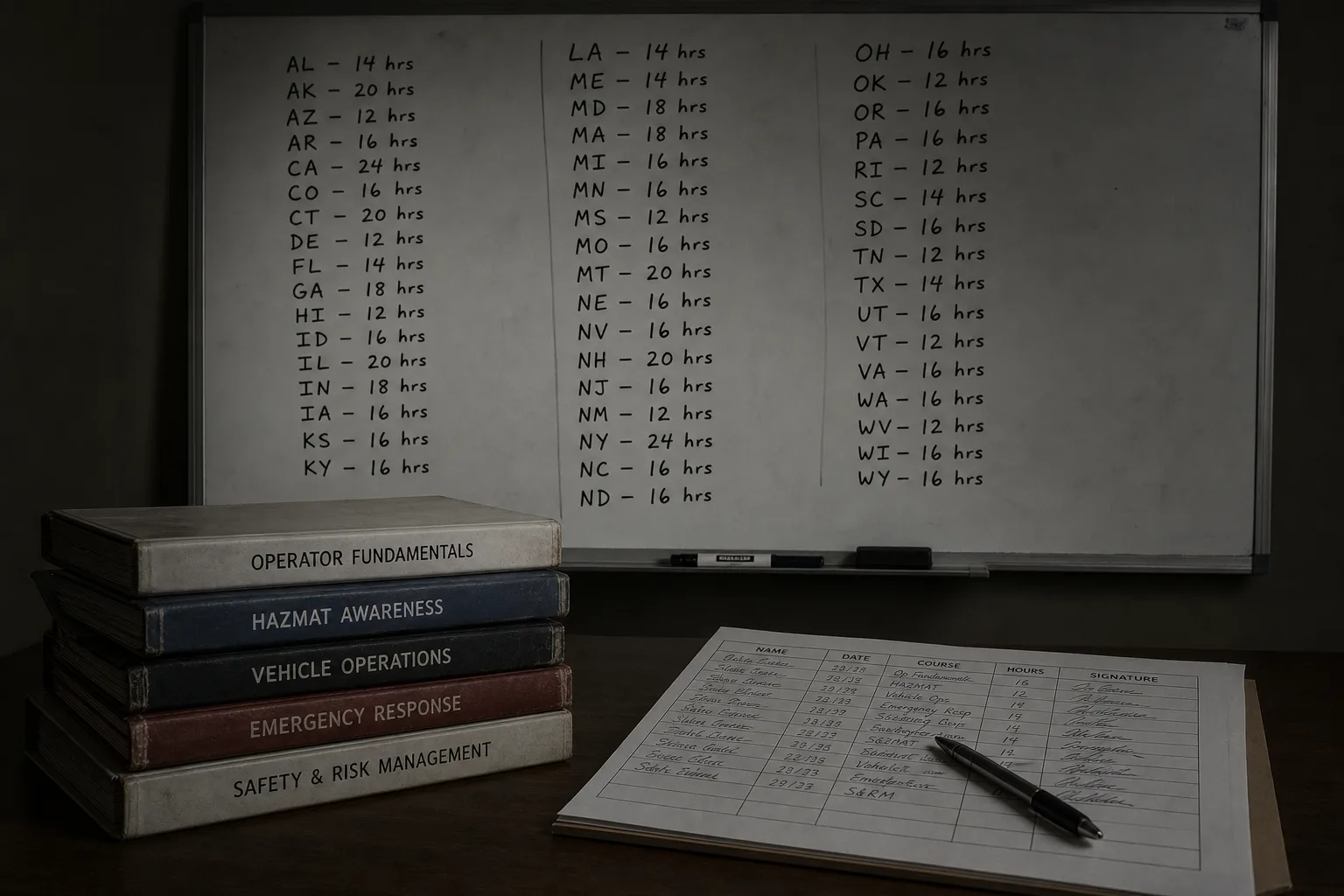
Tuition is the number a school publishes and the number a buyer fixates on, and it is rarely the number that decides anything. The expensive variables sit elsewhere: how many hours a state board will actually count toward the credential, how those hours are scheduled against a working week, and whether the person sitting in the classroom is being paid while they sit. Compare two routes on tuition alone and they look a few thousand dollars apart. Compare them on elapsed months, wages paid during training, and the odds of passing the exam the first time, and the gap often reverses.
The published price and the three costs underneath it
Every training route carries four costs, and only one of them appears in the catalog. There is tuition, which is visible. There is time, measured not in classroom hours but in elapsed calendar weeks before the person is billable or licensed, which is where an eighteen-month evening program and a nine-week daytime program diverge sharply even when they cost the same. There is wage exposure, meaning what you pay someone who is learning rather than producing. And there is retry risk: the cost of a candidate who finishes the program, fails the exam, and has to be carried through a second attempt and a second fee.
A barely adequate program is usually competitive on the first number and quietly terrible on the fourth. It admits anyone, teaches to the hours rather than to the test, and reports nothing useful about outcomes. A good one will tell you its first-attempt pass rate without being pressed, will say plainly which portions of the exam its graduates struggle with, and will have a written policy on what happens when someone fails: whether they repeat the module at no charge, whether they get tutoring, whether the clock on their enrolled hours keeps running. Ask for that policy in writing before you pay a deposit.
The state line moves the arithmetic more than the provider does
Required hours for the same occupational credential are set state by state, and the spread is not small. A trade or personal-service license that takes several hundred supervised hours in one state can require two or three times that across a border, which changes both the tuition and the months of unpaid or low-paid time before the credential arrives. Reciprocity rules then layer on top: some states accept another state's hours outright, some accept them only after a period of licensed practice, and some will credit nothing earned outside their own approved provider list. For anyone hiring across a metro area that straddles a state line, that detail is the whole decision.
Local rules add a second layer that catalogs almost never mention. City or county permitting may require a separate registration, a bond, or continuing education on a cycle that does not match the state's. The Department of Labor oversees registered apprenticeship, and a route registered through that framework carries portability and a defined wage progression that an unregistered in-house program does not, which matters most when your workforce moves between jurisdictions. Before comparing any two providers, call the licensing board in the state where the work will actually be performed and confirm, by program name, that its hours are accepted.
Where the threshold between buying seats and building a program sits
For one person, buying a seat at an established school is almost always correct. You are renting a curriculum, an approved instructor, and a relationship with the board that would cost you a year to build. The arithmetic changes somewhere in the middle, and the threshold is lower than most employers assume. By the time you are putting five or six people a year through the same credential, the per-seat price starts to look like a recurring line item worth negotiating, and community colleges and approved providers will quote contract training at a discount for a guaranteed cohort.
Past roughly a dozen candidates a year, running your own approved program becomes a real option, and the cost profile inverts: you take on an upfront burden of curriculum approval, instructor credentialing, and record-keeping, and in exchange your marginal cost per additional trainee falls close to wages and materials. The hidden benefit at that scale is scheduling control. A school's calendar is built for its enrollment, not your staffing, and the cost of a hire who waits eleven weeks for the next cohort to start is usually larger than the tuition difference between any two providers.
What a good route does that a thin one does not
Three things separate them, and all three are checkable before money changes hands. First, documentation: a good provider tracks hours in a format the board accepts and will send that transcript directly, so a candidate never has to reconstruct attendance from memory. Second, supervisor sign-off, where applicable, is handled by someone who actually holds the credential and is willing to be named, rather than by whoever happens to be on shift. Third, the schedule is published far enough ahead that you can plan hiring around it, including make-up sessions for missed days.
Ask the same four questions of every option: what the board in this specific state counts, how long from enrollment to exam eligibility, what happens on a first failure, and what the price does at five seats and at fifteen. The answers will sort the field faster than any brochure.